Full Article
about La Nou de Berguedà
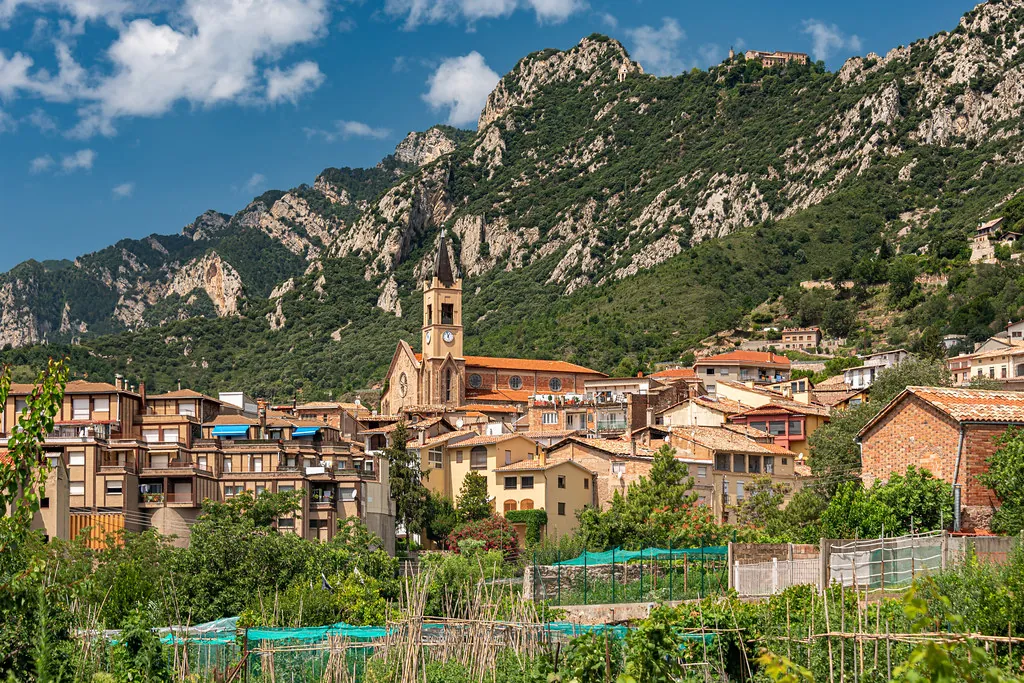
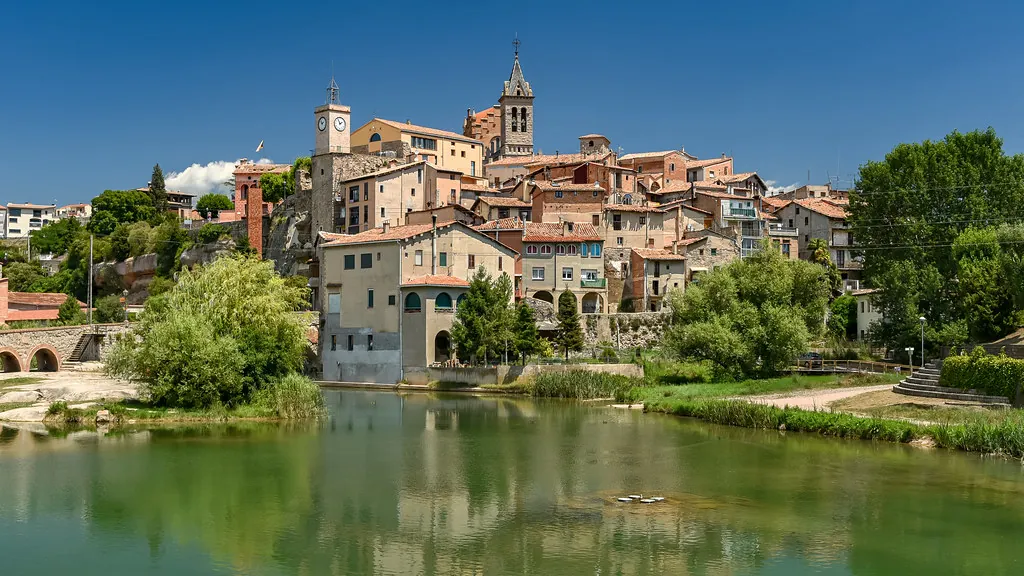
Small mountain village with the Lourdes shrine of La Nou
Hide article Read full article
Where the Berguedà Turns North
Tourism in La Nou de Berguedà begins with geography. The village lies on the northern side of the comarca of Berguedà, on the slopes of the Serra del Catllaràs, at around 876 metres above sea level. It is small, with just over a hundred residents, and sits away from the busiest routes through the area.
The road climbs up from Guardiola de Berguedà and, as it gains height, the landscape tightens. Woodland closes in, meadows tilt on the hillsides and scattered masías, traditional Catalan farmhouses, appear between folds in the terrain. This is mountain country, though not the high Pyrenees. It belongs to the Pre-Pyrenees, a belt of ranges that act as a transition between inland Catalonia and the higher peaks to the north.
Medieval documents already mention La Nou, linked to small-scale mountain farming and livestock. The settlement never grew large, and that modest scale still defines its layout. A handful of streets form the core, lined with compact stone houses. Around them stand masías that historically structured the surrounding land. The architecture reflects that rural economy. Thick walls, small openings and tiled roofs were built to endure long winters and the damp cold typical of these elevations.
Sant Martí at the Centre
At the heart of the village stands the parish church of Sant Martí. The present building is the result of several phases of construction. A medieval base survives, though later alterations significantly changed its original appearance. This kind of evolution is common in mountain parishes, which were adapted over time according to shifting needs and resources.
The church is simple in design, without grand decorative ambitions. Its importance lies more in its function than its form. For centuries it served as the meeting point for a highly dispersed municipality, where people lived in isolated farmhouses rather than clustered streets.
Inside, devotional elements from the modern period remain, probably dating from the eighteenth century. During that time many rural churches in the Berguedà were redecorated with Baroque altarpieces, bringing a more elaborate visual language into otherwise austere interiors. Sant Martí reflects that wider pattern, even if on a modest scale.
Forests and Open Views
A large part of the municipal area is covered by forest. Pine dominates, though in shadier spots beech and oak appear. The Serra del Catllaràs rises immediately to the north and shapes the character of the landscape. It is a rugged range, crossed by forest tracks and old paths that once linked masías and high pastures.
From certain points in the surrounding hills, the view opens towards the valley of the Llobregat river and, on clear days, as far as the Cadí massif. These are not formal viewpoints with railings and information boards. Often it is enough to step a little way off the road or follow a livestock track to find a natural balcony over the valley.
The sense of enclosure alternates with these sudden perspectives. One moment the route runs through dense woodland, the next it breaks into open ground with long sightlines across the Pre-Pyrenean ridges. The landscape does not present itself all at once. It reveals itself gradually, depending on where the road or path turns.
Paths Through Mid-Mountain Country
Several paths leave directly from the village centre, linking it with masías and wooded areas. Some follow old routes once used to move animals or reach fields that are now abandoned. Others have been recovered and signposted as local walking trails.
The terrain is typical of mid-mountain areas. Slopes are constant, forest tracks are common and there are stretches of dense woodland where it is important to keep a sense of direction. There are no major technical climbs, but the frequent junctions make it advisable to carry a map or follow a clearly defined route.
Secondary roads in the area also attract cyclists. Traffic is usually light and the ascents are long yet steady, a familiar pattern in the Pre-Pyrenees. The gradients demand effort without becoming extreme, and the quiet surroundings add to the appeal for those who prefer distance and rhythm over speed.
Walking or cycling here is less about ticking off landmarks and more about moving through a working landscape. Even if some fields are no longer cultivated, the imprint of past agricultural use remains visible in terraces, clearings and stone boundaries.
A Small Community and Its Calendar
La Nou maintains a simple festive calendar closely tied to residents who live here year-round or return during the summer months. The celebration associated with Sant Martí usually takes place in November, as in many parishes dedicated to this saint across Catalonia and beyond. It is a traditional date in the rural calendar, marking the onset of colder weather.
In summer, events are also organised in the square or in communal spaces, taking advantage of a temporary increase in population. Families with roots in the village often return during the warmer months, and the social life of La Nou adjusts accordingly.
These are not large-scale festivals designed to attract outside crowds. They function primarily as meeting points for locals and for those who maintain ties with the village. The scale remains consistent with the size of the community itself.
Before Setting Off
La Nou de Berguedà can be explored quickly. The village centre is small enough that all its streets can be walked in under an hour.
The greater interest lies in the surroundings. Quiet roads, forest tracks and the proximity of the Serra del Catllaràs define the experience more than any single monument. A car is advisable for moving around the wider area, given the village’s distance from main transport axes. Mobile phone coverage can be unreliable in parts of the municipality, particularly away from the centre.
In winter the cold and damp are more noticeable here than down in the valley of the Llobregat. The altitude and the orientation of the slopes make a difference. Visiting at that time of year means shorter days and a sharper chill, though it also reinforces the sense of being in a mountain environment shaped by climate and isolation.
La Nou de Berguedà does not rely on spectacle. Its appeal is rooted in scale, landscape and continuity with a rural past that has never entirely disappeared. Stone houses, wooded hillsides and the quiet presence of Sant Martí define a place that remains closely tied to the rhythms of the Berguedà’s northern slopes.