Full Article
about La Pobla de Lillet
Tourist town with Gaudí’s Artigas Gardens and the Cement Train
Hide article Read full article
At nine in the morning, the bridge over the Llobregat is still half silent. Water slips between rounded stones and patches of dark moss, and the air carries that chill that lingers on your hands when you walk without gloves. This is when tourism in La Pobla de Lillet begins to make sense. There is no rush, just people crossing the bridge on their way to buy bread or head to the car, and stone façades slowly waking up.
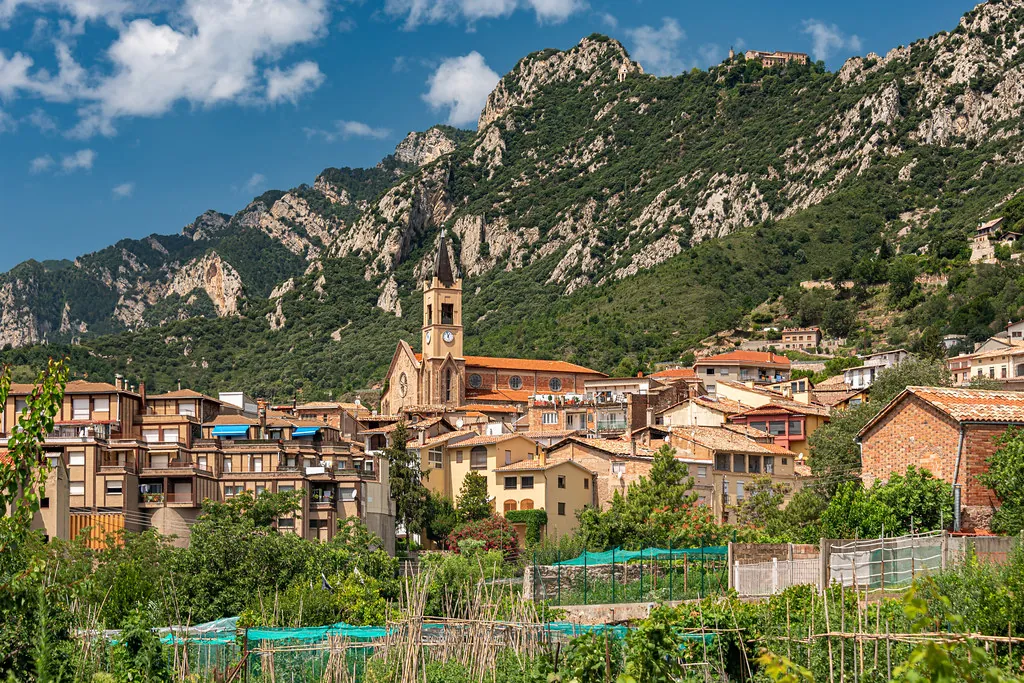
La Pobla de Lillet sits at about 840 metres above sea level in the Berguedà, a comarca in the Catalan Pyrenees. It does not rely on theatrical backdrops. For decades it was a place of work rather than a place to visit, shaped by mining and by the cement factory that provided jobs for much of the valley. That history is still visible in the industrial buildings that remain standing and in the way the village stretches along the river. Between those structures lie slopes of pine, the occasional holm oak, and old terraces where cultivation still appears from time to time.
Here the Llobregat is young. It does not carry as much water as it will further downstream, yet it already shows character. From certain points in the village, the valley can be seen opening gradually. Paths descend towards the riverbank and then climb back up through trees. There are no sweeping panoramas revealed all at once. The landscape unfolds step by step.
The footprint of the cement factory
On the outskirts stands the former industrial complex now known as the Museo del Cemento Asland. The buildings, constructed at the end of the nineteenth century, retain their tall chimneys, brick walls and exposed metal structures that explain by themselves how the place once functioned.
A walk through the site clarifies why this valley filled with tracks, warehouses and workers. Inside, the rooms display machinery and tools alongside photographs of the men and women who worked there when the factory was at full capacity. It is worth checking opening times in advance, as it does not open every day.
The presence of the factory shaped La Pobla de Lillet for generations. The river was part of that story, as were the transport links that connected mines and production areas. Even today, the industrial remains are not tucked away. They sit within the landscape, reminding visitors that this was once a busy working environment rather than a destination for a weekend escape.
Gaudí’s small garden by the river
A short distance from the centre, following the course of the Llobregat, lies the Jardín Artigas. Antoni Gaudí designed it at the beginning of the twentieth century. Although his name often suggests something monumental, this garden is relatively compact.
Short staircases adapt to the natural rock. Low stone bridges cross over water. Small waterfalls blend into the flow of the river itself. The design feels integrated with its surroundings rather than imposed on them. When the paths are quiet, the sound of water moving beneath the structures becomes more noticeable, as does the crunch of leaves underfoot when someone passes.
Early morning tends to be calmer, and the humidity from the river keeps the greenery intense. The setting remains modest in scale. Its interest lies in the dialogue between stone, vegetation and water, all within a confined stretch of riverbank.
The train that followed the valley
Another reminder of the industrial era is the so called Tren del Ciment. Today it operates as a short heritage route. The train passes through tunnels carved into the rock and crosses several viaducts that span the valley.
The journey is not long, yet it offers a different perspective on the landscape. Passengers follow the same line once used to transport materials between the mines and the factory. From the carriage, the valley appears narrower in places, more open in others, and always closely tied to the river’s path.
Before heading there, it is sensible to check whether it is running that day, as departures are usually limited. The experience is straightforward and focused on the route itself rather than on speed or distance.
Through the old centre
The historic centre is small enough to explore without a map. Streets are narrow and lead naturally towards the river. The church of Santa Maria preserves a Romanesque base, although it has undergone several later reforms. These changes are visible in the walls and in the bell tower, where different phases of construction can be traced in the stonework.
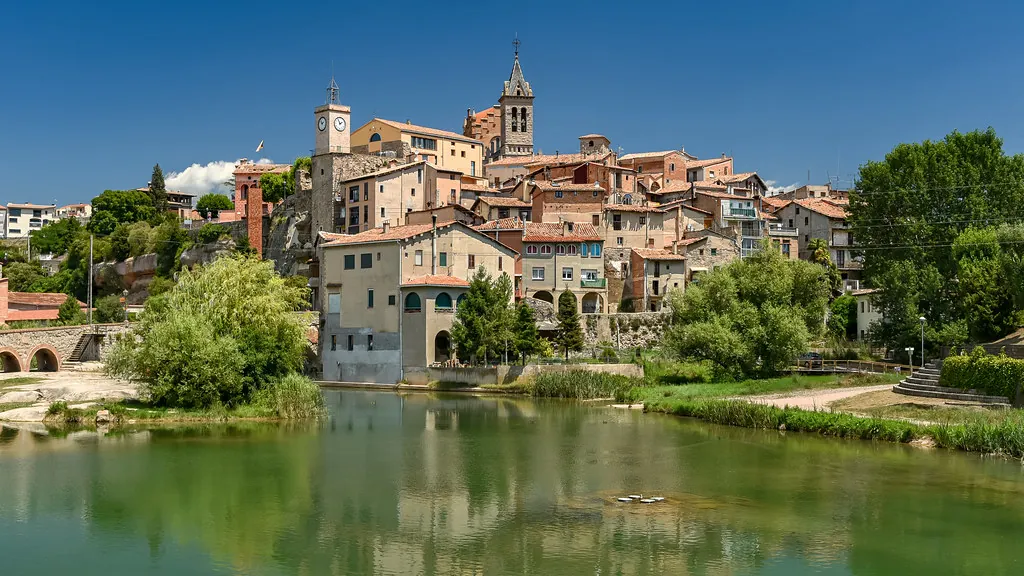
The medieval bridge over the Llobregat remains one of the spots where people pause. From here, houses line the riverbank in close formation. Depending on the time of day, the air may carry the smell of fresh bread drifting from a nearby doorway, or damp firewood in winter. As afternoon advances, light enters the valley at a lower angle and leaves the façades in ochre and reddish tones.
At weekends, parking on the outer edge of the centre and walking in is usually more practical. Streets are tight, and traffic becomes awkward when visitor numbers rise. On foot, the rhythm of the place is easier to absorb.
Walking the valley
Much of La Pobla de Lillet’s quiet character lies along the paths that leave the village. Waymarked routes follow former mining tracks, while other footpaths climb through pinewoods towards more open areas of the Berguedà.
Some walks can be completed in a couple of hours. Others connect with longer routes if the intention is to continue higher into the mountains. The terrain shifts gradually from riverside paths to forest trails, and then to broader views over the valley.
Autumn brings a particular atmosphere. After several days of rain, the forest floor often fills with mushrooms. The smell of damp earth becomes intense and lingers along the paths. During the week at that time of year, the valley tends to be quieter.
Summer and certain public holidays change the mood. Trails near the river attract more people than a glance at the map might suggest. The contrast between a weekday in late autumn and a busy summer afternoon can be noticeable, especially along the most accessible stretches.
La Pobla de Lillet is best understood at a slow pace. The river, the remains of the factory and the paths that rise towards the woods form a continuous thread. Time here is less about ticking off sights and more about noticing small details close to the ground: the texture of stone on a bridge, the sound of water under a low arch, the shift in light along a narrow street.