Full Article
about La Quar
Scattered, quiet municipality with the Santuario de la Quar on the summit.
Ocultar artículo Leer artículo completo
The first clue is the road sign: “La Quar 6 km” chalked on a slate tile that looks as if someone nailed it up in a hurry. From that moment the tarmac narrows, the stone walls press in, and phone reception quietly clocks off. By the time the radiator grille is level with the 885-metre contour line you realise the map has been kind: Barcelona is 110 km away, yet the outside world feels negotiable.
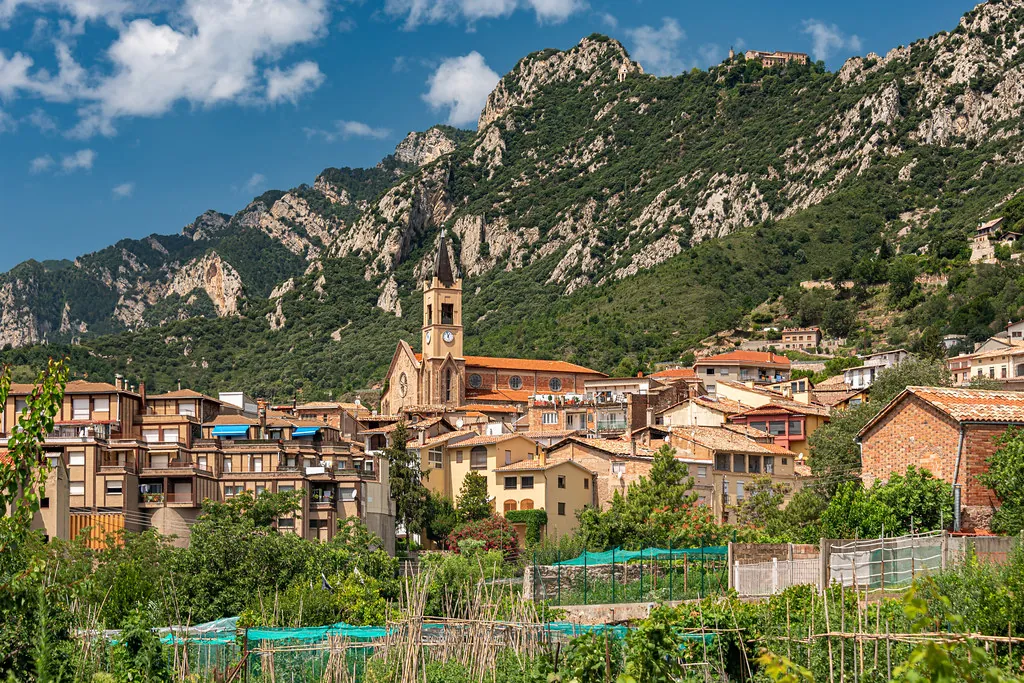
La Quar is less a village than a scatter of farmhouses that agreed to share a church. Officially 42 souls live here; unofficially the place is rented out to sheep, stone walls and the wind. There is no centre to head for, no souvenir fridge magnets, and – crucially – no shop. The single through-lane peters out at the stone cross in front of Santa Maria, a barn-sized parish church whose bell still marks the quarters for people who don’t need reminding of the time.
Stone, altitude and silence
Everything is built from the hill’s own granite. Roofs slump under slabs the colour of old pennies, and wooden balconies sag just enough to prove their age. Walk twenty paces beyond the last house and the forest reclaims the soundtrack: oaks, beeches and the odd Scots pine creaking above a carpet of last year’s leaves. The altitude knocks the Mediterranean out of the air; even in August the breeze carries a note of Pyrenean snow that won’t reach the coast until midnight.
Maps show half a dozen footpaths fanning from the tarmacked spur, but way-marks appear only when a farmer has nailed up an aerosol-painted tin can. A practical loop starts behind the church gate: follow the concrete water tank, fork left at the holm oak split by lightning, and in forty minutes you’re on the Espluga ridge looking south over the Berguedà basin. On clear mornings the opaque haze above Barcelona looks like a separate weather system. Take the steep return through the holm-oak hollow and you’ll surprise wild boar turning the soil; they’re shy, but the prints are as fresh as the mud allows.
Summer hikers sometimes arrive expecting signed mileage and snack stations and leave disappointed. La Quar refuses to be that helpful. Bring water, download the 1:25,000 ICC map, and accept that the route you planned may be blocked by a shepherd who felt like moving the electric fence. The reward is motion without crowds: on a weekday in May you can spend five hours on the circuit to Merlès valley and meet nobody except the occasional cyclist pushing uphill in bottom gear.
Getting up and getting stuck
Access is deliberately awkward. From Barcelona you take the C-16 toll road as far as Berga, then swing onto the BV-4244, a lane that twirls through pine plantations and suddenly pitches over the edge like a forgotten ski-run. Six kilometres of hairpins later the tarmac flattens and La Quar announces itself with three houses and a dog. In winter this last stretch is salted only after the snowplough has cleared the route to the ski station at Rasos; if a white blanket is forecast, carry chains or be prepared to abandon the car at the turning circle and walk the final climb.
Public transport is theoretical. One school bus leaves Berga at 07:10, returns at 14:00, and does not run in July. Hitching down with a local is possible if you speak enough Catalan to distinguish “I’m going to the doctor” from “I’m fetching fertiliser” – both involve stopping at an agricultural co-op that smells equally of antibiotics and hay.
Food, beds and the missing pintxo
There is no hotel, hostel or officially recognised spare room. What exists is an arrangement: ring the ajuntament in Berga, give your dates, and someone’s cousin hands over a key to a renovated barn with solar-heated showers and a wood stove. Expect €70 a night for two, linen included, plus the instruction to feed the cat if she looks at you in a certain way. Breakfast is whatever you carried up: fresh bread from Forn de Pa Cros in Gironella, a slab of mountain cheese wrapped in wax paper, and coffee brewed on the hob while the mist unpicks itself from the valley.
Evening meals happen elsewhere. The nearest restaurant is Can Paredes, twelve minutes down the hill in Sagàs, where the menu sticks to charcoal-grilled lamb, river trout with almonds, and trinxat – a reassuringly blunt mash of potato, cabbage and streaky bacon that tastes like something a farmer would invent if he had one pan and winter to survive. House red is poured from a plastic jug and costs €3; they close the kitchen at 21:30 sharp, so order dessert before you contemplate a second jug.
August fifteenth and other explosions of noise
For fifty-one weeks the village clock is the loudest thing moving. Then the festa major lands. Around 15 August ex-residents park their Barcelona-licenced hatchbacks wherever a wheel will fit, someone wires loudspeakers to the church tower, and a foam machine is installed in the square that isn’t a square. There is no parade route: people simply circulate between the two pop-up bars, the sausage grill and the inflatable castle. By midnight the playlist has reached nineties Eurodance, the altitude has done nothing to dilute the gin, and a teenager is being sick behind the stone cross. Book accommodation a year ahead or stay in Berga and accept a sober drive home.
The rest of the calendar belongs to the livestock. In late October shepherds bring flocks down from the high pastures; the clop of bells drifts through the beeches like a slow-moving xylophone. On the first weekend of December someone fells a spruce, drags it to the church, and the priest blesses it while children hurl glitter. Fireworks are modest – two rockets and a Catherine wheel that fizzles against the granite – but the echo off the ridge makes the display sound twice the size.
When to come, when to leave
May and late-September give you green underfoot, stable weather and daylight warm enough to sit outside at 8 a.m. without a jacket. October adds the beech forest in copper plate, plus the risk of a soaking that turns the paths to grease. July and August are hot in the sun but breathable in shade; the place is quiet at dawn, overrun by 11 a.m. with day-trippers who read about the sunrise viewpoint on a blog and leave disappointed because the sun, inevitably, rose before they found parking. Winter is magnificent if you enjoy the possibility of being snowed in; carry extra food, a shovel and something alcoholic you can drink without mixer because the tap water will freeze.
Leave before you run out of supplies. There is no epiphany here, no hidden monastery selling artisan gin. La Quar offers altitude, stone and a pause button. Press it, then drive back down the switchbacks until the phone pings with messages you no longer care to answer.