Full Article
about L'Espunyola
Scattered rural municipality of farmhouses and pre-Pyrenean landscape.
Hide article Read full article
A Village That Feels Like a Refuge
Some villages work as viewpoints. Others feel more like places to take shelter. Tourism in Lespunyola leans towards the second. You arrive, park the car without much fuss, look around and get the sense that life here follows the rhythm of the countryside rather than the tempo of weekend breaks.
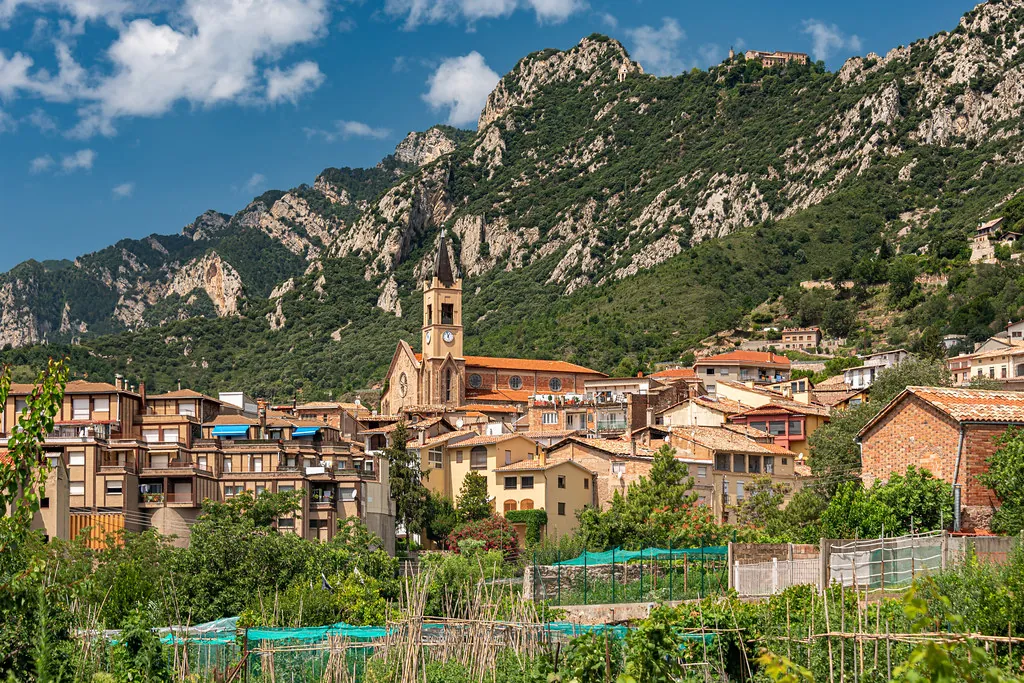
L'Espunyola is in the comarca of Berguedà, set at a certain height above the surrounding valleys. The landscape is shaped by scattered masías, wooded slopes and secondary roads that rise and dip without urgency. This is not a destination of grand monuments or shopping streets. It is the kind of place that helps you understand how people live in this part of Catalunya once you step away from the main urban centres.
There is space here, and quiet. The horizon is not dominated by skylines but by gentle hills and farmland. Even before seeing any specific landmark, the atmosphere makes it clear that daily life has long revolved around agriculture and small rural communities.
A Small Centre and Santa Maria
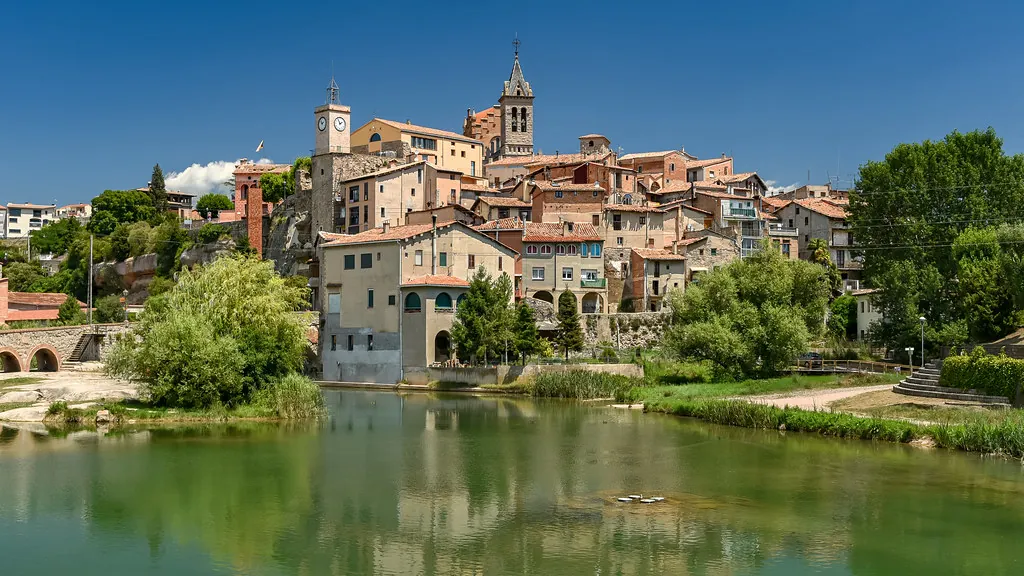
The heart of the village is compact. A handful of stone houses, a short incline and a small square that works as a point of reference. Nothing monumental, nothing designed to impress. It feels practical and proportionate to the number of people who live here.
Close by stands the church of Santa Maria. It is Romanesque, or at least clearly appears so, with thick walls and narrow windows. Like many churches in the area, it was probably built in the Middle Ages. It is not a vast or elaborate building, yet it sits comfortably in its surroundings: sober stonework and a calm presence that matches the landscape.
Around it are older houses with straight doorways and windows that hint at more prosperous periods in the past. There are also buildings mid-renovation and walls that have endured as best they can. In the Berguedà, time has not treated every structure equally. Some homes have been maintained and adapted, others show the marks of decades of change.
Walking through the centre does not take long, but it gives a sense of continuity. Generations have passed through the same narrow streets, gathering in the same square and using the same church as a reference point.
Masías Across the Slopes
A look at a map of the municipality shows that the main cluster of houses is only a small part of L'Espunyola. The area is dotted with masías spread across the hillsides.
Many retain their traditional form: sloping tiled roofs, thick stone walls and enclosed yards where traces of agricultural life from decades ago can still be imagined. Some are still inhabited. Others have been transformed over time, adapted to new uses or left partially altered.
They are not generally open to visitors. Even so, walking or driving along rural tracks makes it easy to understand how the territory was organised. Fields lay close to the house, woodland stretched beyond, and paths linked one masía to another. The layout reflects a way of life based on proximity to land and livestock, with each household largely self-contained yet connected to its neighbours.
This dispersed settlement pattern defines the visual identity of L'Espunyola far more than its small centre. The slopes are not empty; they are structured by these farmhouses and the plots around them.
Forest Walks in the Berguedà
Landscape carries real weight here. Fairly dense woodland covers much of the area, interspersed with soft hills and long views over the valleys below. Silence is part of the experience. It is broken occasionally by a passing car or by wind moving through the pines.
Local residents use the paths for everyday movement, for walking and, when autumn arrives, for mushroom foraging. In this part of Catalunya, species such as rovellons and fredolics are well known and widely sought after. As always with wild mushrooms, knowing exactly what is being picked matters.
Do not expect large information boards or routes packaged as tourist products. These are ordinary paths, the kind used for generations to move between farms and woodland. Their appeal lies in their simplicity. A steady walk through forest and open patches of land is often enough.
The terrain is not extreme, yet it demands attention. Tracks climb and descend gently, sometimes under tree cover, sometimes along edges where the view opens out over the Berguedà.
Cycling on Quiet Roads
The roads around L'Espunyola are the type many cyclists look for. The tarmac is decent, traffic is light and the gradients encourage a steady pace.
These are not dramatic mountain passes. Instead, they are sustained climbs with wooded stretches and sequences of bends that continue for kilometres. Progress tends to be gradual rather than explosive. For those who prefer to pedal without cars passing every minute, this setting works well.
The area also connects easily with other villages in the Berguedà. It is common to see longer routes that cross several comarques before returning to the starting point. The network of secondary roads makes such circuits possible without the intensity of major highways.
Cycling here is less about conquering a famous ascent and more about maintaining rhythm across varied terrain.
Food Rooted in the Land
Local cooking follows the logic of the territory. Dishes are filling and based on produce closely tied to farming life.
In many homes and establishments in the area, traditional embutidos, aged cheeses and spoon dishes remain common, especially in colder weather. Recipes such as escudella, a hearty Catalan stew, or preparations combining cabbage, potato and pork appear frequently on tables in the Berguedà.
It is straightforward food, designed to sustain rather than to impress. After a morning spent walking or working outdoors, these are the flavours that make sense.
The ingredients reflect what the surrounding land provides. There is little ornamentation, and little need for it.
Local Celebrations and Everyday Life
Throughout the year the village maintains a number of celebrations that bring residents together. The festa major usually takes place in summer and tends to last several days, with popular activities and gatherings that involve people from the municipality and nearby areas.
It is not a mass event. Rather, it is a time to reconnect, bring tables out into the street and keep traditions that still carry weight in small villages.
In places like L'Espunyola, these occasions reinforce social ties that extend beyond individual households. They punctuate the year and provide moments of shared activity within a setting that is otherwise calm and dispersed.
In the end, L'Espunyola is best understood by slowing down. It is not somewhere to rush through while ticking sights off a list. It is more about pausing for a while, looking out over the Berguedà landscape and recognising that some villages continue at their own pace, with little noise around them.