Full Article
about Montmajor
Large rural municipality with a quirky mushroom museum
Hide article Read full article
A Village You Can See in Twenty Minutes
Montmajor is quick to explore. Park on the edge of the village centre and continue on foot. There are only a handful of streets and no great distances to cover, so in about 20 minutes you will have seen the essentials.
Services are scarce. You may well find no open shops and nowhere to buy water, so it is best to arrive prepared. Montmajor is not set up as a tourist hub. It is a small rural settlement that carries on at its own pace.
The village lies within the comarca of Berguedà, in Catalonia. This is inland territory, more fields and woodland than coastal drama, and Montmajor reflects that setting.
Stone Houses and Sant Esteve
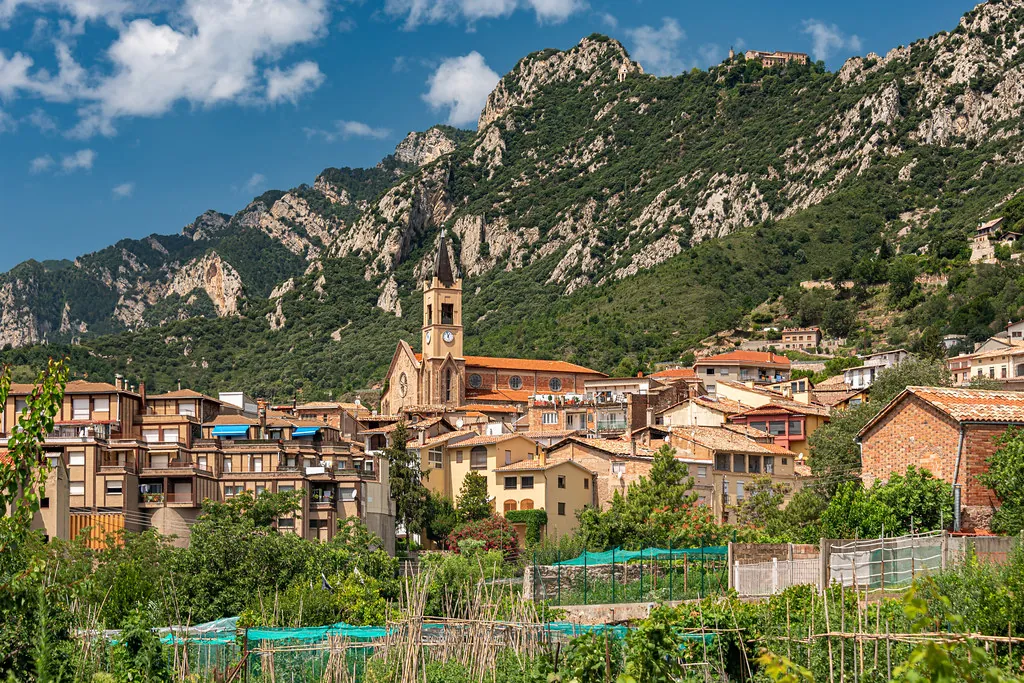
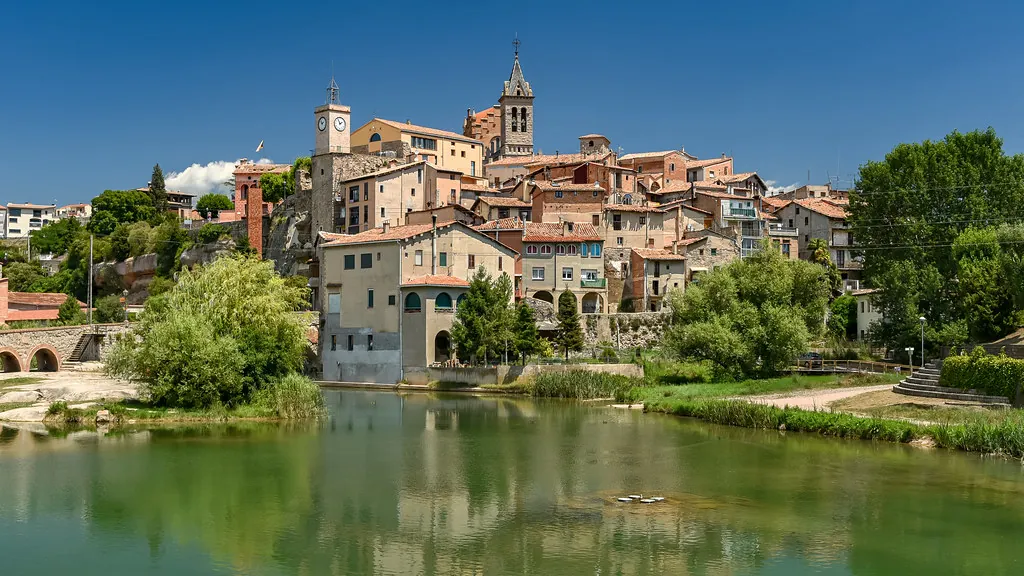
The heart of Montmajor is modest: stone houses, tiled roofs and little else competing for attention. The clearest landmark is the church of Sant Esteve, of Romanesque origin. Its tower and position within the cluster of buildings make it easy to spot.
You do not need long to take in the church before moving on. The streets around it are short and straightforward. Some houses retain older features such as thick stone walls, darkened wooden balconies and small windows. There is nothing monumental here. The architecture is the kind of rural construction still found in many villages across the Berguedà.
This simplicity defines the visit. Montmajor does not revolve around a large historic quarter or a concentration of major monuments. It is a working rural nucleus, compact and functional.
A Municipality of Scattered Masías
What best represents Montmajor is not concentrated in the village centre but spread across the wider municipality. The area is dotted with masías, traditional Catalan farmhouses, standing alone among fields and small woods. Some remain inhabited as primary homes, others have been restored as second residences.
They can be seen from minor roads and public tracks that cross the area. Many of these properties are private and sit within enclosed land, so it is important to respect boundaries and not enter without permission.
This pattern of dispersed farmhouses is typical of inland Catalonia. Rather than a single dense settlement, the landscape is organised around agricultural plots and isolated buildings connected by rural lanes.
Walks on Gentle Terrain
The terrain around Montmajor is generally kind to walkers. Rural paths link the village with several masías and agricultural zones. Slopes are usually moderate and there are no major ascents.
A circular walk along nearby tracks can take between two and three hours, depending on pace and how many detours you make. This is not technical mountain terrain or demanding hiking. It is closer to straightforward countryside walking along farm roads and earth paths.
The appeal lies in the quiet and the open space. You move between cultivated fields, patches of woodland and low rises that occasionally widen the view. There are no marked mountain routes highlighted as attractions, just a network of practical paths that locals have used for years.
Natural Viewpoints Over the Berguedà
Around the municipality there are slightly elevated spots where the landscape opens up across the Berguedà. They are not signposted as formal viewpoints. Instead, they are clearings or edges of tracks where the land dips away and the horizon becomes visible.
On clear days it is sometimes possible to glimpse peaks from the Cadí range, or further away, the distinctive outline of Pedraforca. At other times the view is closer and more contained, a patchwork of fields and forest stretching out from the roadside.
These vantage points do not require special access. They are simply part of the natural relief of the area, discovered as you move along the quiet lanes.
Quiet Roads for Cycling
The secondary roads that cross Montmajor carry little traffic. For that reason some cyclists use them to link longer routes across the comarca.
Facilities along these stretches are almost non-existent. It is sensible to carry water and something to eat in a backpack or jersey pocket. Once on the road, you should not expect frequent stops or services.
The character of these roads mirrors the village itself: functional, calm and largely unchanged by heavy tourism.
Local Produce from the Interior
In this part of inland Catalonia, basic mountain produce remains present. Embutidos, cured sausages typical of the region, artisan cheeses and honey are part of the local food culture.
Many houses still keep a vegetable garden or small animal pens. In villages of this size that remains common practice. The connection between home and land is visible in everyday life, rather than staged for visitors.
You are unlikely to find a broad commercial offering in the centre of Montmajor, but the agricultural tradition is still there in the surrounding fields and farmhouses.
Mushroom Season in the Woods
When the season arrives, the nearby forests attract those searching for mushrooms. Rovellones, known in English as saffron milk caps, appear along with other species familiar in the area.
Foraging requires knowledge. If you are not confident in identifying mushrooms correctly, it is better not to pick them. Each year there are avoidable scares caused by confusion between edible and toxic varieties.
The practice is part of autumn life in many Catalan rural areas, and Montmajor is no exception.
Village Festivities
The festa major, the main annual celebration typical of Catalan towns and villages, is usually held towards the end of August around the feast of Sant Esteve. Communal meals and dances are organised, especially for people who maintain a link with the village even if they no longer live there all year.
In winter, bonfires are still lit in connection with the tradition of Sant Antoni. These seasonal customs mark the calendar in a place where community ties remain strong despite the small population.
A Brief Stop, or Keep Driving
Montmajor is not a destination for a long stay focused on monuments or a large historic centre. It is a small nucleus surrounded by countryside.
If you are already travelling through the Berguedà and enjoy quiet roads or gentle walks with few people around, it can be worth a short stop. Otherwise, you may prefer to continue your route through the comarca and explore other villages along the way.
Montmajor does not try to be more than it is: a compact rural settlement, a handful of streets, and a landscape of fields and scattered masías stretching beyond them.