Full Article
about Saldes
Iconic village at the foot of Pedraforca, a hiking mecca.
Hide article Read full article
Where the Mountain Sets the Pace
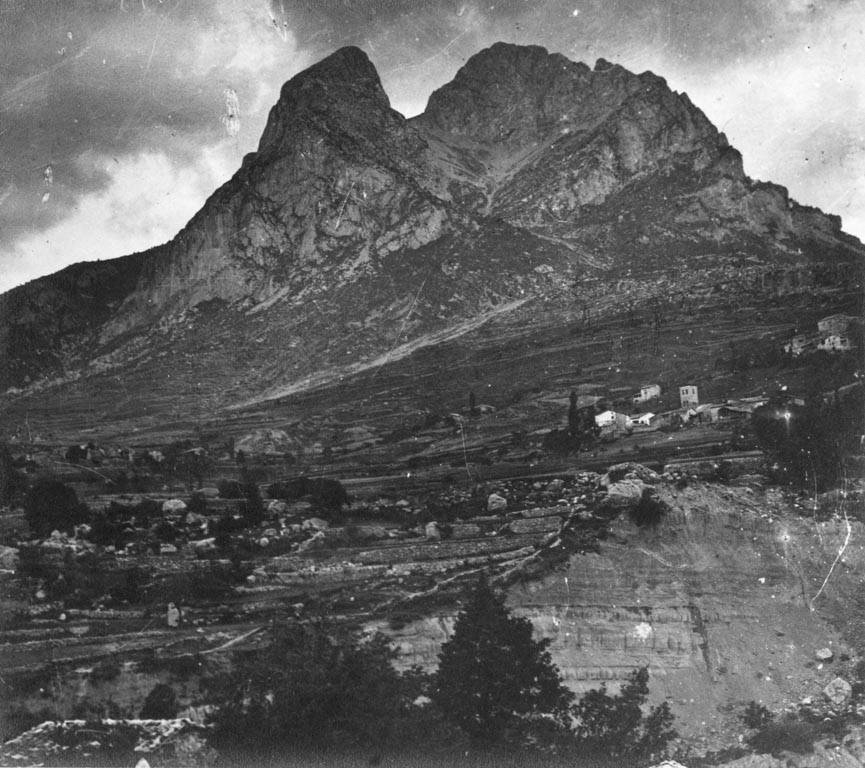
Early in the morning, as sunlight filters through the pines of the Berguedà comarca in Catalonia and the ground still holds the night’s damp, tourism in Saldes feels like a pause in the day. The path crunches underfoot and, between the tree trunks, the double outline of Pedraforca suddenly comes into view. From certain clearings the whole massif appears at once: its two peaks and the wide grey scree slope that drops towards the valley. On cloudy days the mountain darkens to a flat, almost matte tone, and mist clings to the forest as if reluctant to move on.
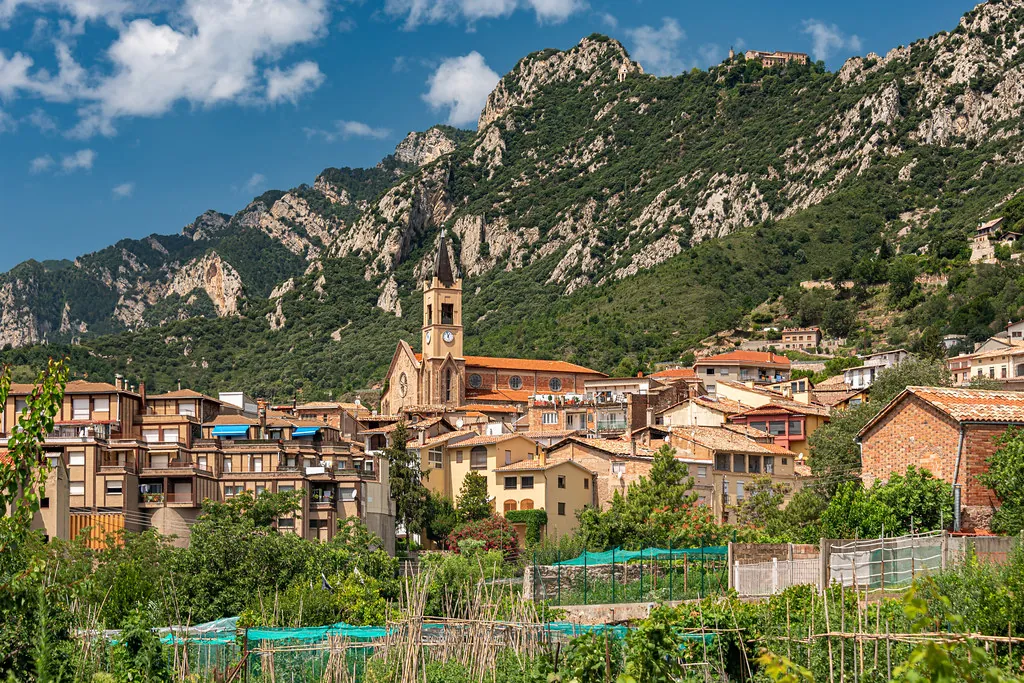
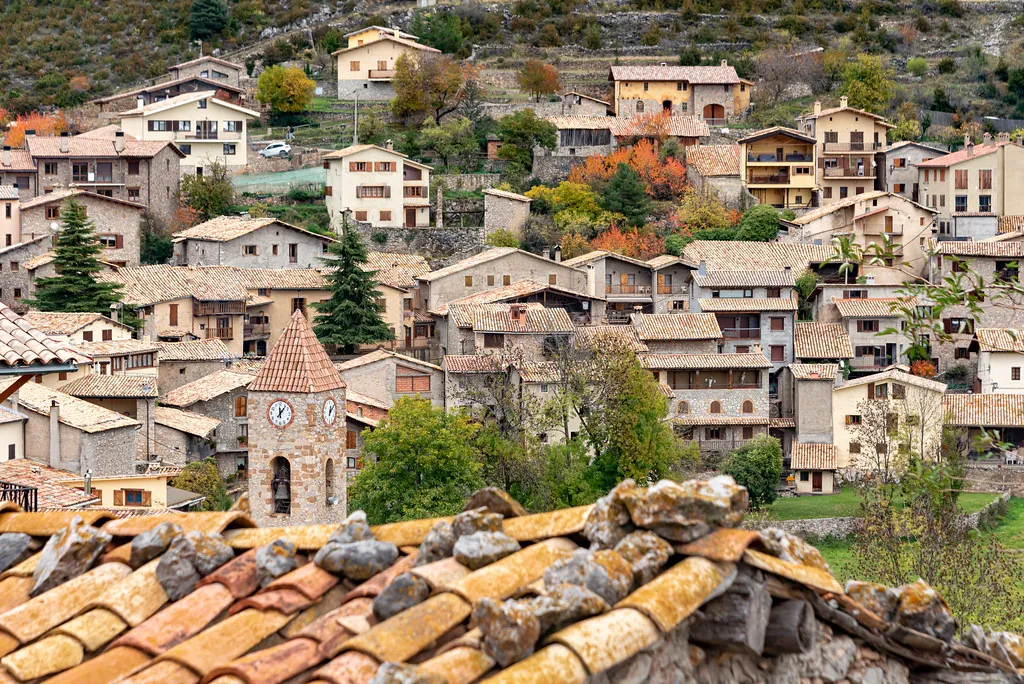
Saldes has around 300 inhabitants and lives in the shadow of that mountain. Many of its houses are built from dark stone and cluster without grand gestures around the church of Santa Maria. The church has Romanesque origins, although it has been altered over the centuries. Its simple bell tower rises above the rooftops and often provides the clearest sound during the quiet hours around midday.
The approach sets the mood. The road climbs steadily between pines and open meadows where sheep are often visible. Each bend alters the perspective of Pedraforca. At times it seems distant and sharply outlined; at others it looms close and imposing. The drive rewards patience, particularly at weekends in good weather, when many visitors arrive to walk in the area.
Watching Pedraforca from Different Angles
Pedraforca dominates the entire municipality. Its two peaks, separated by a central col, shift in character as the light changes. At dawn the rock often looks pale, almost silver. Later in the day shadows define the fissures and the broad scree slope that descends along one side.
One of the usual vantage points is near the sanctuary of Gresolet, set on a col more than a thousand metres above sea level. From there the valley opens wide and the massif stands directly ahead, unobstructed. In autumn, the contrast between the grey rock and the yellows of the beech forest of Gresolet is striking.
Within the village, the walk is short yet full of small details. Doorways display carved dates, some façades bear old coats of arms, and wooden balconies look out across the valley. There are no large squares or monumental buildings. Instead, Saldes is compact and self-contained, with everything only a few minutes apart on foot.
Paths Through Forest and Meadow
The area around Saldes is threaded with footpaths that slip into woodland or circle the lower slopes of Pedraforca. Reaching the summit is not essential to understand the landscape. Some routes cross high meadows, while others lead into dense pine forests where even at midday sunlight barely reaches the ground.
The ascent of Pedraforca is another matter. The climb via the scree slope requires mountain experience and good footwear. On busy days the loose stones can become uncomfortable because of the number of people tackling the same stretch. Those who plan to go up usually set off early.
The long-distance footpath GR‑107 also passes through the municipality. Known as the Camí dels Bons Homes, or Way of the Good Men, it follows in part the routes taken by Cathars who crossed southwards during the Middle Ages. Today it forms a multi-day itinerary linking villages in the Berguedà with others in the French Ariège. Some sections run through the forests that surround Saldes, tying the village to a broader historical and geographical route.
The landscape shifts markedly with the seasons. Spring brings small wildflowers scattered across the meadows and an intense green to the hillsides. Autumn changes the colour of the woods and draws mushroom hunters into the forest. During those months, anyone seeking a quieter walk benefits from setting out early.
The Rhythm of Santa Maria
The main festival, dedicated to Santa Maria, usually takes place towards the end of August. During those days the pace of the village changes. Music fills the square, traditional dances are performed, and families return to spend time here. It is not a large celebration, yet it has a strong local character shaped by neighbours and returning residents.
Outside the festival period, Saldes quickly settles back into its usual rhythm. Wind moves through the pines, an occasional car passes through on the way towards the mountain, and Pedraforca stands watch over the valley. Life here revolves around that silhouette.
As evening falls, the light lowers and the rock takes on an orange hue that lasts only a few minutes before fading. The change is brief and easy to miss. Staying a little longer allows the colour to deepen and then disappear, and the mountain returns to shadow. In Saldes, the day often seems to end the way it begins, with attention fixed on Pedraforca and the quiet presence it brings to the landscape.