Full Article
about Santa Maria de Merlès
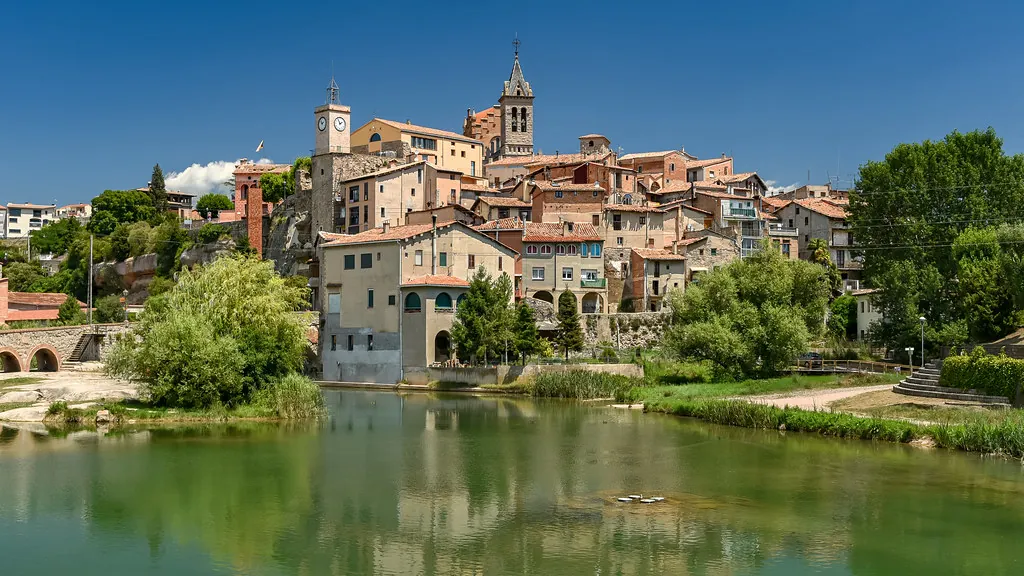
Scattered rural municipality along the Merlès stream
Ocultar artículo Leer artículo completo
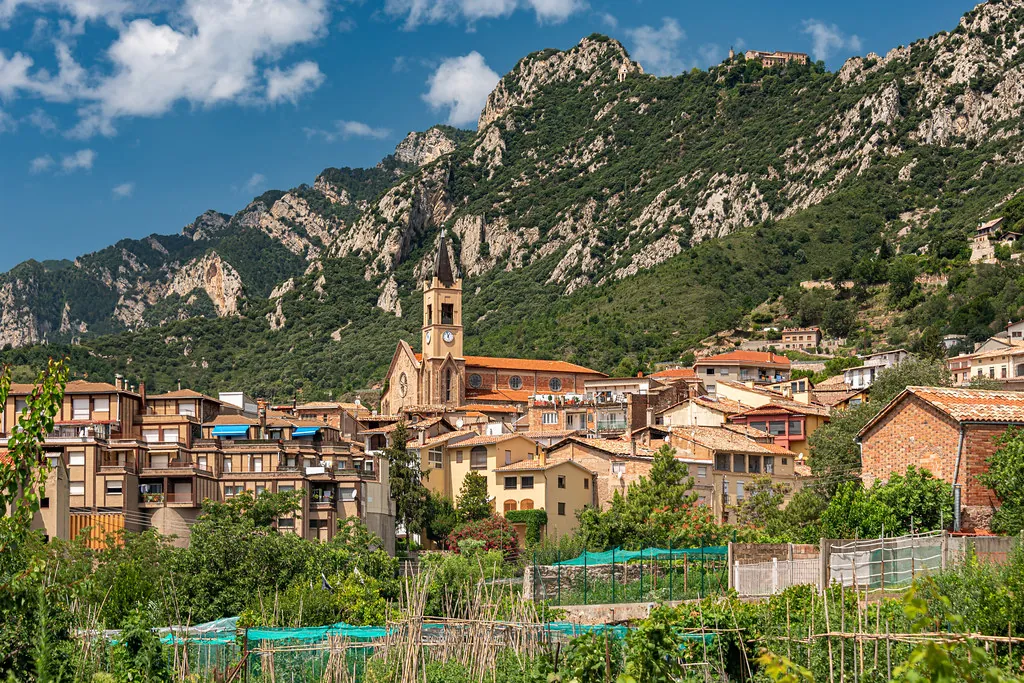
The church bell strikes noon, yet only a single tractor engine replies. At 532 metres above sea-level, Santa Maria de Merlès sits high enough for the air to feel thinner, cleaner, and just a shade cooler than Barcelona’s plain ninety minutes south. Scattered farmhouses outnumber permanent residents by roughly five to one; the council head-count is 178, and even that figure swells when summer cousins drive up from Manresa. In practice the “village” is a web of stone roofs tucked among oak and pine, threaded together by the Merlès river and a tangle of farm tracks that turn to ochre paste after every storm.
Walking without Way-markers
There are no ticket booths, audio guides or souvenir stalls. What you get instead is a lattice of medieval hoof-paths that once linked mills, threshing floors and market gardens. Most trails are graded “soft-mountain”: expect 200–300 m of ascent over 8–10 km, nothing that demands poles yet enough to raise a sweat when the sun ricochets off the limestone. Spring brings a brief, brilliant window—orchid blooms in April, shade still thin enough to let views slip through the branches—while late-October sets the valley alight with chestnut bronze and poplar gold. After heavy rain the clay sections become skating rinks; if the forecast mentions a dana (a cut-off low that can dump 100 mm in a afternoon) swap boots for tyres and explore by car instead.
One sensible circuit starts at the Romanesque parish church (locked unless you beg the key off the mayor’s office) and follows the sign-posted “Ruta de les Masies” west along the river. You’ll pass Masia Escrigas, a fifteenth-century manor now running three guest rooms and a cobalt plunge pool that looks absurdly inviting against the stone. Stick to the track for another forty minutes and you reach an iron footbridge where the water pools deeply enough for a swim—though the bottom is slippery river weed and the farmer on the opposite bank charges €3 for parking honesty-box style. Total distance: 7 km. Total outlay: the price of a London coffee.
A Bigger Back Garden
Santa Maria sits on the seam between Berguedà and Lluçanès comarcas, which means day-trips in every direction. Twenty-five minutes north-east, the fortified town of Gironella crowns a basalt cliff and has a supermarket that stays open through siesta—vital if you forgot lentils. Thirty minutes west, the Cadí-Moixeró Natural Park throws up proper 1,000-metre walls and griffon vultures that circle like paper planes. Even closer, the quirky ballooning centre of Igualada offers Sunday brunch flights over the plain; prices start at €165 for 75 minutes, cloud-cover permitting.
Back at base, the real entertainment is logistical. Phone reception flickers between one bar and none, so download an offline map the night before. There is no cash machine: the nearest hole-in-the-wall lives inside a pharmacy in Gironella and limits withdrawals to €150. Bars follow the classic Catalan timetable—open 7 a.m. for cafe amb llet, bolt the door at 11 a.m., reopen 6 p.m. until 9 p.m.—so if you want a mid-hike sandwich, carry it.
What Passes for a Social Scene
August’s Festa Major turns the silent lanes into a low-key house party. A foam cannon rigged in the school playground substitutes for the seaside; elderly residents dance sardanes under fairy-lights strung between plane trees; and a communal paella feeds anyone who buys a €10 ticket before noon. Visitors are welcomed but not fussed over—think village fête in the Cotswolds rather than Benidorm fiesta. Come the last firework, usually around 1 a.m., the valley slips back into hush and the only soundtrack is the river and the dogs arguing across the hillsides.
For the remaining eleven months, gastronomy is measured in kilometres, not Michelin stars. The district restaurant list consists of two farm-kitchens licensed to serve paying guests and a pizzeria attached to a rural petrol station. Instead, stock up in the Wednesday market at Puig-reig (ten minutes by car) and cook. Local trout from the river tastes closer to English brown trout than oily Mediterranean fish; dust with smoked paprika, flash-fry in local arbequina olive oil and you have supper for four at roughly €6 a head. Pair it with a young red from the Berguedà cooperative—light enough to drink chilled, priced like a decent Rioja at £9 in the cellar door.
Winter Rules
Elevation matters when the tramuntana wind sweeps down from the Pyrenees. Snow is rare at village level but not impossible; in February 2021 18 cm fell overnight, cutting power for three days and making the access road a toboggan run. If you fancy a winter writing retreat, book somewhere with a fireplace and accept that you may be digging the car out. Conversely, July and August can nudge 34 °C; the river pools fill with shrieking teenagers from Berga and every mosquito for miles zeroes in on bare ankles. The sweet spot—late April to mid-June or mid-September to early November—delivers 20 °C afternoons, cool sheets at night and negligible rainfall.
Getting Here, Getting Out
Barcelona El Prat is the obvious gateway; Ryanair, Jet2 and Vueling all fly UK routes year-round. Pick up a hire car at Terminal 1, point it northwest on the A-2, then peel off at Manresa onto the C-25 and finally the C-1411 via Navàs. The last 12 km wriggle uphill through holm-oak forest; allow ninety minutes in total, longer if your sat-nav still thinks the variant is under construction. There is a twice-daily bus from Barcelona’s Estació del Nord to Gironella, but the connecting village taxi only runs on schooldays and the driver refuses luggage bigger than a Ryanair cabin bag. In short: if you can’t face driving, choose a different holiday.
Leave time for the return, too. The C-1411 is single-carriageway and slow; Sunday evening traffic back to Barcelona can add forty minutes of nose-to-tail behind lorries laden with timber. Better to book a late flight, stop for a leisurely menú del dia in Manresa (three courses, wine, water and cheeky carajillo coffee, €18) and roll into the airport relaxed rather than rattled.
Worth It?
Santa Maria de Merlès offers silence, scented air and the occasional electric-green lizard on a warm stone. It does not supply room service, Uber or nightlife. If that sounds like deprivation, stay on the coast. If it sounds like breathing space, pack walking boots, download that offline map and set the out-of-office reply. The mountain will do the rest.