Full Article
about Vallcebre
Mountain village with major paleontological sites and landscapes
Hide article Read full article
Life Above 1,100 Metres
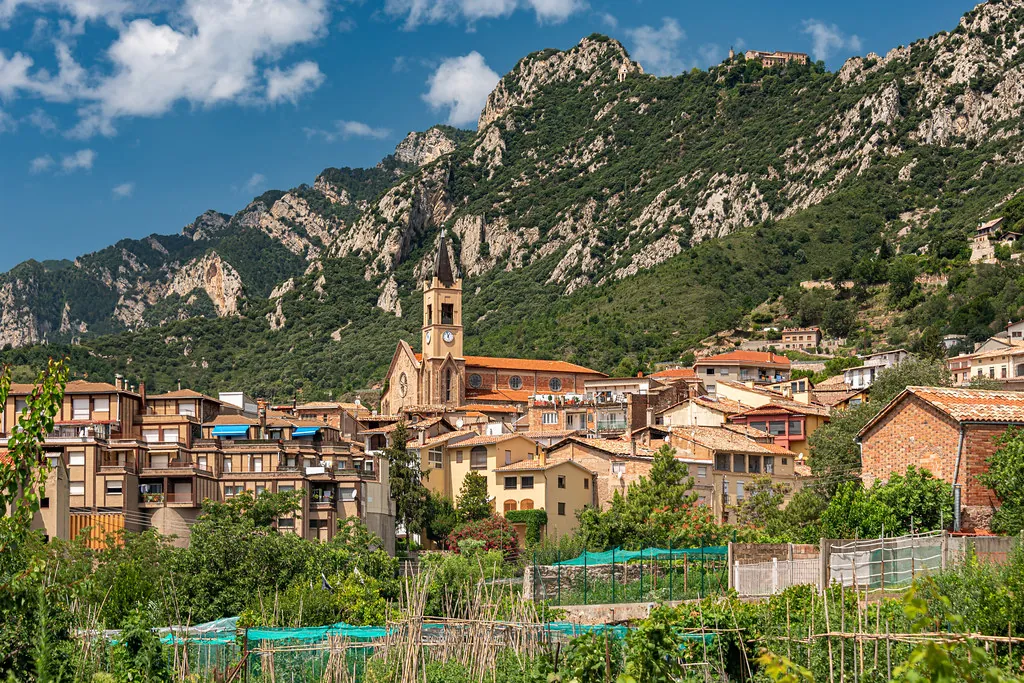
In the shadow of the Serra del Cadí, on an open plateau where the wind moves freely across the land, lies Vallcebre. This small municipality in the Berguedà region of Catalonia sits at over 1,100 metres above sea level and is home to only a few hundred residents, scattered between a compact village centre and isolated farmhouses known as masías.
Silence here is not marketed or curated. It is simply part of daily life. Early in the morning, the main sound is often the engine of a car heading down towards the rest of the comarca, the local county area. In the distance, cowbells carry across the meadows. There is no sense of rush, no steady flow of visitors. The rhythm is set by farming and the seasons.
The landscape shifts throughout the year, though what stands out most is the changing light. In spring, green spreads quickly over the fields and wildflowers appear along the edges of dirt tracks. Summer brings strong sun, yet the air up here tends to feel cooler than down in the valley below. Autumn sometimes settles in with low-lying mist and muted tones across the woods. In winter, snow arrives from time to time and turns the plateau into a wide, white expanse where sound seems to soften.
There are no headline attractions to tick off. A walk along an unpaved path, a glance at a dry-stone wall, smoke rising from a chimney at dusk, these small details shape the experience of Vallcebre more than any landmark.
What defines the place is its scale. A handful of houses, open fields, scattered masías and working pastureland. This is a landscape shaped over centuries by livestock farming and agriculture. It is not a backdrop arranged for visitors, but a setting that continues to function as it always has.
The Village and Its Surroundings
At the centre of the small settlement stands the church of Sant Martí. This simple Romanesque building, typical of medieval rural Catalonia, features a modest bell gable that stands out against the sky on clear days. Around it, houses cluster together without obvious order. Walking through the village is less about following a route and more about noticing what is around you: a vegetable garden pressed against a stone wall, logs stacked in preparation for winter, the outline of an old threshing floor still visible on the ground.
A short distance from the main cluster of houses is the hermitage of Sant Julià de Pedra. The building is small and set in fairly open terrain, with the land sloping gently down towards the valley. It can be reached by car via local rural tracks, or on foot across meadows and small patches of woodland. Anyone choosing to walk should keep an eye on the time. Once the sun drops behind the Cadí range, the temperature falls quickly, even outside the winter months.
The wider municipal area is dotted with masías. Many are private homes, still inhabited or used for livestock. Their dark stone walls and sloping roofs appear unexpectedly as you round a bend in the track. Fenced meadows and small shelters for animals often sit nearby. These farmhouses have been part of the landscape for generations and remain central to how the land is used.
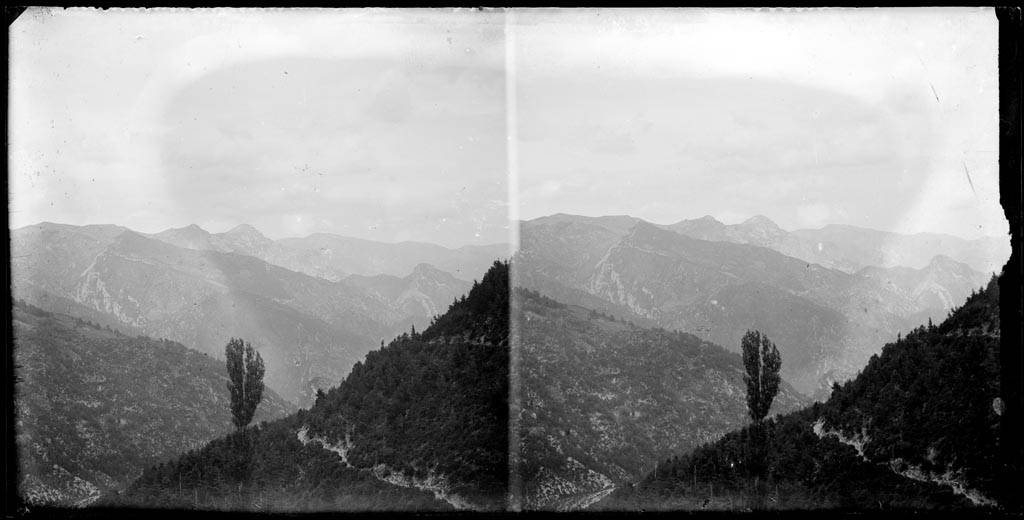
To the north rises the Serra del Cadí, dominating the horizon. From Vallcebre, it appears as a long wall of pale rock that changes colour depending on the hour, light grey in the morning and warmer in tone as the sun lowers. The range shapes both the skyline and the local climate. When the wind blows from the north, it is clearly felt on the plateau.
Rural Paths and Open Views
Several rural tracks leave Vallcebre, linking farmhouses, fields and small ravines. These are not dramatic mountain trails, but they are quiet. It is common to walk for some time without meeting anyone, apart from cattle grazing behind fences. If you pass through gates, leave them as you find them. In this area livestock move freely between enclosed plots, and small actions matter.
Some routes head in the direction of the Pedraforca massif. On clear days, its distinctive silhouette stands out sharply. Although Pedraforca itself lies outside Vallcebre’s municipal boundaries, the surrounding paths offer views of the mountain from angles that tend to be less busy than the main access points.
Forest tracks in the area are also used for mountain biking. The gradients are gentle at first, although certain climbs can feel long, especially if the ground is loose. Setting out early is often sensible. There is usually less agricultural or forestry traffic in the morning, and the light across the fields is cleaner.
The terrain is varied without being extreme. Meadows give way to small wooded patches, tracks dip into shallow ravines and rise again towards open ground. The sense is of space rather than spectacle.
A Working Landscape
Tourist infrastructure in Vallcebre is limited, and that is part of its character. For meals or local produce, people generally head to other villages in the Berguedà. Across the comarca, cured meats, cheeses and beef are still produced from livestock raised in these same mountains. Food here reflects the agricultural base of the area, even if visitors may need to travel a short distance to find it.
In autumn, nearby woods attract people searching for wild mushrooms, a popular seasonal activity in many parts of Catalonia. Anyone interested in this should check local regulations and current conditions before setting out. The forest is both used and cared for, and gathering is subject to local norms.
Vallcebre does not revolve around events or high-season buzz. Its appeal lies in continuity. Fields remain in use, masías continue to operate, and the Serra del Cadí anchors the horizon day after day. Weather and light alter the mood, but the structure of the place stays much the same.
For travellers looking for monuments or a busy programme, this plateau may feel sparse. For those content with open space, shifting light and the steady presence of livestock in the fields, Vallcebre offers something quieter. The experience is built from small observations rather than grand sights, from the sound of distant bells to the outline of rock against the sky.
Up here, at over 1,100 metres, the ordinary details carry weight. Silence is not staged. It is simply how things are.