Full Article
about Vilada
Tourist village near the Baells reservoir, perfect for summer.
Hide article Read full article
Morning Light in the Llobregat Valley
Early in the day, before a single car is heard on the road, Vilada sits under a soft grey light that settles over tiled roofs and stone walls. The air often carries the damp scent of forest and firewood, particularly in the colder months. From the small rises around the village, the course of the Llobregat can be traced as it narrows between pine woods and patches of oak. Most constant of all is the wind moving through the treetops.
Vilada lies in the comarca of Berguedà, in inland Catalonia, at around 750 metres above sea level. It has just over four hundred inhabitants. Rather than forming a compact settlement, it is a dispersed municipality. Alongside the main cluster of houses, there are masías, traditional rural farmhouses, scattered across the slopes. Old paths still link fields, vegetable plots and woodland.
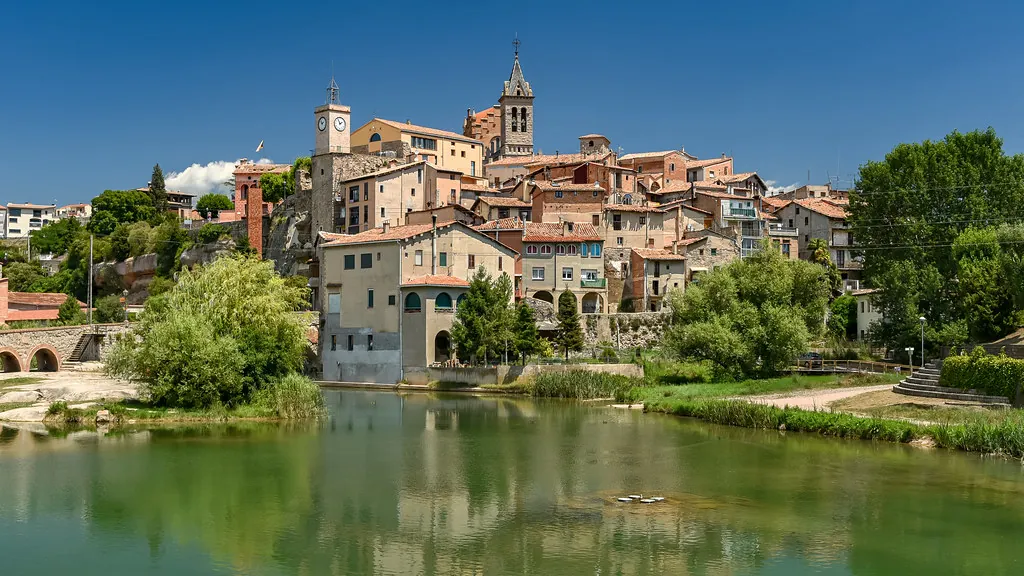
The Llobregat flows nearby. Decades ago it shaped daily life more directly. Today it no longer dictates the rhythm of the village, yet it remains present in the landscape and in the walking routes that follow its banks.
Winter brings its own atmosphere. When the air is still, smoke from chimneys hangs between the houses. Snow falls some years, and when it does the shadier areas can hold onto it for several days. Spring shifts the palette completely. Greens intensify along the riverbanks and in the meadows that open between wooded areas.
The Village Centre and Sant Martí
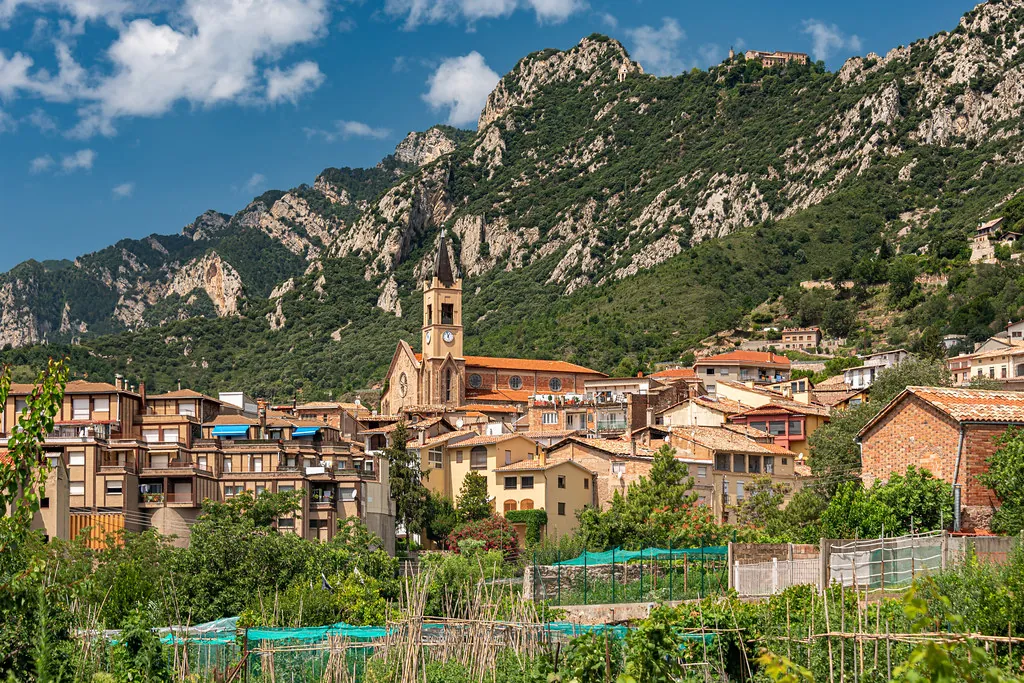
The centre of Vilada is small and does not follow an obvious layout. Houses gather along a handful of short streets and around the parish church of Sant Martí. The church retains elements of Romanesque origin, although it has undergone several alterations over time.
Standing near Sant Martí, the structure of the village becomes clear. Stone houses with sloping roofs cluster close together, and beyond them the forest closes in almost immediately. Within minutes on foot, the built-up area gives way to forest tracks and footpaths that either descend towards the river or climb towards nearby hills.
There is no grand square or monumental avenue. The scale remains domestic and practical. Stone, timber and tile dominate the view, with the surrounding woodland never far from sight. The transition from village to countryside is abrupt in the best sense. A short walk is enough to leave streets behind and step onto earth and gravel.
Walking the Forests of Berguedà
The surroundings of Vilada are threaded with paths. Some follow former routes between masías, reminders of a time when moving on foot or by animal was part of daily routine. Others are forest tracks opened for woodland management. Pine woods are common, mixed with oak in the slightly damper zones.
At times the trees thin out and clearings appear. From these points, higher mountains of the Berguedà come into view. On clear days, silhouettes such as the Cadí or Pedraforca can be recognised in the distance. Yet attention here often settles on nearer details: a moss-covered stone wall, an old irrigation channel, a sloping meadow where tall grass shifts with the wind.
Anyone planning to link several paths would be wise to carry a map or a downloaded track. Not every junction is signposted, and some tracks branch more than they appear to on a map. The network is extensive and, in places, loosely marked.
Walking here is less about reaching a specific landmark and more about moving through a varied landscape of forest, river margins and open ground. The soundscape changes subtly from one stretch to another: wind in the canopy, the faint rush of water, the crunch of gravel underfoot.
Mountain Biking on Forest Tracks
The forest tracks around Vilada are also used by mountain bikers. These are not gentle, flat routes. Certain sections have notable gradients and uneven surfaces, with loose stones in places.
Cyclists who come here generally have some experience and a bike suited to off-road terrain. For relaxed rides with very young children, the ground can feel demanding. The appeal lies in the mix of steady climbs, rougher patches and longer stretches through woodland.
As with walking, orientation matters. The number of junctions and branching tracks can make route planning important, particularly for those unfamiliar with the area.
Autumn and the Mushroom Season
With the autumn rains, many of the surrounding woods attract mushroom foragers. Níscalos, known in Catalonia as rovellons, and other species can appear in good numbers in some years, though much depends on the season’s conditions.
It is important to pay attention to property boundaries and to signs indicating restricted access. Many areas belong to private estates or are part of forestry operations. The same tracks used by walkers and cyclists may also serve woodland work.
In years when mushrooms are plentiful, setting out early makes for a calmer walk. By mid-morning, some access points and tracks can see a noticeable increase in activity. The search for fungi is a well-established autumn habit in this part of Catalonia, and the forests reflect that seasonal rhythm.
When to Approach Vilada
Vilada changes markedly with the seasons. In summer, the forest provides shade and the river brings a measure of coolness, although the central hours of the day can still be hot. Autumn introduces more varied colours in the woods, and weekdays are often quiet.
Fine weekends bring more movement, with visitors arriving from the Barcelona area and other parts of the Berguedà. Those looking for greater silence may prefer to arrive early or choose a weekday.
Across the year, the character of Vilada remains tied to its setting. Stone houses, sloping roofs and surrounding forest define its outline. The Llobregat continues to trace its course nearby, sometimes glimpsed from higher ground, sometimes heard from below. What changes is the light, the temperature and the pace of those who pass through.
Vilada does not present itself through grand monuments or busy streets. Its interest lies in the relationship between village and woodland, between river and hillside. A short walk is enough to understand that balance, and to see how closely built space and forest are woven together in this corner of the Berguedà.