Full Article
about Cabrils
Gastronomic town in Maresme, set in an inland valley near the coast.
Hide article Read full article
At nine in the morning, when the sun has not yet burned away the Maresme haze, the pines around Can Vehils smell of warm resin and fresh bread drifting out of a kitchen window. From the Camí de Sant Cristòfol there is the steady murmur of the C‑32 motorway, but also that brief stillness villages keep before the day properly begins.
Tourism in Cabrils often starts with that contrast. The motorway runs close by and, a little higher up the slope, the small hermitage of Sant Cristòfol recalls a time when this was little more than a handful of masías, traditional Catalan farmhouses, surrounded by market gardens.
Cabrils sits in the Maresme region of Catalonia, between the coast and the low hills that separate it from the Vallès inland. The sea is near, though not always visible, and the mountains are close enough to shape the streets, which tilt and climb rather than spread out flat.
A village that grew ninefold
At the beginning of the 20th century Cabrils had around eight hundred inhabitants. Today it comfortably exceeds seven thousand. The growth came quickly, particularly from the end of the last century, and that expansion is still visible in the mix of newer residential developments and a historic core that keeps older habits and buildings intact.
A walk down Carrer Major reveals some of those traces. The tower of Can Amat still shows its stone machicolation and raised entrance, features common in fortified houses in this area, built for less peaceful times. A short distance away stands the masía of Can Vehils, also fortified and now used for something very different from its original purpose. Its thick walls remain, the stone turned an ochre tone after centuries of damp Maresme winters.
The parish church of the Santa Creu began construction in the early 18th century and took decades to complete, which was fairly typical for small village churches. Its bell tower looks out over the valley where Cabrils potatoes were once widely cultivated. This local variety is still remembered by older residents with a certain nostalgia. There are still market gardens on the edges of the village, though far fewer than in the past.
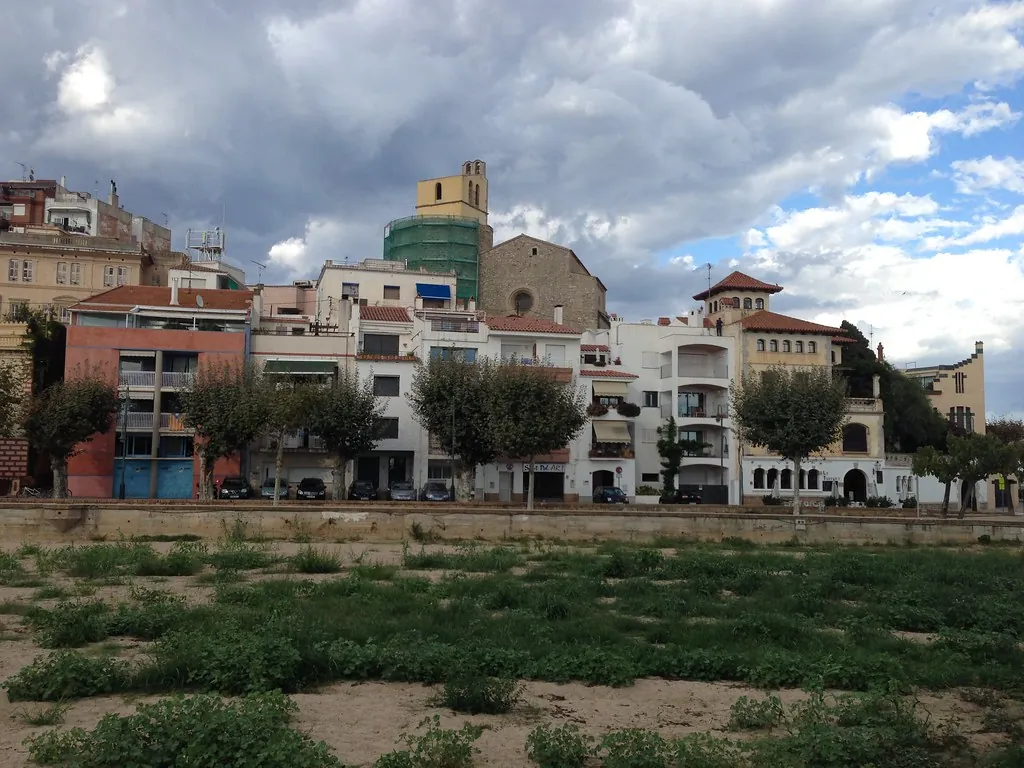
Cabrils has expanded, but the older centre retains a scale that feels closer to its rural origins. Streets narrow as they approach the Plaça de la Vila, façades stand close together, and the rhythm of daily life revolves more around neighbours than visitors.
Three crosses and a sea you cannot quite see
The route known as Les Tres Creus usually starts in the Plaça de la Vila and quickly enters the pine woods. It is not long, just over four kilometres, but there are climbs that make themselves felt. The path crosses the small mountain range that separates Cabrils from the Vallès, passing through holm oaks and Aleppo pines, over ground carpeted with dry needles that crunch underfoot.
The first to appear is usually the Creu de Terme, a wayside cross that once marked one of the old boundaries of the municipality. On a clear day there can be a faint saline scent in the air. The Mediterranean is relatively close, even if it cannot be seen from many points along the route.
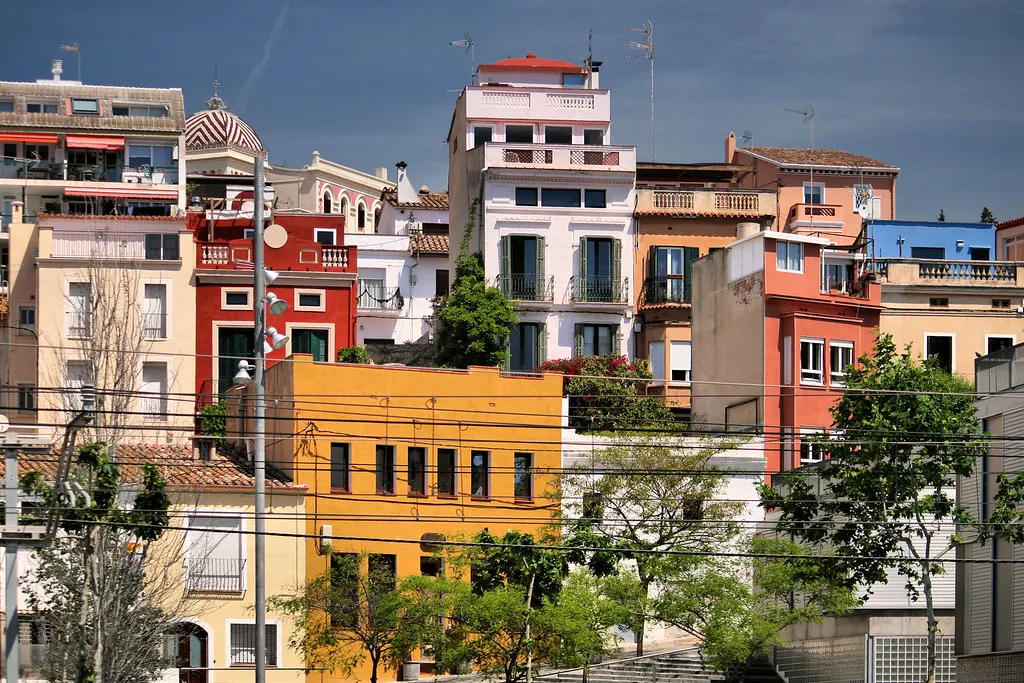
Higher up stands the Creu de Montcabrer. From here the village is clearly laid out below: reddish roofs, sloping streets and, scattered here and there, the swimming pools of houses reflecting light like small mirrors. The third cross, the Creu de l’Abella, is more discreet and somewhat hidden among the pines.
During the week the path is usually quiet. At weekends there are more cyclists and walkers coming up from neighbouring towns. Even then, it rarely feels crowded, and the dominant sounds remain wind in the trees and the muted echo of traffic from below.
The walk makes clear how close together different landscapes are here. Within a short distance, there is motorway, woodland, cultivated land and residential streets. Cabrils exists in the middle of all of them.
The season of cocas and butifarra
In the centre of the village there are still bakeries and bars where life revolves around the table rather than tourism. By mid‑morning, the smell of sweet dough reaches the street as trays of brioche and cocas are brought out.
A coca is a traditional Catalan flatbread that can be sweet or savoury. In Cabrils, during Easter, a simple and airy mona is prepared with a boiled egg set in the centre. It is quite different from the more elaborate versions found in larger cities. The emphasis here is on a light sponge and the symbolism of the egg rather than decoration.
For much of the year it is easy to find coca de recapte. This is a savoury version with a bread base topped with escalivada, a mix of roasted vegetables usually prepared that same morning, and sometimes butifarra, a Catalan sausage. It is food tied to the agricultural rhythms that once defined the village.
Coca de Sant Joan appears in shop windows on the afternoon of 23 June, the eve of the feast of Sant Joan, which marks the summer solstice in Catalonia. Topped with toasted pine nuts and either custard or candied fruit, depending on the baker, it is closely associated with the evening’s celebrations. In many places only small batches are made. When they are sold out, there is no second round in the early hours.
These traditions are not presented as attractions. They are part of everyday life, continuing alongside the village’s expansion and its proximity to Barcelona and the coast.
When to go, and what to bear in mind
Spring is when the landscape around Cabrils makes the most sense. Rosemary scents the air, the earth is still damp, and the last active market gardens on the village margins are easier to spot. September also has a good rhythm, with a livelier atmosphere in the streets during local festivals.
In August, particularly in the afternoon, the heat can become trapped between the streets, and walking uphill feels heavier than usual. The layout of the old quarter does not help: streets are narrow and parking near the Plaça de la Vila is not always straightforward. Those arriving by car may find it easier to leave it in the higher areas or near the cemetery and walk down into the centre.
As evening falls and the light turns more golden, shutters begin to close and Cabrils recovers something of its earlier pace. Not the pace of eight hundred inhabitants from a century ago, but a brief moment of near silence in which the scent of pine once again outweighs the sound of the motorway.
In that balance between growth and memory, woodland and asphalt, Cabrils finds its character.