Full Article
about Ger
Sunny Cerdanya town overlooking the valley; standout cuisine and natural setting
Hide article Read full article
A Small Village on the Cerdanya Plain
If you are planning to spend a little time in Ger, sort out the car first. The village centre is small and the streets were not designed for much traffic. It is usually easier to leave the car in the upper part of the village and walk down. You can see the essentials in just over half an hour.
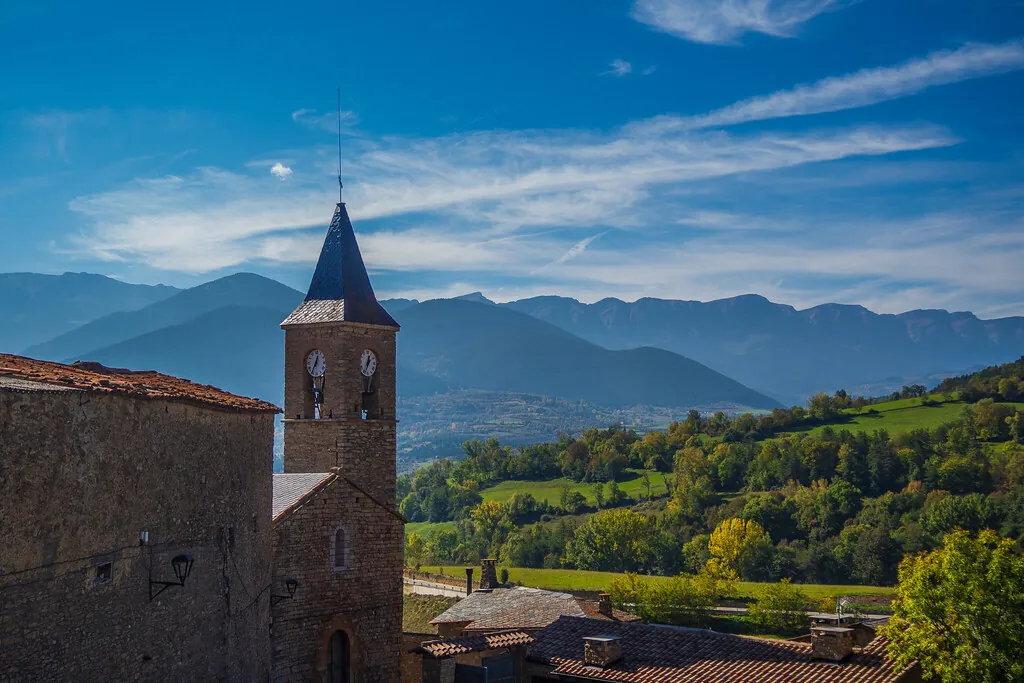
Ger sits in the middle of the Cerdanya plain, a broad valley in Catalonia close to the French border. From the higher streets the whole valley opens out. To the south rises the Cadí‑Moixeró range. To the north, the mountains mark the frontier with France. The setting is wide and open rather than dramatic, and on clear days the sense of space is unmistakable.
The village does not try to draw attention to itself. There are stone houses, dark roofs and little else in the way of ornament. In summer there is more movement than you might expect for a place with around 500 inhabitants, yet it still feels like a lived‑in rural community rather than a resort.
Around Sant Sadurní
Life in Ger revolves around the church of Sant Sadurní. It is Romanesque in origin, although later alterations have changed parts of the structure. The bell tower is narrow and visible from several points in the village, acting as a simple landmark as you move through the streets. The church is still used for celebrations linked to the local calendar.
Beyond the church, the old centre is straightforward. Short streets branch off in different directions. Some houses have arched doorways and old windows, and there is nothing monumental in scale. The interest lies in the details. Stone inscriptions and heavy wooden doors reveal more about the village’s past than any explanatory panel could.
Ger retains a clearly rural structure. Open meadows spread out around the built area. There are a few scattered masías, traditional country houses typical of this part of Catalonia, along with small mixed woods of pine and other species. There is no staged tourist setting. People live and work here, and that shapes the atmosphere.
Walking Out into the Valley
Footpaths begin almost without warning at the edge of the last houses. Many are rural tracks used by farmers and local residents. Signposting is not always clear, so carrying a map or GPS is advisable.
Most routes are gentle because the valley floor is fairly flat. Even so, conditions can make them less straightforward than they look on paper. After rain, some tracks turn muddy. In winter, icy stretches are common. Short distances can still feel awkward underfoot.
From certain points you get a good view of the outline of the Cadí and the mountains of Capcir towards the border. On clear days the landscape opens up considerably, with long views across fields and towards the surrounding ranges.
Walking here is less about reaching a specific landmark and more about moving through an agricultural landscape that continues to function as it always has. The scale is manageable, and it is easy to combine a brief stroll with time in the village itself.
Cycling and Roads Through La Cerdanya
Ger works better as a stopping point than as a base for a long stay. Several secondary roads start nearby and are popular with cyclists. Some connect quickly with mountain passes in the area, making the village a convenient place to pass through on longer rides.
The valley wind can complicate matters. When it blows, riding across the plain becomes more demanding than the map suggests, especially on the return leg. The apparent flatness does not always translate into an easy journey.
There are also forest tracks linking Ger with other nearby villages in La Cerdanya. Many of these can be covered in short outings, whether on foot or by bike. As with the walking routes, surfaces vary depending on the weather.
Winter Snow and Local Traditions
When snow arrives, activity across the valley changes. Ski resorts in the area draw significant numbers of visitors, and some choose to stay in villages such as Ger for a quieter night. The village lies a few kilometres from several well‑known ski areas, making it a practical option for those who prefer to sleep away from busier resort centres.
Despite this seasonal movement, Ger keeps its own rhythm. The main traditional celebrations are held around Sant Sadurní towards the end of October, although the exact dates can vary from year to year. These are local festivities, organised with residents in mind rather than as a spectacle for visitors.
Outside peak ski periods and the summer months, life returns to a steady pace. The open plain, the agricultural plots and the surrounding mountains define daily routines more than tourism does.
A Brief Pause on the Way
Ger is quick to see. If you are travelling through La Cerdanya, it works well as a place to stop, stretch your legs and look out across the valley. It is not a destination for grand monuments or a large historic quarter.
Park at the top, wander down through the streets around Sant Sadurní, and take in the views towards the Cadí‑Moixeró and the French border. Then continue along the valley. In the end, that broader landscape is the real draw, and Ger sits quietly at its centre.