Full Article
about Llívia
Spanish enclave surrounded by French territory; known for its historic pharmacy
Ocultar artículo Leer artículo completo
A Passport in Your Pocket, Just in Case
The road signs switch from French to Catalan before you've even noticed the border. One moment you're winding through the French hamlet of Saillagouse, the next you're climbing towards a stone gateway that reads "Benvinguts a Llívia". No customs, no barrier, just a quiet assertion that you're now in Spain—technically, legally, and rather confusingly.
This is Europe at its most eccentric. Llívia sits 1,223 metres up in the Pyrenees, entirely surrounded by French territory after a quirk of the 1659 Treaty of the Pyrenees. The treaty handed French villages to France, but Llívia was classed as a "villa" (a medieval town), not a village. That bureaucratic footnote kept it Spanish, creating a 13-square-kilometre enclave accessible only by a 1.6-kilometre corridor of French road. Your sat-nav will have an identity crisis.
Where Roman Stones Meet Ski Lift Timetables
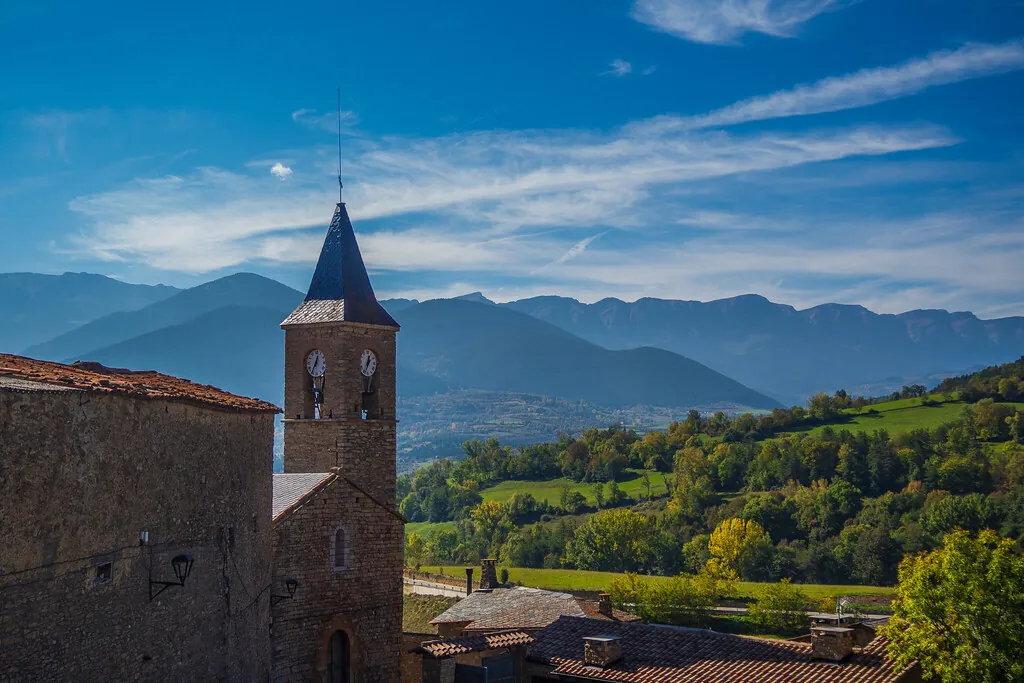
Llívia's origins stretch back to the Roman settlement of Iulia Lybica, once the capital of Cerdanya. Those ancient foundations still shape the place: the old centre climbs a defensive hill, stone houses stamped with 17th-century dates, and a fortified church whose bell tower doubled as a lookout against French raids. History here isn't a museum piece—it's the reason the bakery on Carrer Major opens onto a Catalan street, not a French one.
Altitude dictates the rhythm of life. Winters arrive early; snow can cut the access road for hours, though graders usually clear it by breakfast. The air thins enough to make uphill walks feel like mild exercise, and summer nights drop to 12°C even in August—pack a fleece alongside the suncream. British skiers have twigged that Llívia gives them the best of both currencies: sleep in cheaper Spain, drive 20 minutes to French pistes at Les Angles or Font-Romeu. The reverse works too—Parisians pop over for tapas and lower restaurant bills.
A Pharmacy Older than Shakespeare, and Other Discoveries
The Museu Municipal hides one of Europe's oldest pharmacies: the Esteve chemist, founded in the fifteenth century and frozen in time with hand-labelled jars, ceramic ointment pots and prescriptions written in Latin. Entry costs €4 and takes half an hour—long enough to wonder how many feverish shepherds were dosed here while Shakespeare was still writing sonnets.
Above the museum, the Iglesia de Nuestra Señora de los Ángeles squats at the summit. Inside, baroque altarpieces gleam dimly; outside, the stone terrace delivers a 180-degree sweep across the Cerdanya basin, hay meadows stitched with stone walls and, on clear days, the snow-capped Canigó massif on the French side. Locals claim you can spot cowbells tinkling two kilometres away when the wind drops.
Wander downhill and lanes narrow to shoulder width. House doors open straight onto the street; grandparents perch on plastic chairs, gossiping in Catalan. Peek into Pati Palau, a medieval courtyard now used for summer concerts—acoustics good enough that even a hesitant school recorder group sounds respectable. The single surviving tower of the old walls, Torre Bernat de So, props up somebody's kitchen extension. Conservation here is pragmatic, not precious.
What to Eat When You're Not Sure Which Country You're In
Catalan cooking dominates, but the border sneaks in French flour and etiquette. Breakfast at Can Ventura means pa amb tomàquet—toast rubbed with tomato, garlic and olive oil—served on proper china while the owner discusses yesterday's rugby (French championship, Catalan players). Midday menus hover round €14 for three courses: trinxat, a hearty cabbage-potato-bacon cake that tastes like Pyrenean bubble-and-squeak, followed by river trout when the season allows. Adventurous? Order half a portion of cargols a la llauna—roast snails that arrive sizzling with garlic and herb butter. Texture resembles mushrooms, honest.
Evening options shrink outside high season. Hotel Esquirol stays open year-round; its dining room does a respectable civet de porc (wild-boar stew) and stocks a Priorat red that justifies the €24 price tag. If everything's shut, the SuperU in Bourg-Madame (three kilometres back into France) sells baguettes, Spanish jamón and English cheddar—Brexit souvenir, anyone?
Walking, Skiing, or Simply Watching the Weather Travel
Llívia sits on the GR-10 footpath, so you can stride south towards Spanish peaks or north into France without showing ID. An easy 45-minute loop heads past the Roman archaeological site (a few low walls, informative panel, free) then drops through meadows where cows wear the traditional Cerdanya cowbells—tuned to different pitches so farmers can locate them in fog. Serious hikers carry on to Puig de Pericosa (2,670 m), a six-hour round trip with 1,400 m of ascent; start early to dodge afternoon storms.
Snow transforms the place. The small Nordic ski track at Llívia Nordic starts 500 metres from the church, €15 for a day pass. Downhill addicts drive 15 minutes to Masella or La Molina—quiet, family-friendly resorts where a day lift pass costs €42, half the price of the big French stations. Come April, meltwater roars down the roadside gullies and cyclists appear, puffing up the 9% gradient from Puigcerdà, the nearest Spanish railhead 6 kilometres away.
Practicalities Your Phone Won't Tell You
No one stamps passports, but French police occasionally set up spot-checks on the access road—keep documents handy. Roaming gets tricksy: standing outside the pharmacy you may latch onto a French mast and pay EU rates instead of Spanish. Handily, the pharmacy sells SIM cards if bill shock bites.
Cash remains king. The only ATM (Caixa) sits beside the tourist office and empties at weekends; bring euros or use the Credit Agricole back in France. Sunday and Monday several restaurants close; plan a supermarket raid on Saturday evening. If you're rail-based, the French stop is Gare de Bourg-Madame; Spanish trains terminate at Puigcerdà. Both are 10 minutes by taxi, but pre-book—there's no rank.
Parking is straightforward: a free municipal car park at the entrance holds 80 spaces; campervans fit but overnight stays are frowned upon. Petrol is cheaper on the Spanish side—fill up before heading back into France.
Leaving Without Knowing Where the Border Is
Head out at dusk and you might miss the tiny stone marker that notes the frontier. The road curves, the language on road signs flips back to French, and suddenly you're searching for "Llívia" on your phone map, wondering if the village was a hallucination. It wasn't—just a reminder that Europe's edges are stranger, and softer, than the atlas suggests.