Full Article
about Montellà i Martinet
Municipality on the banks of the Segre; known for the Bunker Park (Civil War)
Hide article Read full article
Montellà i Martinet: el paso hacia el Alt Urgell
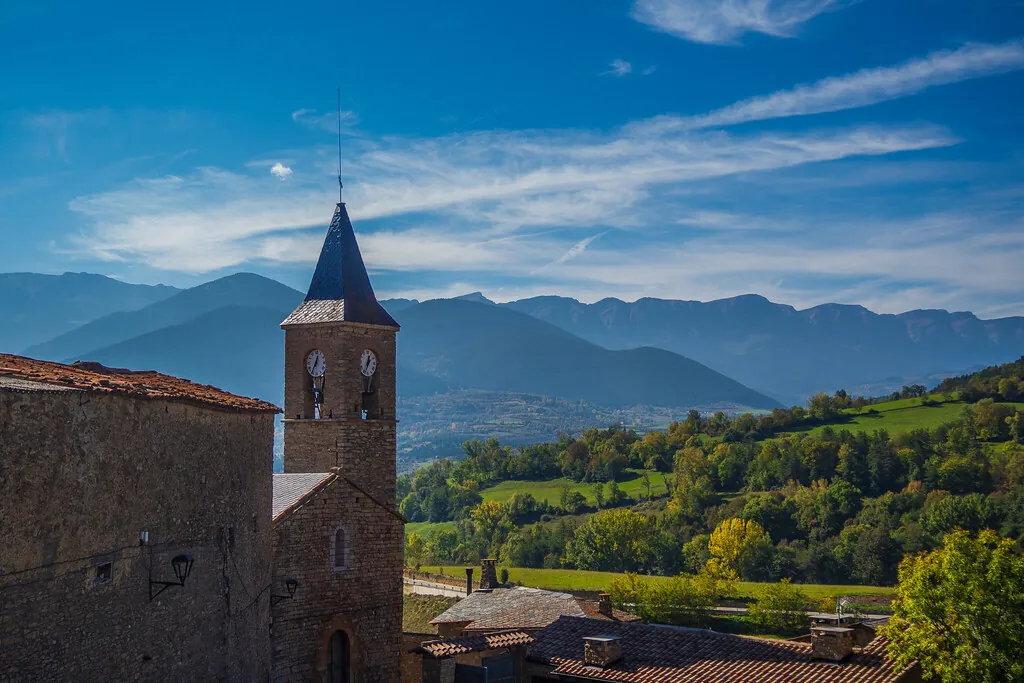
La geografía de Montellà i Martinet explica su función. Aquí, en el extremo occidental de la Cerdanya, el valle ancho del Segre comienza a estrecharse. La llanura abierta da paso a las primeras estribaciones que conducen al Alt Urgell, marcando un cambio de territorio. El municipio agrupa los núcleos de Montellà, Martinet y Ars, con una población que ronda los seiscientos habitantes. No es un lugar pensado para el turismo masivo, sino una zona rural donde la agricultura y la ganadería siguen marcando el ritmo.
El paisaje mezcla prados de siega con manchas de bosque de pino y algún robledal. El Segre pasa cerca de Martinet; aunque no domina la vista como en otros puntos del valle, su curso ayuda a entender por qué se asentaron aquí los pueblos. Los núcleos suelen situarse ligeramente elevados sobre el fondo del valle, en posiciones más resguardadas de las riadas y con mejor exposición al sol.
La carretera N-260 cruza Martinet, uniendo Puigcerdà con La Seu d’Urgell. Esta vía ha condicionado la vida local durante décadas. El municipio funciona aún como un paso entre la Cerdanya y el Alt Urgell, con un movimiento constante en ambas direcciones.
Arquitectura rural y un patrimonio modesto
El patrimonio construido aquí es modesto, a escala de los pueblos pirenaicos. En Montellà se encuentra la iglesia de Sant Andreu, de origen medieval aunque muy reformada. Su estructura responde a la lógica del románico rural: muros desnudos, volumen compacto y una torre campanario cuadrada que sobresale entre las casas.
Martinet tiene su propia iglesia parroquial, Sant Martí, que conserva elementos románicos visibles en el ábside. Como ocurre con muchos templos de montaña, ha evolucionado a base de añadidos y reparaciones, fruto del uso continuado más que de un proyecto unitario.
En Ars, la iglesia de Sant Esteve completa este circuito discreto entre núcleos. Pero el interés no está solo en los edificios religiosos, sino en el tejido de cada pueblo. Las casas de piedra se alinean en calles estrechas, con portales de dintel trabajado y balcones de madera orientados a captar el sol. Son soluciones propias de la Cerdanya, que responden al clima y a la vida agropecuaria.
Senderos, prados y el curso del Segre
Una red de caminos atraviesa el municipio, uniendo pueblos, masías y antiguas zonas de cultivo. Algunos de estos trazados son muy antiguos y ya servían para comunicar valles antes de que existiera la carretera moderna.
Caminarlos da una idea clara del paisaje de la Cerdanya occidental: prados abiertos en el fondo del valle, laderas boscosas a ambos lados y vistas largas que siguen el curso del Segre. La señalización es suficiente en muchos tramos, aunque no siempre continua; para rutas más largas conviene llevar mapa o track.
El río se hace más presente cerca de Martinet. En sus riberas cambia la vegetación: hay más humedad, aparecen chopos y zonas donde el verde se mantiene incluso en los meses más secos del verano. Este contraste añade una capa más a un paisaje que alterna pasto y bosque.
Un paisaje habitado
El uso más habitual de esta zona es sencillo: pasear, ir en bicicleta o moverse entre pueblos por carreteras secundarias. Las rutas para bicicleta de carretera pueden ser exigentes, con constantes cambios de desnivel, aunque las subidas no sean siempre muy largas.
En los bosques es relativamente fácil encontrar rastros de fauna, sobre todo a primera hora de la mañana o al final de la tarde. Huellas y señales delatan la presencia de corzos, zorros y aves rapaces. Verlos requiere paciencia, pero están asentados en la zona.
En otoño se nota un cambio. Los bosques atraen a recolectores de setas, una práctica extendida en toda la Cerdanya. Conviene recordar que buena parte del terreno es privado y que algunos lugares tienen normativas específicas sobre la recolección.
Cómo moverse y conexiones con el entorno
Los núcleos del municipio están separados por distancias cortas, pero el desplazamiento entre ellos se hace casi siempre en coche. Esto responde al carácter rural de la zona y a cómo se distribuyen los asentamientos en el territorio.
Desde Martinet el acceso es relativamente fácil en dos direcciones. Una lleva de vuelta a la llanura ancha de la Cerdanya; la otra se dirige hacia las primeras montañas de la sierra del Cadí. En invierno, algunas estaciones de esquí de la comarca quedan a un trayecto razonable en coche, aunque los tiempos dependen mucho de la nieve y del tráfico estacional.
Montellà i Martinet no se presenta a través de grandes monumentos o reclamos turísticos. Su carácter viene de la relación entre pueblos, prados, caminos y río, y de una forma de vida que sigue ligada al territorio.