Full Article
about Urús
Mountain village at the Cadí tunnel exit; springs and dense forests
Ocultar artículo Leer artículo completo
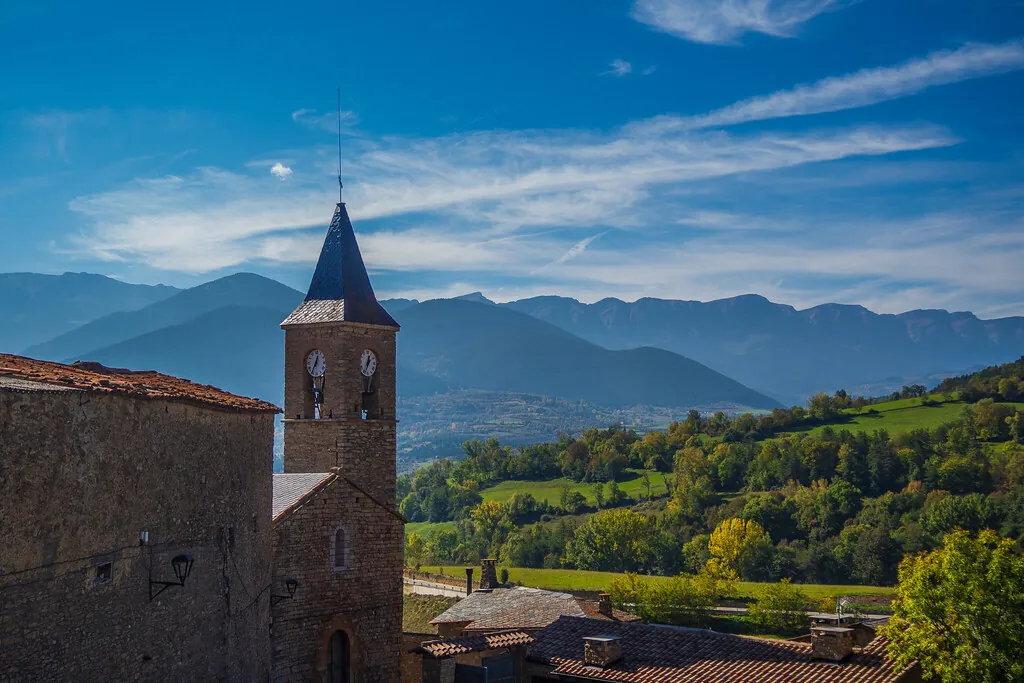
The church bell strikes eleven, but few notice. In Urus, time moves with the shadows across mountain meadows rather than clock faces. At 1,263 metres above sea level, this stone village of barely two hundred souls sits where Catalonia's Cerdanya valley narrows toward France, its slate-roofed houses huddled against winds that carry the scent of pine and snow.
Stone Walls and Winter Silence
Traditional stone houses line just four streets, their wooden balconies designed for drying hay rather than holiday photographs. The Romanesque church of Sant Martí anchors the village centre, its bell tower weathered by centuries of Pyrenean winters. Local stone walls divide properties, some topped with modern solar panels that glint incongruously against medieval masonry.
Winter transforms Urus completely. Snow arrives early at this altitude, often blanketing the village from November through March. The population swells slightly with weekend visitors escaping Barcelona's grey skies, though most stay in nearby Puigcerdà where restaurants stay open year-round. Here, silence amplifies: bootsteps crunch on frozen ground, breath clouds in minus temperatures, and the distant hum of Masella's ski lifts carries across the valley on clear days.
Road access demands respect for mountain weather. The C-16 from Barcelona closes during heavy snowfalls, turning the usual two-hour drive into an uncertain journey. Winter tyres prove essential rather than precautionary. Yet this meteorological honesty suits Urus perfectly – no pretence of year-round accessibility, no false promises of Mediterranean warmth.
Walking Where Eagles Circle
The village's greatest asset lies beyond its buildings. Footpaths radiate into black pine forests, following centuries-old routes between hay meadows and mountain streams. These aren't challenging Alpine treks but gentle rambles gaining altitude gradually, revealing valley views that stretch toward Andorra's peaks on exceptionally clear days.
Wildlife watching requires patience and early starts. Dawn brings the best chances of spotting roe deer grazing meadow edges, while dusk might reveal wild boar tracks crossing muddy paths. Golden eagles nest on nearby cliffs; their distinctive silhouettes circle overhead most afternoons, riding thermals above the valley floor. Bring binoculars and realistic expectations – this isn't a nature reserve with guaranteed sightings, but a working landscape where humans and wildlife maintain cautious coexistence.
Spring arrives late and brief. Snow melt swells streams through April, while May brings carpets of wildflowers to higher meadows. Summer hiking extends from June through September, though afternoon thunderstorms build quickly over the mountains. Always pack waterproofs regardless of morning sunshine – Pyrenean weather changes within minutes, not hours.
Beyond the Village Limits
Urus serves better as base than destination. Puigcerdà, fifteen minutes by car, provides supermarkets, pharmacy and Saturday market selling local cheese and cured meats. The town's restored old town offers proper coffee and patisserie for those missing civilisation. Alp, ten minutes south, contains the region's best restaurant – a converted farmhouse serving trinxat (cabbage and potato cake with pork belly) alongside modern interpretations of mountain cuisine.
Masella and La Molina ski resorts lie twenty-five minutes distant, their modern lifts accessing slopes reaching 2,500 metres. Weekday skiing avoids weekend crowds from Barcelona, while spring skiing often extends into April. Summer brings mountain biking trails and via ferrata routes, though these demand proper equipment and mountain experience.
The French border sits just thirty kilometres north, though the mountain road twists dramatically. Perpignan's Mediterranean influence appears suddenly – palm trees replace pines, café culture replaces mountain practicality. This contrast defines Cerdanya's appeal: breakfast among snow peaks, lunch beside the sea.
When Silence Isn't Golden
Honesty demands acknowledging Urus's limitations. Summer weekends bring motocross bikes roaring through forest tracks, their riders ignoring noise restrictions. August packs the village with returning Catalan families, transforming tranquil streets into children's racing circuits. September offers better weather with fewer people, though some accommodation closes from October through December.
Shopping requires planning. The village bakery closed years ago; fresh bread means driving to neighbouring settlements. Evening dining options simply don't exist – self-catering proves essential unless you fancy twenty-minute drives for every meal. Mobile phone coverage remains patchy inside stone houses, though this bothers visitors more than residents.
Winter heating costs surprise many. At this altitude, nights drop below freezing from October onward. Traditional houses retain cold in their thick stone walls; modern underfloor heating becomes necessity rather than luxury. Check utility charges before booking – some landlords pass winter fuel costs directly to guests.
Practical Reality
Accommodation comprises half-dozen rural apartments, mostly converted barns and outbuildings. Expect to pay €80-120 nightly for two-bedroom properties, considerably less outside peak seasons. Most require minimum three-night stays, weekly bookings during August. Book directly with owners – the village maintains no tourist office, no booking service, no multilingual assistance.
Car hire from Barcelona airport provides easiest access, though Girona's smaller airport reduces driving time by forty minutes. Train travel reaches Puigcerdà from Barcelona, but reaching Urus without wheels demands expensive taxi rides through mountain roads. Winter visitors should request snow chains even with hired vehicles – Spanish rental companies rarely provide them automatically.
The village asks little from visitors beyond respect: don't photograph locals without permission, keep noise reasonable after ten, remember this remains home rather than holiday resort. Bring sturdy walking boots, layers for changing weather, and realistic expectations about rural mountain life. Urus rewards those seeking Pyrenean authenticity over Alpine glamour, offering mountain peace in exchange for metropolitan convenience.