Full Article
about Barberà de la Conca
Historic village with a Templar castle and Spain’s first Modernist-style cooperative winery.
Hide article Read full article
A village shaped by vines
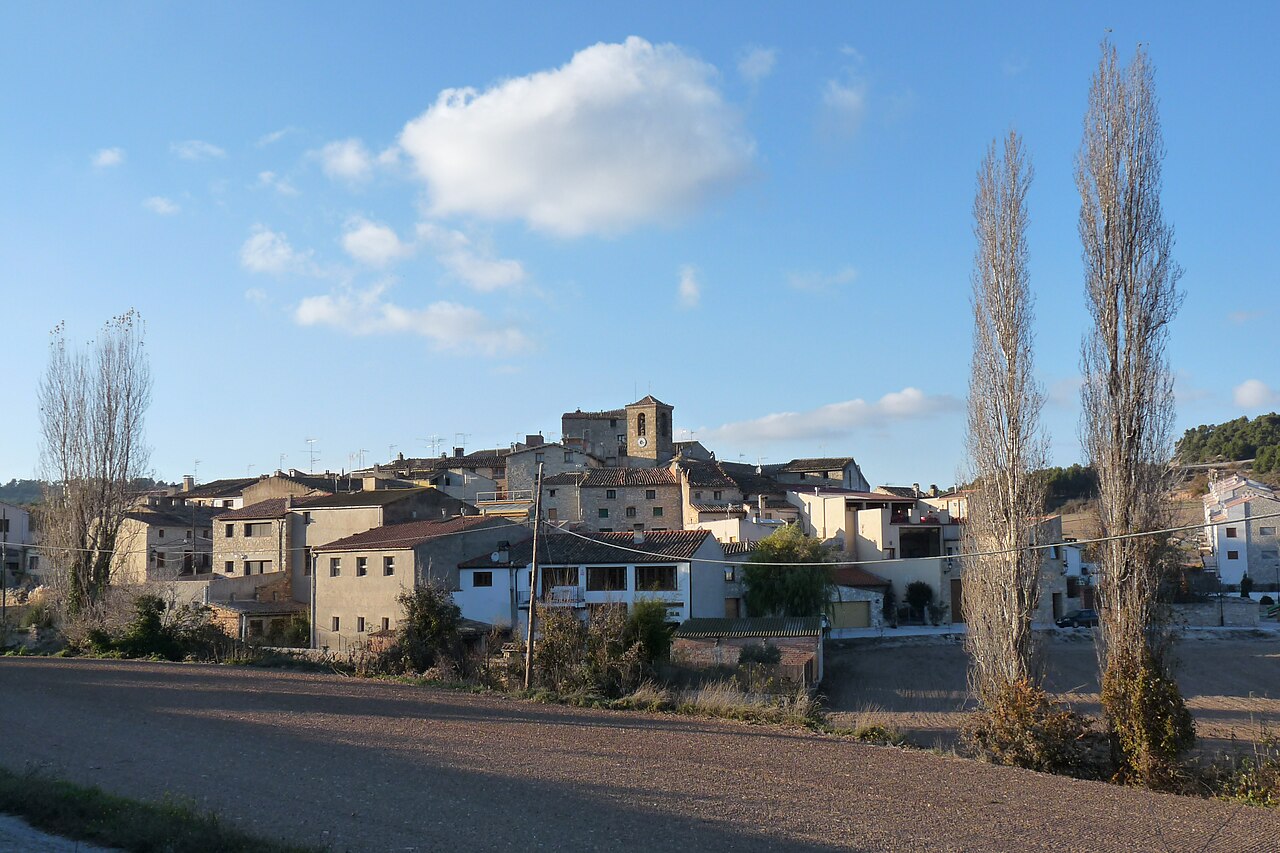
Barberà de la Conca stands on a small rise in the centre of the Conca de Barberà comarca, in inland Tarragona. With around five hundred residents, it follows a pattern common in this part of Catalonia: houses gathered closely on higher ground, and farmland beginning almost as soon as the streets end.
The surrounding landscape is largely agricultural, with vineyards dominating the scene. This is not a recent development. Viticulture has defined this area for centuries, sometimes alternating with cereals and a smaller presence of olive trees depending on the period. The result is an open, expansive setting, often marked by dry tones for much of the year. Lines of vines give the land a clear structure, organising fields into neat, readable patterns.
This relationship between the village and its fields is immediate. There is no sharp boundary between settlement and countryside. Step beyond the last houses and the agricultural world begins straight away, shaping both the economy and the visual identity of Barberà de la Conca.
Traces of a medieval stronghold
Despite its modest size, Barberà de la Conca has a notable medieval background. The settlement was linked to the Order of the Temple, which established a fortification here to control the surrounding basin. This origin helps explain why the village occupies a dominant position and why certain buildings still reflect that past.
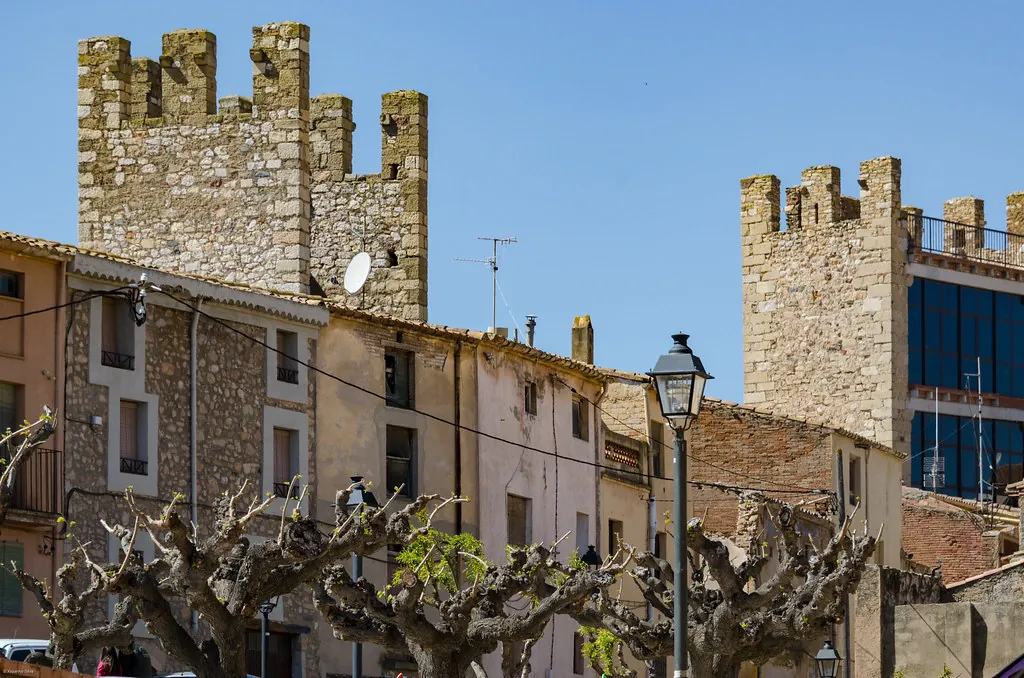
The most prominent feature is the castle of Barberà, located at the highest point. Its origins are Templar, although what stands today comes from different phases and later alterations. Even so, its defensive purpose remains clear. From this elevated position, it once oversaw routes across the territory, reinforcing its strategic importance within the Conca de Barberà.
Nearby, the parish church of Sant Joan Baptista forms another focal point within the old centre. It dates back to medieval times, though it has undergone modifications, particularly during the modern period. Rather than impressing through scale, it draws attention through its placement within the network of streets that climb towards the upper part of the village.
Walking through the historic core reveals several stone houses with wide doorways and wrought-iron balconies. This is not a monumental ensemble, but it offers a clear example of rural domestic architecture typical of the comarca. Some façades still display old voussoirs or simple coats of arms, hinting at renovations carried out during the 17th and 18th centuries.
On the outskirts stands another building often mentioned in connection with Barberà: the modernista agricultural cooperative. It belongs to a wider movement in Catalonia during the early 20th century, when many villages built large communal wineries to process and store grapes. Its presence reflects the continued importance of wine production in the local economy.
Paths through an open landscape
A network of agricultural tracks spreads out from the village, used for generations to reach fields or connect with neighbouring municipalities. These routes are generally straightforward, crossing open terrain with little variation in elevation.
Following these paths gives a clear sense of how the landscape of the Conca de Barberà functions. Vineyards are laid out in relatively ordered plots, often bordered by low dry-stone walls. Scattered farmhouses, known locally as masías, appear here and there, reinforcing the agricultural character of the area.
The rhythm of the countryside becomes especially noticeable in autumn, during the grape harvest. This is when activity in the fields increases and the connection between village and vineyard feels most visible.
For those exploring on foot or by bicycle, what stands out is the quiet and the breadth of the horizon. It is not a landscape that aims to impress in a dramatic way. Instead, it offers a direct and representative view of inland Tarragona, where agriculture shapes both the land and daily life.
Everyday life and local traditions
The main annual celebration in Barberà de la Conca takes place around Sant Joan, at the end of June. This follows a common festive calendar across many villages in the comarca. During these days, local organisations arrange activities, shared meals and events that bring together residents and those who return during the summer months.
Beyond specific festivities, daily life in the village shifts with the seasons. In the warmer months, activity often moves outdoors in the early evening. Squares fill with people sitting on benches, conversations stretch on, and there is a gentle sense of movement around the centre.
In a place of this size, these everyday scenes are as much a part of the landscape as the vineyards. Social life unfolds in public spaces, closely tied to the rhythms of climate and community.
Getting your bearings
Barberà de la Conca lies a short distance from Montblanc, reached by regional roads that pass through cultivated fields. The village itself can be explored on foot in a short time. The most rewarding approach is often to wander slowly through the streets that climb towards the castle, then continue outwards along one of the agricultural paths that encircle the settlement.
This combination of compact historic core and open countryside defines the experience of the place. Barberà de la Conca does not rely on grand landmarks or dense tourism infrastructure. Its character comes from continuity: between past and present, between village and fields, and between the built environment and the land that sustains it.