Full Article
about Blancafort
A farming village in La Conca with a Modernist winery and quiet medieval streets.
Hide article Read full article
A small village, nothing more and nothing less
Tourism in Blancafort is straightforward: arrive, park near the square and spend ten minutes walking around. There is usually space in the streets around the centre, although they are narrow and require careful manoeuvring. There are no large car parks or facilities designed for long stays. This remains a small village where daily life matters more than tourism.
Blancafort lies around 17 kilometres from Montblanc. The road is narrow in places and signposting is not always especially helpful, so a GPS tends to be the most practical option.
Anyone expecting a line-up of attractions will not find them here. Blancafort is compact and easily covered on foot. A short visit is normal, particularly if you are already travelling through the Conca de Barberà region.
The centre and the church of Santa Magdalena
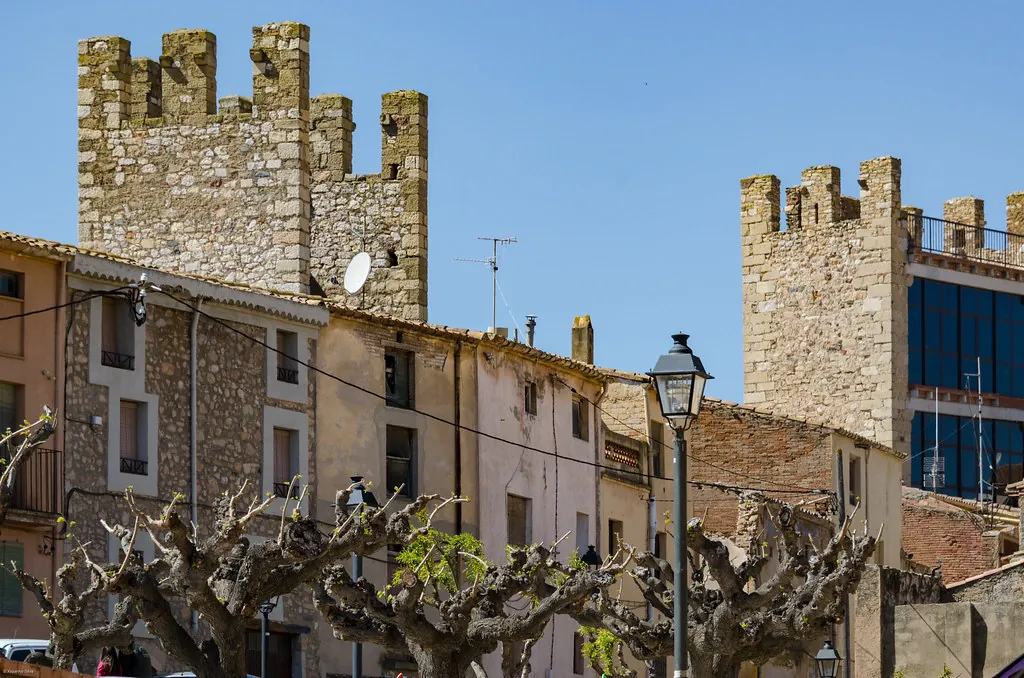
The village layout is simple. One main street links the square with the church and there is little beyond that. Stone houses line the route, many with large gateways and iron grilles on the windows. There are no shop fronts aimed at visitors and no souvenir shops.
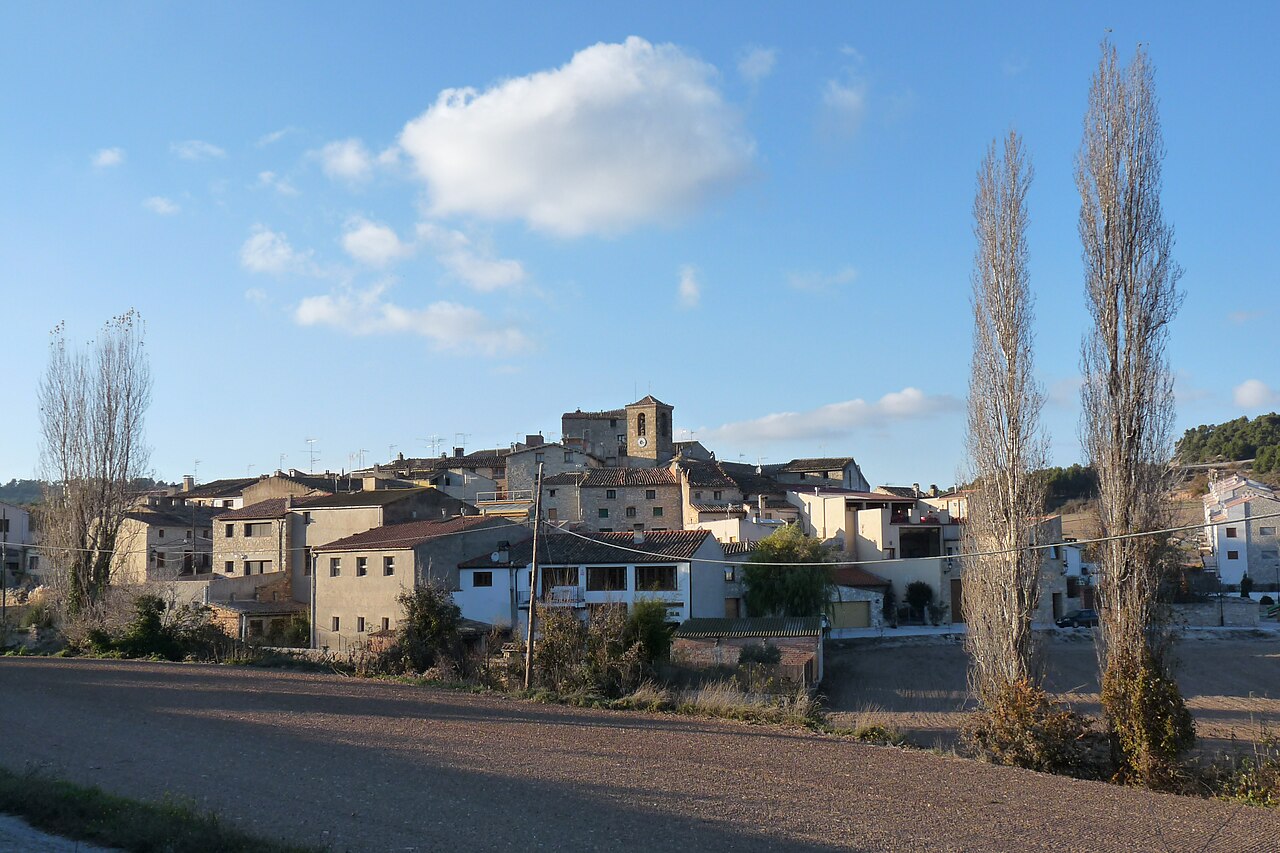
The church of Santa Magdalena is visible from almost anywhere in the village. Built in the 18th century, it is a sober structure made from local stone and topped with a traditional curved tile roof. It is not monumental in scale, yet it defines the village skyline and acts as a useful point of reference while walking through the streets.
The centre can be explored at an unhurried pace. There are no marked routes or information panels, just everyday buildings that continue to serve their original purpose.
Quiet streets and older details
What stands out in Blancafort lies in the smaller details. Worn wooden doors, underground cellars beneath houses and interior courtyards that can barely be glimpsed from the street all hint at earlier ways of life. Many of these cellars remain closed or are used privately, though they can be recognised by their low entrances and darker stones on the façades.
The layout of the village has not changed much over time. Streets are short, some with a slight incline, and there is almost always silence. It is common to walk for several minutes without crossing paths with anyone.
There is no attempt to turn the historic centre into a display. The buildings are simply there, forming part of the daily routine of those who live in Blancafort throughout the year.
Fields beyond the last houses
Step outside the built-up area and farmland begins almost immediately. Vineyards, almond trees and olive groves cover most of the surrounding land. The landscape is open, with rectangular plots and agricultural tracks linking one property to another.
During the grape harvest or the olive picking season there is noticeably more activity. Tractors and trailers move along the tracks and people work in the fields. For the rest of the year the area is largely quiet.
Blancafort sits within the territory of the Denominación de Origen Conca de Barberà. For readers unfamiliar with the term, a Denominación de Origen is a protected wine designation that guarantees origin and certain production standards. Despite this, there are not usually wineries open to visitors within the municipality itself. Those interested in wine typically travel to nearby villages such as Sarral or Santa Coloma de Queralt, where there is more activity linked to production. The distances are short and can be covered by car in a few minutes.
Rural paths and seasonal rhythms
Several agricultural tracks lead out from Blancafort towards other small settlements in the comarca, the local administrative area. These routes can be used for walking or cycling, although some stretches have uneven surfaces and are shared with tractors.
Summer brings intense heat and very little shade. Spring and autumn are generally more comfortable times to explore the area on foot or by bike. The terrain is not especially dramatic, but the openness of the fields gives a clear sense of how closely the village is tied to agriculture.
Life here follows a seasonal rhythm. Activity increases when work in the fields demands it, then settles back into quiet routines.
Festivals and everyday life
Village festivals are usually concentrated in summer, when people who live elsewhere during the rest of the year return. Communal meals, music and activities take place in the square or near the church, turning the centre into a social space.
Traditional winter festivities are also observed, linked to saints such as San Antonio Abad and San Sebastián. These celebrations are common in many villages in the area and form part of a wider rural calendar.
Outside these dates, Blancafort remains calm. There is no programme of events designed for visitors, and no expectation that tourism should shape the village agenda.
A brief stop in the Conca de Barberà
Blancafort does not require a long stay. It can be seen quickly, and there is nothing wrong with a short visit. For those already touring the Conca de Barberà, it works as a brief pause to stretch your legs before continuing to other nearby villages. If you are not passing through the region, there is little reason to make a major detour.
The appeal lies in its stillness rather than in the number of things to do. A main street, a square, the church of Santa Magdalena, a few quiet lanes and fields stretching out in every direction. That is the whole picture.
Blancafort makes no effort to be more than it is. For some travellers, that simplicity is reason enough to stop, even if only for a short walk before moving on.