Full Article
about Conesa
Medieval walled town declared a Cultural Heritage site, preserving its historic structure and charm.
Ocultar artículo Leer artículo completo
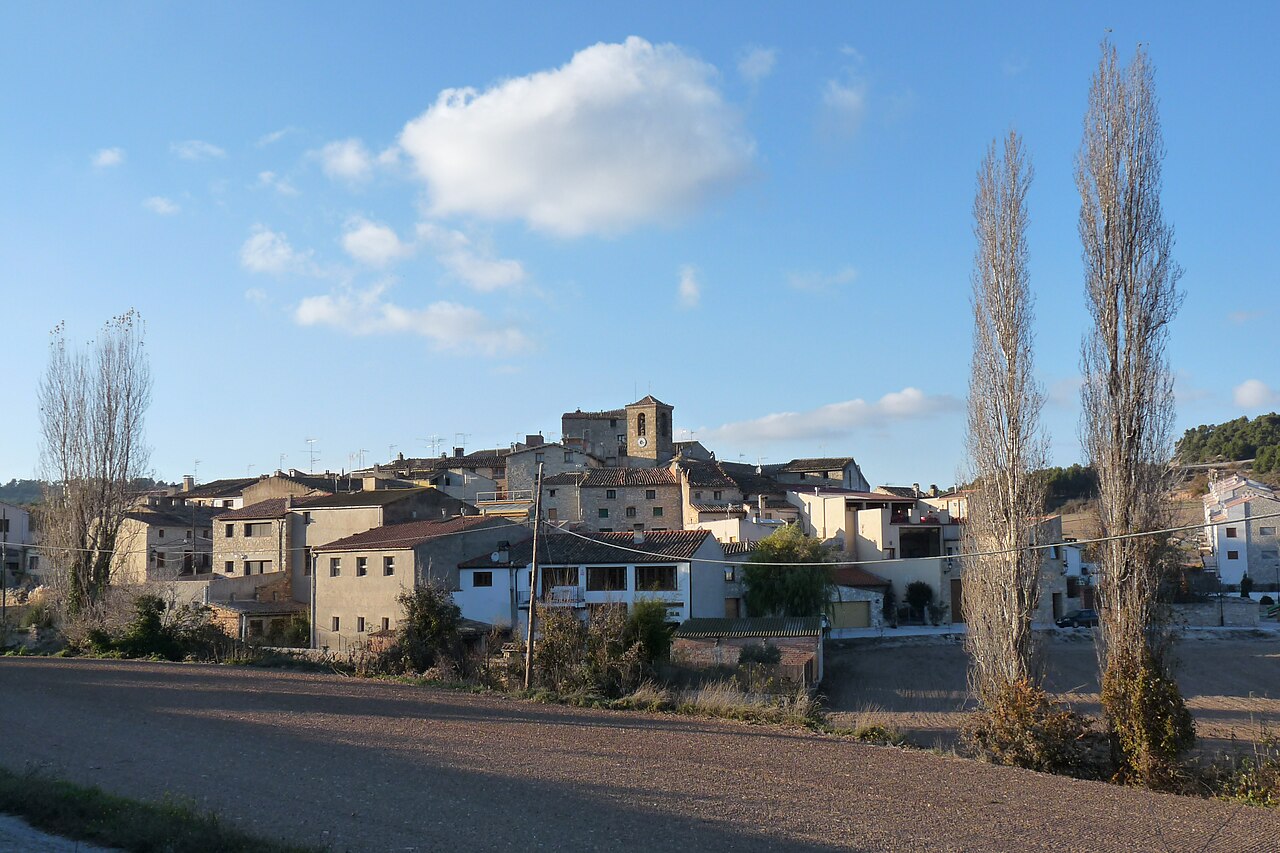
The bells ring at 702 metres, and nobody answers. From the stone tower of Conesa's parish church, the sound carries across vineyards and almond groves until it meets the hills that roll towards Montblanc. At this altitude, the wind arrives earlier than the postman, and conversations happen at village volume—no need to shout when there are only 120 neighbours.
Most maps of Catalonia leave Conesa as a speck between Tàrrega and Valls, forty minutes' drive inland from the AP-2 motorway. That distance from the coast matters. Summers stay five degrees cooler than Barcelona, but winter fog can trap the village for days. The first frost usually arrives mid-October; by December the narrow lanes turn polished-ice slippery, and elderly residents wait for sun before venturing out. Come March, however, the same streets warm quickly. South-facing stone walls radiate heat, and the smell of damp earth drifts up from terraced vegetable plots behind the houses.
Stone that Remembers
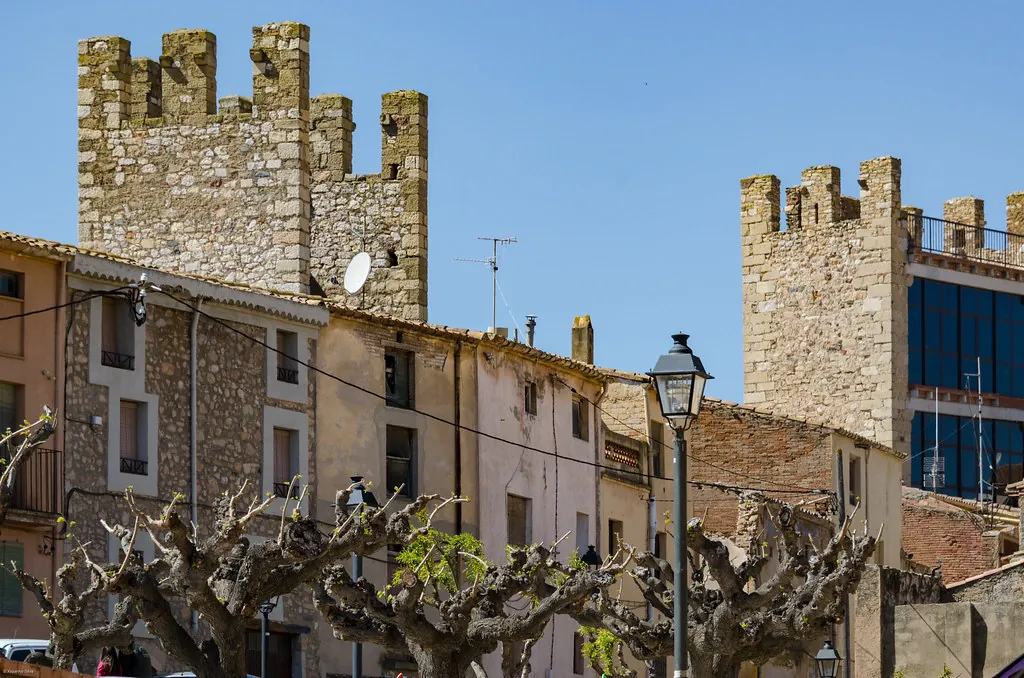
No grand castle dominates here. Conesa's architecture is domestic, built for farmers who needed shelter rather than status. Walk Carrer Major at seven in the morning and the east façades glow honey-coloured; by five the west walls take over, soaking up the last light. Lintels still carry the dates and initials of builders long dead—1687, 1723, 1834—carved when the village population was twice today's. Doorways narrow towards the top, a medieval trick to stabilise unstable ground without expensive scaffolding. The effect is subtle, but once noticed it becomes impossible to walk upright without checking angles.
The church itself has been rebuilt so often that historians argue over what survives. A Romanesque base, Gothic lengthening, Baroque cornices, Civil-war bullet-pocks: all true, none dominant. Inside, the temperature drops a full ten degrees; outside, swallows nest under the eaves and leave white streaks on the sandstone. Entrance is free, though the building closes at dusk because the village can't afford night-time lighting bills. If the door is locked, ask at the house opposite—Maria keeps the key and will open up in exchange for a brief chat about the weather.
Paths that Were Roads
From the upper square, a mule track zig-zags down through almond terraces to the valley floor. This was the old route to Santa Coloma de Queralt, twenty kilometres east. Medieval traders followed the same line, loaded with salt and saffron. Today the stones are loose, boots recommended, but the gradient never exceeds one in ten—comfortable enough for an evening stroll before supper. Halfway down, an abandoned stone hut offers shade and a view back up to Conesa, the village appearing to balance on a knife-edge ridge.
Shorter loops exist. A thirty-minute circuit heads west along the ridge, then drops into a shallow gully where wild rosemary grows chest-high. After rain the clay sticks to soles and doubles the weight of footwear; in July the scent is sharp enough to flavour roast lamb at fifty paces. Markers are intermittent—red-and-white flashes painted by the local hiking club—yet getting lost is difficult: every path eventually meets a farm track, and farm tracks lead to tarmac. Carry water; the only fountain is in the village square, and summer shade is scarce.
Wine Without Theatre
Conesa grows no grapes itself—the slope is too steep for tractors—but the surrounding Conca de Barberà denomination begins two kilometres away. Cellers Miquel Jané in nearby Rauric offer weekday tastings at eleven euros, including three reds and a glass of their sweet moscatell. Transport is the problem: no bus connects the two villages, and taxis from Montblanc cost €18 each way. The pragmatic solution is to taste first, buy second, and ask the winery to call a cab once bottles outweigh walking capacity.
Back in Conesa, the social centre is Bar-Restaurant l'Hostal, open Thursday to Sunday because the owners also farm and Mondays mean market in Cervera. A menu del dia runs to €14: soup, grilled pork, wine, dessert. Coffee costs extra, and card payments start at €10—below that it's cash only. Locals occupy the corner table by eleven-thirty; visitors who arrive later may wait forty minutes while the single waitress finishes her own lunch. Patience is part of the order.
When the Village Returns
August fifteenth brings the festa major. Former residents—now scattered across Barcelona, Tarragona, even London—drive home for the weekend. Population swells to perhaps four hundred, enough to fill the single street with second-hand conversations about rent prices and football. A mobile disco arrives on the back of a tractor; teenagers pretend not to know the words to songs their parents danced to in 1995. At midnight everyone moves to the football pitch for fireworks that echo off the surrounding hills like distant artillery. By Sunday evening the village empties, leaving only the smell of gunpowder and plastic cups trodden into the dust.
Winter offers the opposite. January days end at five-thirty; by six the square is dark except for a single orange bulb above the bakery door. On still nights voices carry from one side of the village to the other—arguments, laughter, a television quiz show through an open window. Snow falls perhaps once each winter, rarely more than five centimetres, but the altitude means it lingers. Roads become impassable for hours because the council prioritises the C-241 main route; Conesa waits its turn.
Getting There, Leaving Again
No railway approaches closer than Montblanc, itself a thirty-minute bus ride from Tarragona or Lleida. From Montblanc, a Monday-to-Friday service run by Hispano Igualadina leaves at 07:25 and returns at 14:00—perfect for a day trip provided you don't mind six hours on foot in between. Car hire remains the realistic option; the last six kilometres twist uphill on the TV-7041, narrow enough that meeting a delivery van requires one driver to reverse. Petrol is cheaper in the regional capitals: fill up before you leave the autopista.
Accommodation is limited. Three rural houses offer rooms from €65 per night, two-night minimum at weekends. All are converted farm buildings with thick walls and erratic Wi-Fi. Breakfast might include tomatoes rubbed on toast, local olive oil, and coffee that qualifies as strong even by Catalan standards. Check-in after ten pm usually means phoning the owner, who lives three doors down and arrives in slippers.
Leave before sunrise in April and you'll see lights flick on across the valley—farmers starting tractors, preparing irrigation. Conesa stays dark longest, perched above the activity, waiting for sun to clear the ridge. By the time the first beam hits the church tower the day has already been decided: which fields to water, which vines to prune, whether the wind will bring rain. The bell rings again. Still nobody answers; the village has never needed replying.