Full Article
about Forès
The Conca lookout sits atop a hill with views reaching the sea.
Hide article Read full article
A Balcony Over the Comarca
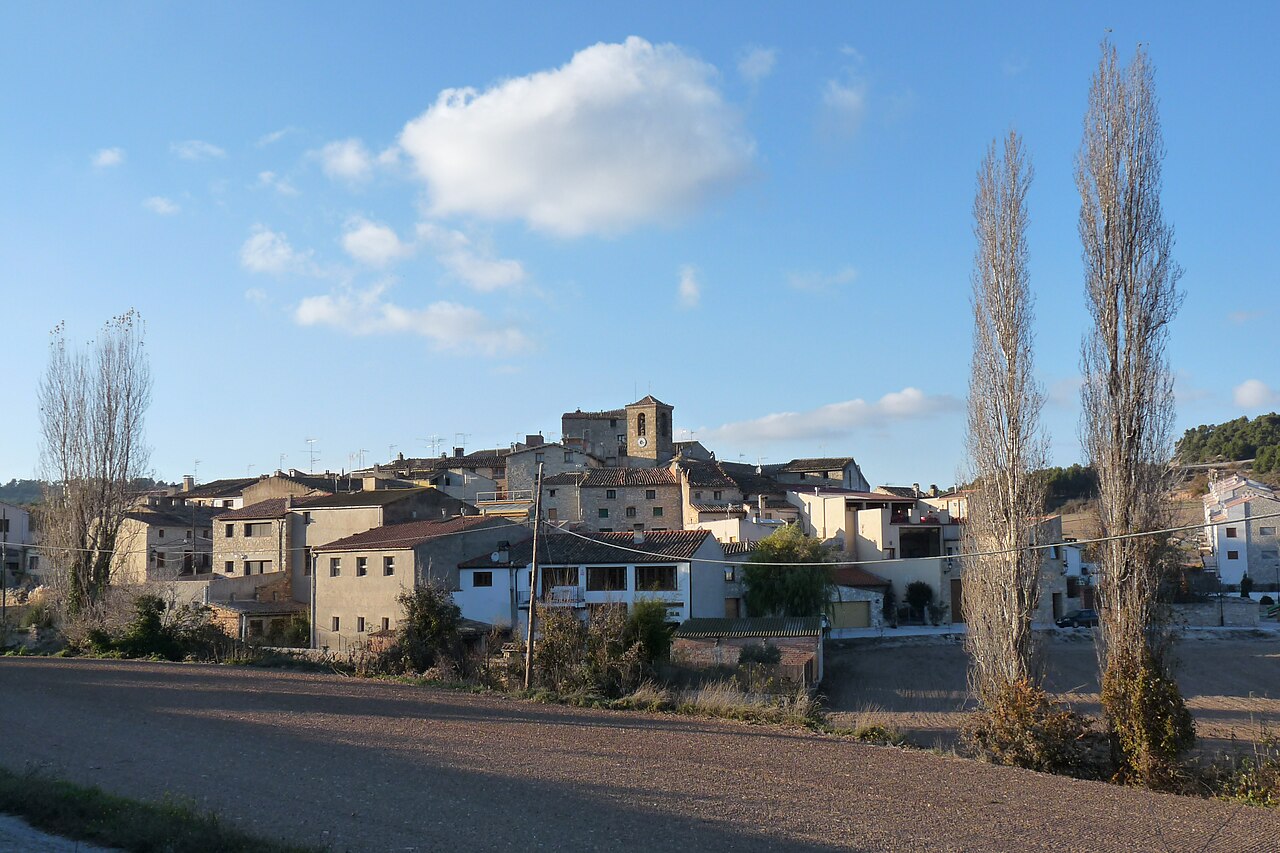
Some villages work like those roadside viewpoints where you plan to stop for five minutes and end up staying half an hour. Not because there is a long list of sights, but because the setting slows everything down. Tourism in Forès follows that pattern. A small cluster of houses crowns a hill in the Conca de Barberà, with very few residents throughout the year and the feeling of observing the whole comarca from the back row of an amphitheatre.
Forès has barely forty inhabitants. That figure already hints at the atmosphere. There is no traffic to speak of, no shop windows designed with visitors in mind. Many of the houses are still built of stone, with reddish roofs and façades that have endured more winters than anyone can easily count. The wind blows hard here and leaves its mark on the walls, like an old jacket creased with stories.
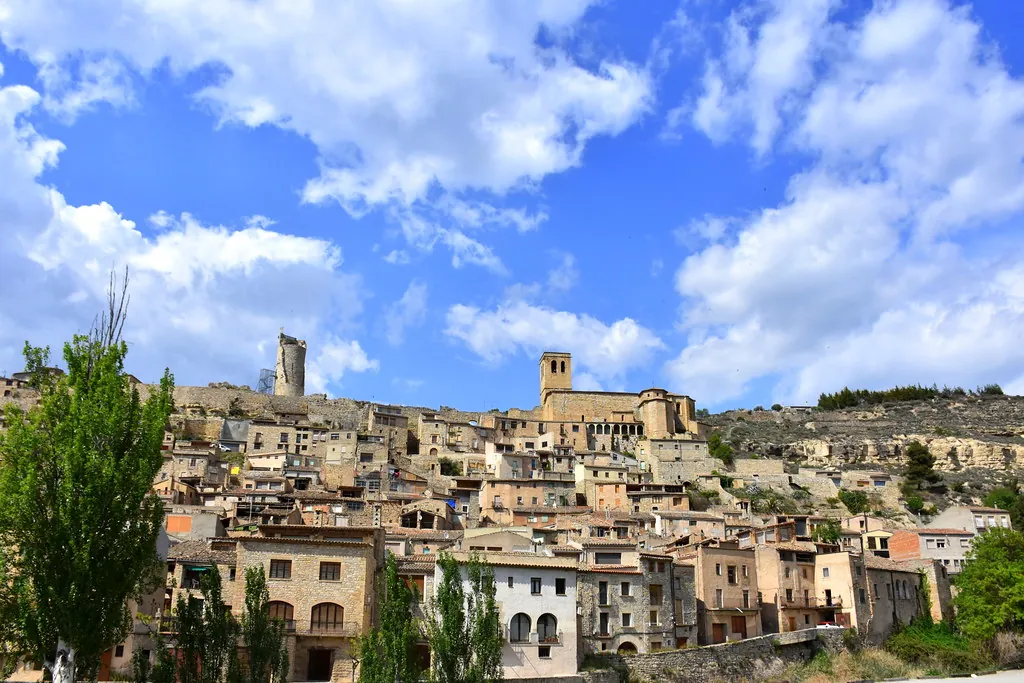
The village sits high above its surroundings. Once the car is parked and the engine switched off, the reason for founding a settlement here becomes clear. From several points, the view opens across a large stretch of the Conca de Barberà. The sensation resembles stepping onto a fifth-floor balcony after spending the morning in a narrow street. Suddenly there is air and distance.
Fields spread out below, broken by small patches of woodland and villages that appear as faint outlines in the distance. On clear days the horizon seems to stretch a long way. When the wind picks up, which happens often, the landscape appears to ripple as if someone were shaking an enormous carpet of crops.
Stone Streets and a Romanesque Heart
The historic centre can be explored quickly. This is not a place to wander for hours, but to stroll without hurry and notice small details.
The streets are narrow, cobbled in parts, and many of them end in small openings towards the surrounding countryside. At times it feels less like walking through a complete village and more like crossing the back courtyard of a large country house.
At the centre stands the parish church, dedicated to Santa María. It is Romanesque and notably sober, one of those buildings that seem to have been constructed from the same stone as the ground beneath. The bell tower defines the village skyline from afar. Inside, everything is simple: thick walls, little decoration and a silence that recalls an old library.
The materials, the scale and the absence of ornament give the church a grounded presence. Nothing feels exaggerated. It blends into the rhythm of the place rather than dominating it.
Echoes of Walls and Watchtowers
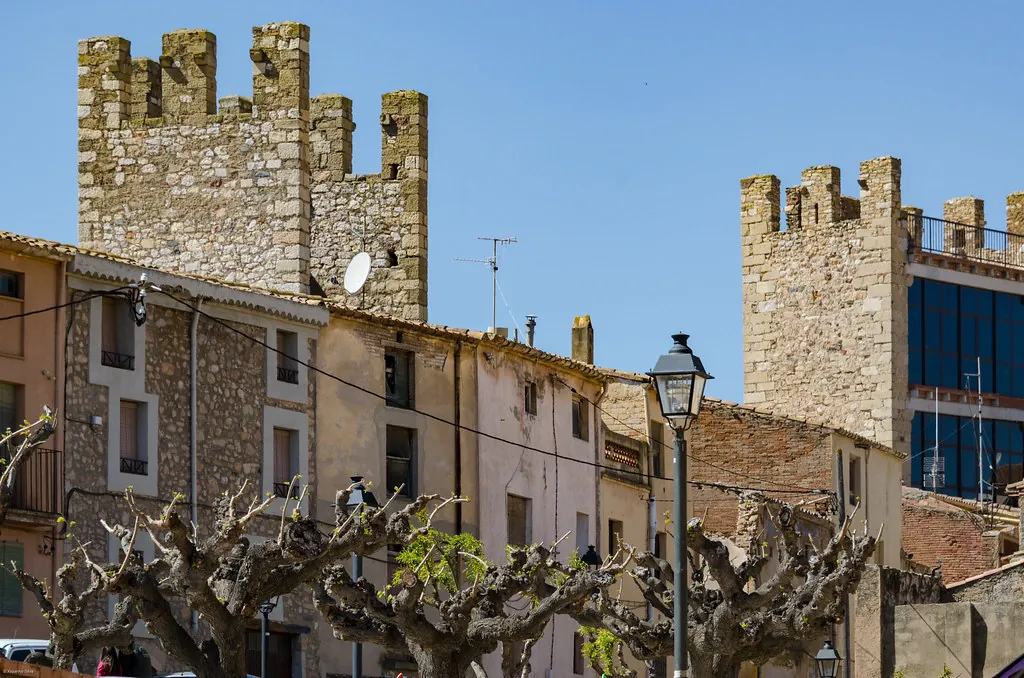
Forès still preserves traces of its defensive past. At the entrance, the outline of the old gateway in the town wall can be sensed, like a door left open centuries ago.
Remains of the castle also survive. It is not a complete fortress or a monumental complex. What stands today is more modest: a tower and fragments that help visitors imagine how the surrounding territory was once watched from this height. From this hill, a wide area lies within sight.
The logic becomes obvious when standing beside the remains. Placing a settlement here meant controlling what moved across the land below. The experience is similar to setting a chair in the corner of a room to see everything at once.
These vestiges do not require long explanations. A short walk around them, combined with the views, allows the past to take shape in the imagination.
Rural Paths and Almond Blossoms
Several agricultural tracks begin on the outskirts of Forès. They link the village with scattered farmhouses and cultivated fields.
These are not dramatic mountain routes. They are calm paths suited to an easy walk while talking as the afternoon light softens. At times the tracks pass between almond trees. At others they cross open fields with very little shade.
Spring changes the scene noticeably. Almond trees often bloom during this season, and the pale flowers contrast with the stone of the village above. The result is simple and distinctly rural, without decoration or artifice.
The terrain does not demand technical skill or special preparation beyond common sense. The pleasure lies in the quiet and in the sense of space that surrounds the hill.
Practicalities and the Pace of Village Life
One detail is worth knowing in advance: Forès does not have restaurants or bars operating on a regular basis. Daily life here does not revolve around visitors.
It makes sense to bring something to eat or to stop beforehand in other towns within the comarca. Montblanc and L'Espluga de Francolí, for example, have more activity and places where it is possible to sit down for a relaxed meal.
Wine plays an important role throughout this area. The trepat grape variety is typical of the Conca de Barberà. Some wineries in the comarca organise visits or tastings. These are not located in Forès itself, but they can be found relatively nearby.
Throughout the year, the village holds a few local celebrations, especially in summer when people with family roots here return. These are not large festivals. They tend to be gatherings of neighbours and acquaintances, the sort of occasion where everyone ends up talking in the same square.
Reaching Forès is straightforward by car. The distance from Tarragona is not great, although the final stretch runs along quieter inland roads. Public transport is limited, so driving remains the practical option.
Forès is not a destination that fills an entire day. Put like that, it may sound like criticism, yet it forms part of its appeal. The village works better as a short pause, similar to stretching your legs midway through a long journey. A slow walk through its streets, a look out across the Conca de Barberà from the hilltop, and then the road continues, with the sense of having encountered a place that keeps to its own rhythm.