Full Article
about Les Piles
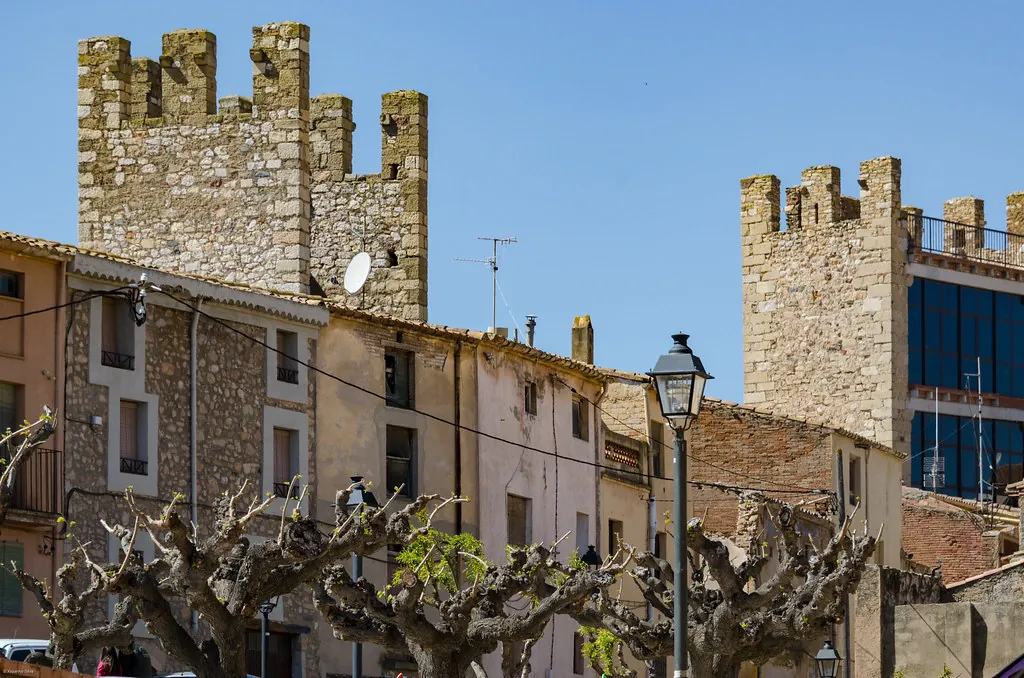
Small municipality with a castle and a hermitage amid hills and cereal fields.
Hide article Read full article
Les Piles: A Village Shaped by Grain and Vine
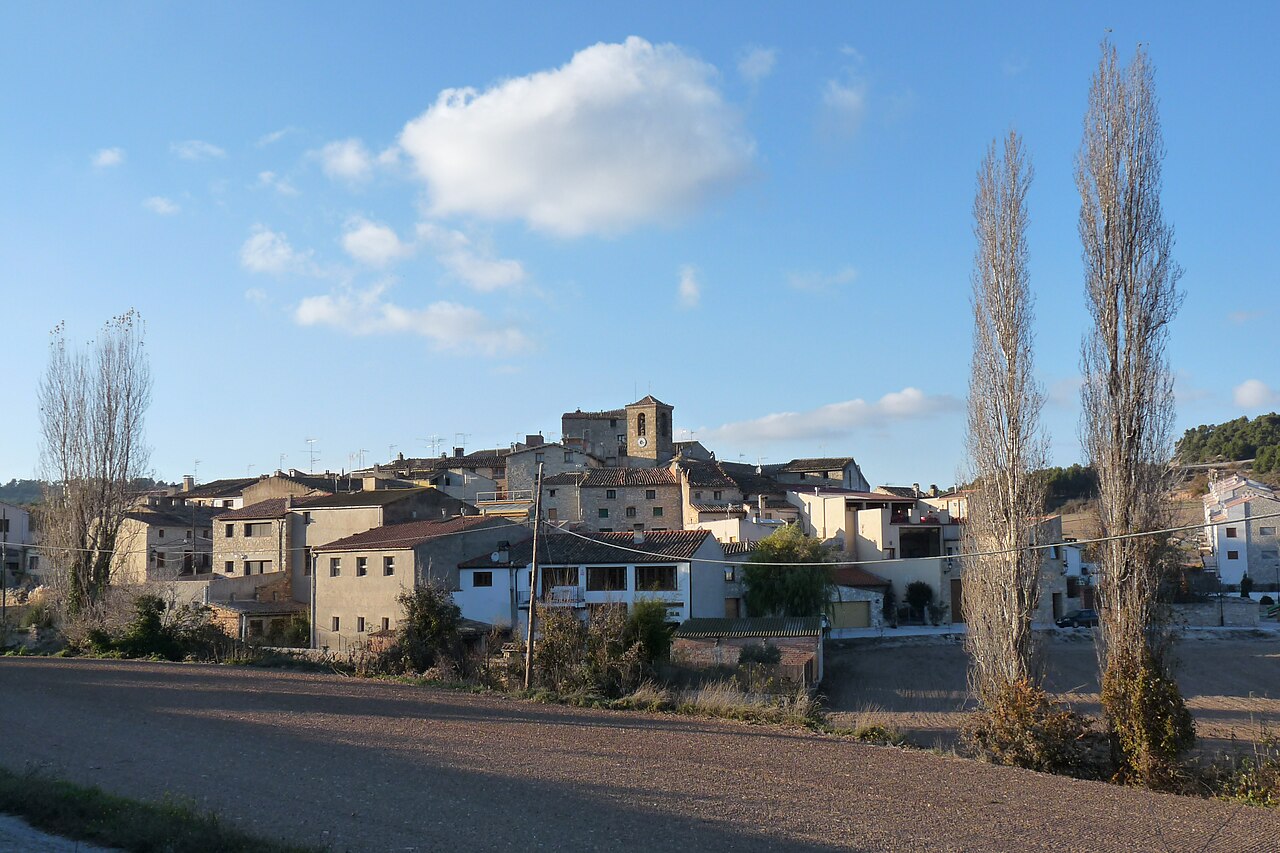
At 676 metres above sea level, Les Piles occupies a distinct geological seam in the Conca de Barberà. It sits precisely where the flat basin of the Conca begins to buckle into the first folds of the Prades foothills. This position, on a gentle but definite slope, dictated its form. The village wasn't placed on the land; it grew from it, its narrow lanes contouring the incline. With 229 residents, its scale remains human, its rhythm still set by the surrounding cycles of cereal, vine, and almond.
The street plan is medieval, a compact cluster of dwellings designed for shelter and efficiency. You won't find grand plazas. Instead, the architecture is one of thick stone walls, small windows, and arched doorways of worn stone. Some lintels bear faint inscriptions or weathered coats of arms, the only public record of families from centuries past. The houses here were built to last winters and to store harvests, their sober facades telling a story of agricultural pragmatism.
A walk through the core takes twenty minutes if you don't stop. It takes an hour if you do—to notice how a wooden gallery faces squarely south for winter sun, or how a courtyard glimpsed through an open door holds farming tools, not decoration.
The Church of Sant Miquel and Its Surroundings
The parish church of Sant Miquel anchors the village. Built in the 16th century and modified later, it follows a common rural template: a single nave and a square bell tower built for function. Its architectural interest is modest. Its significance is topographical. Standing beside it, you understand the village layout immediately. The houses huddle around the church for protection from the north wind, creating a dense thermal mass against the cold. Several nearby doorways show more refined stonework, suggesting these plots belonged to families of greater means, their status etched into the portal rather than declared with grandiosity.
The Masies and the Working Land
The story of Les Piles extends beyond the village nucleus to the scattered masies, the traditional Catalan farmsteads that dot the landscape. These were self-sufficient units for centuries. Their placement across the territory—some on slopes, others on flatter land—maps the historical organisation of agriculture here. Most remain private working farms. They are best understood from a distance as you walk, seeing how they relate to terraced vineyards or fields of barley.
The landscape changes texture with the calendar. In February, the almond trees bloom white on the grey slopes. By June, the wheat turns the plains a pale gold. The vineyards add a deeper green, their rows following the contours of the land with geometric precision. This is not a preserved panorama; it is a living system. The dirt tracks that climb gently from the village are farm access routes, not hiking trails. They offer open views of the Conca because farmers need to see their fields and the weather coming.
Walking the Connections
You can walk or cycle from Les Piles to neighbouring villages like L'Espluga de Francolí or Vallclara along these agricultural tracks. The routes are unmarked but logical, following old paths between fields and through pockets of Aleppo pine and holm oak. The gradients are generally mild, though there are short, sharp climbs that remind you you're on the edge of a basin.
The value of these walks lies in understanding the connective tissue of the comarca. You see how far one village is from another by foot, how a masia is positioned to manage specific plots, and how the geology subtly shifts underfoot from sedimentary plain to rocky hill.
Context: Wine, Food and Neighbours
Les Piles exists within the D.O. Conca de Barberà wine region, known for whites made from the parellada grape. The vineyards are part of the scenery here, though the village itself has no bodegas for visits. The wine culture is ambient, not curated for tourism.
The local cooking mirrors this unpretentious setting. It is based on what grows and what is raised nearby: grilled lamb, wild mushrooms in autumn, and in late winter, the ritual of the calçotada. This is when families and friends gather to grill long, tender spring onions over vine prunings, a social event rooted in the agricultural calendar.
Two significant sites lie within a short drive, providing context. To the south is Montblanc, its formidable medieval walls still encircling a complete town, showcasing the urban wealth this land could generate. To the west is the Monastery of Poblet, a Cistercian world of stone and order whose vast scale underscores how most people in this region lived in communities not much larger than Les Piles.
Visiting Les Piles
Come here to see a working village in the Conca de Barberà that hasn't been redesigned for visitors. Its value is in its clarity—a clear example of how geography dictates settlement, how medieval planning persists, and how agriculture still defines both view and routine. After seeing the monumental draws of Montblanc or Poblet, Les Piles grounds you in the everyday landscape that sustained them.
Parking is straightforward near the church. Wear shoes that can handle uneven cobbles and light dirt tracks if you plan to walk out into the fields. The light is particularly clear in the early morning or late afternoon, when the low sun throws the texture of the stone facades and the lines of the vineyards into sharp relief.