Full Article
about Montblanc
Walled medieval capital with an exceptional collection of monuments and the legend of Sant Jordi.
Hide article Read full article
An Old Town Framed by Walls
At seven in the evening, the light crosses the Plaça Major and settles on the stone façade of the town hall, still warm from the day’s sun. On a terrace, an elderly man blows the foam from his beer while his tanned, wrinkled fingers tap gently on an iron table. No one seems in a hurry. It is the hour when Montblanc slips into a kind of pause: the groups who have climbed the walls are making their way down, and the schoolchildren have disappeared up the street.
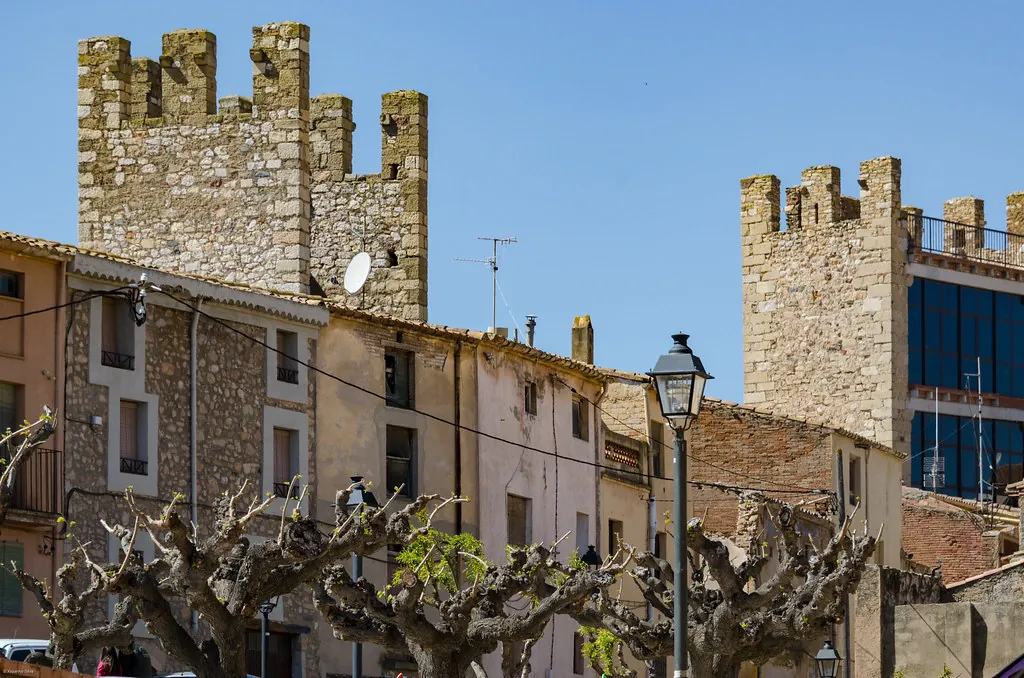
From almost anywhere in the old quarter, the walls are visible. They do not feel like a theatrical medieval backdrop. They are a line of stone that once decided who entered and who stayed outside. Thirty-one towers guard a perimeter of around a kilometre and a half. Some sections are carefully restored, others show the wear of centuries.
Near the gate of Sant Antoni, a panel recalls the legend of Sant Jordi and the dragon. People stop, read, take a quick photo and move on. The story is not fully explained here. Visitors are left to piece it together.
Walking the Ramparts at Dusk
The path up to the walkway has its incline. The stone steps have been polished by centuries of footsteps and, if it has rained, care is needed on the way up.
At the top, the wind moves freely. From this vantage point, the valley of the Francolí opens out without obstruction: terraced olive groves, an occasional vineyard, and the town spread below under a blanket of reddish roof tiles. At times there is the scent of rosemary and dry earth.
In the 14th century, Montblanc held considerable political weight within Catalonia. The Corts Catalanes, the medieval Catalan parliament, met here on several occasions. From the walls, overlooking the plain of the Conca de Barberà, the choice of location begins to make sense.
The walk along the ramparts is not long, yet it changes the way the town is understood. From above, the layout is clear. The streets inside appear compact, almost defensive in their arrangement.
Narrow Streets and Santa Maria la Major
Descending back into the walled enclosure, footsteps echo against the cobbles. The streets are narrow and, in some places, houses nearly touch across their balconies. On one façade there is a coat of arms bearing a double-headed eagle. On another, a carved cross recalls the military orders that once passed through.
The church of Santa Maria la Major stands at the end of a street slightly darker than the rest. Its Gothic portal seems large for a town of this size. When the sun drops to one side, the rose window filters the light like a sieve. It is sometimes called the Cathedral of the Mountain.
Inside, the air carries the scent of wax and cold stone. The vaults, painted deep blue and dotted with golden stars, draw the eye, especially when there are few people about. Late in the afternoon it is not unusual to find the interior almost empty.
There is no elaborate interpretation on display. Montblanc does not present its history as a finished narrative. Instead, fragments appear on walls, in doorways, on plaques and stones, and visitors assemble the rest for themselves.
A Town in Costume: Setmana Medieval
For a few days in April, the atmosphere shifts completely. During the Setmana Medieval, the streets fill with stalls, capes, banners and drums. There are demonstrations of old trades, the smell of freshly worked leather, and the metallic ring of hammer on anvil.
The re-enactment of the legend of Sant Jordi usually takes place near the gate of Sant Antoni, where tradition situates the dragon’s defeat. Children watch without blinking. Adults comment on the weather, drink wine from a porró, the traditional glass vessel with a narrow spout, and move slowly between the stalls.
When the week ends, Montblanc returns quickly to its usual rhythm. The costumes are packed away, the banners removed, and the sound of drums fades back into the ordinary quiet of the old town.
Flavours of the Conca de Barberà
The cooking in this part of Catalonia is direct and closely tied to the calendar.
Coca de recapte appears frequently. It is a base of bread or flat dough topped with escalivada, slow-roasted vegetables, and some cured meat. It is eaten warm and without much ceremony.
At Easter, orelletes are common: very thin pastries covered in sugar. The name refers to their shape, reminiscent of small ears.
Relleno de Montblanc is a sweet dish made with sweet potato and pine nuts. It is still prepared in some homes for celebrations. Its presence on the table signals an occasion rather than an everyday meal.
Across the comarca, there has also been a revival of saffron cultivation. Traditionally part of the local economy, it is once again appearing in some rice dishes.
Food here does not aim to surprise. It follows the seasons and draws from what the surrounding fields provide.
When to Come and What to Bear in Mind
Spring is usually the most pleasant time to walk around Montblanc, when the surrounding fields begin to turn green. September also works well, with the Festa Major dedicated to the Mare de Déu de la Serra.
If there is a choice, weekdays are calmer. In August, the old quarter fills with cars and with people going up and down the walls, and the atmosphere changes noticeably.
Comfortable footwear makes a difference. The streets rise and fall without warning, and the cobbles can be slippery when damp.
A day of light rain is not necessarily a reason to stay indoors. The smell of wet stone within the walls is one of those small details that help explain the character of the place.
Montblanc from the River
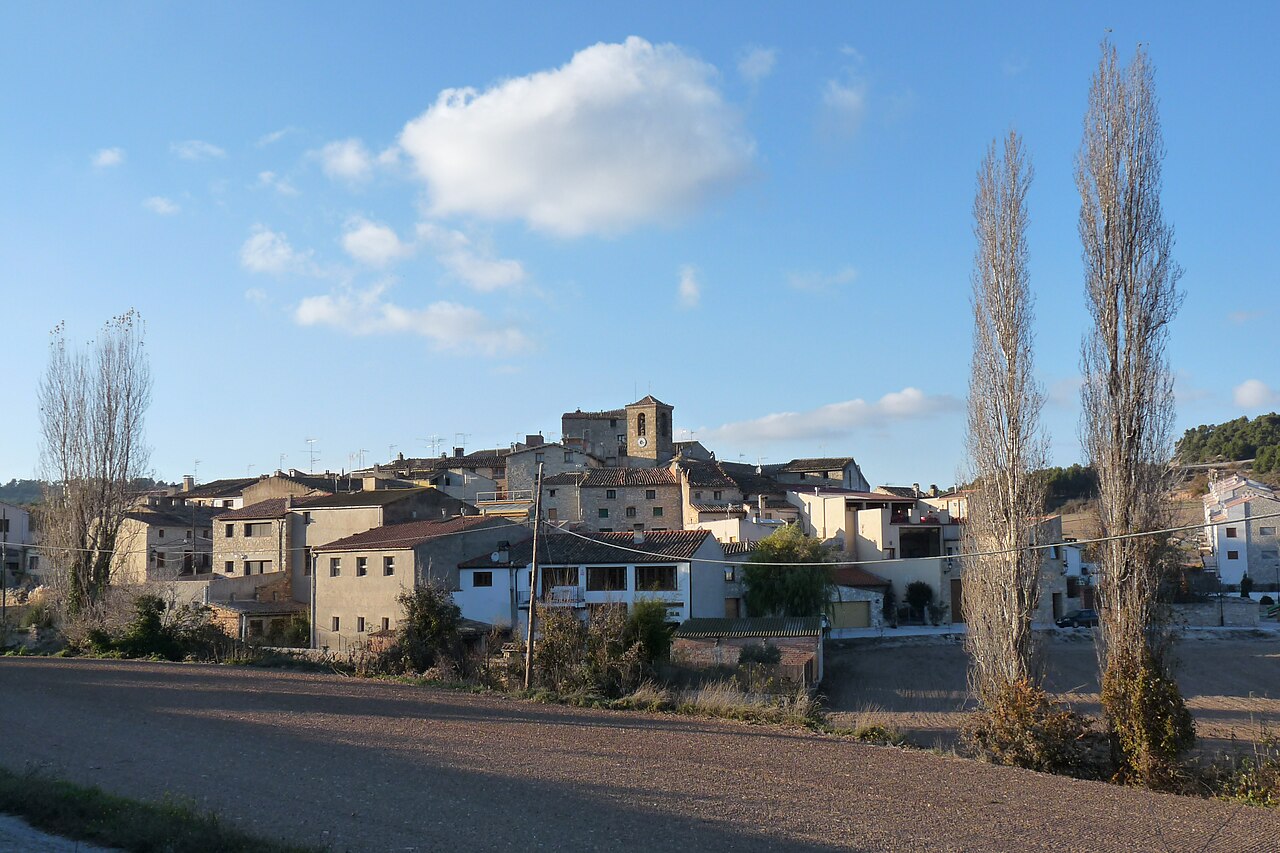
A little below the old quarter stands a stone bridge over the Francolí, known as the Pont Vell. From the parapet, Montblanc can be seen as a whole: the line of walls, the church tower rising above them, and the tightly packed roofs gathered within.
From here, the town appears compact and contained, defined by its boundaries yet open to the plain beyond. The walls no longer control who comes and goes. They remain instead as a reminder of how Montblanc once positioned itself in the landscape of the Conca de Barberà, and how that landscape still shapes the town today.