Full Article
about Pontils
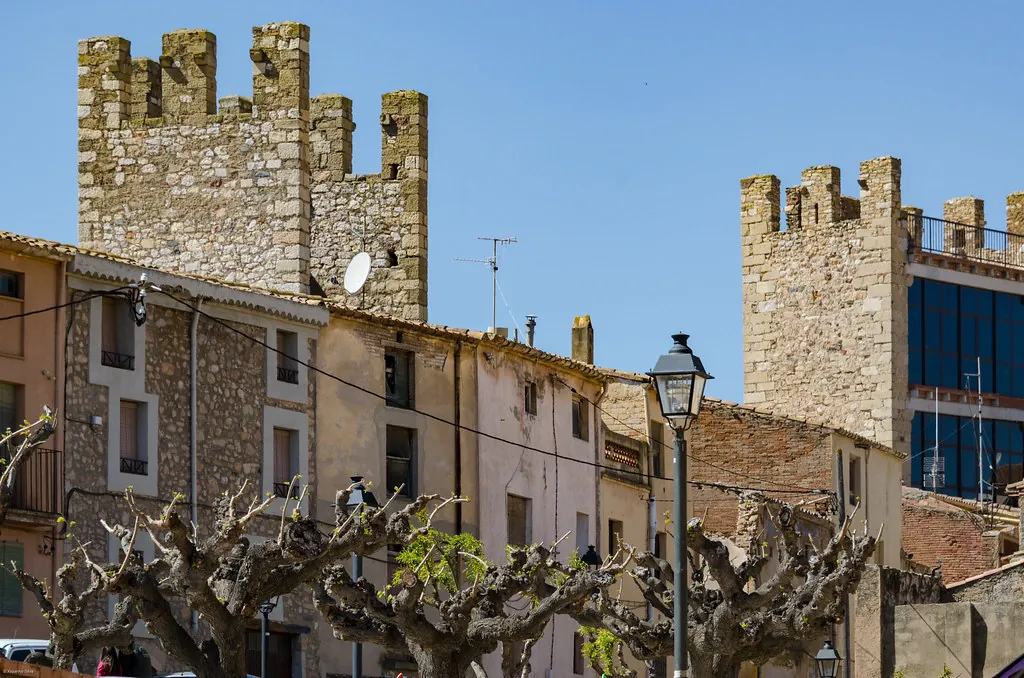
Municipality with several villages and medieval castles in the Gaià valley
Hide article Read full article
A scattered village in eastern Conca de Barberà
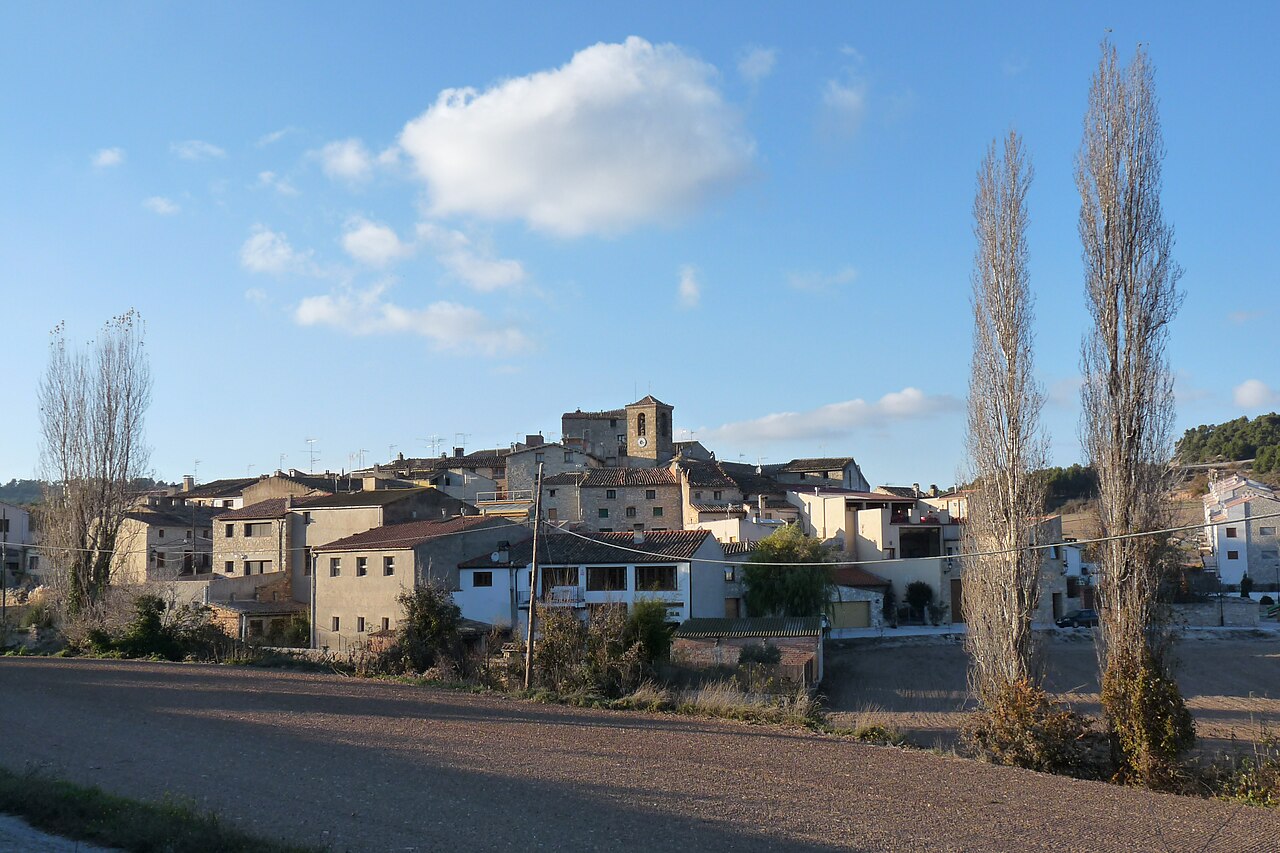
At the eastern edge of the Conca de Barberà, where the comarca begins to blend into Alt Camp and l’Anoia, lies Pontils. Rather than forming a single compact village, the municipality is a small mosaic of hamlets and isolated farmhouses spread across the valley of the river Gaià and the surrounding hills. With just over a hundred inhabitants and sitting at around 550 metres above sea level, it occupies a dry farming landscape of cultivated fields, holm oak and pine woodland.
Pontils is not defined by one standout monument. Its identity comes from the way it occupies the land. For centuries, life here revolved around masías, traditional Catalan farmhouses, with agricultural holdings scattered throughout the municipal area. That structure is still visible today when travelling along the local roads: standalone houses, plots of cereal or vines, and narrow tracks linking one property to another.
Its proximity to the wine-producing area of the DO Conca de Barberà, a protected designation of origin, and to the monastery of Poblet places Pontils within a region shaped by a long history. Here, though, the atmosphere is more rural and subdued than in other parts of the comarca.
The hamlet of Pontils and Sant Pere
The small settlement that gives the municipality its name consists of just a handful of short streets and a simple square. The houses retain features of rural architecture: stone walls, wide doorways and former outbuildings once used as stables or agricultural storage.
At the centre stands the parish church of Sant Pere. The present building is generally dated to the 16th century, although later alterations are clearly visible. It is not an elaborate church, yet it reflects the scale of the place, a parish designed for a small community closely tied to farming.
Around the hamlet, family vegetable plots and agricultural sheds can still be seen. These modest details help explain how the local economy functioned for generations, rooted in small-scale cultivation and livestock.
A landscape of masías
Much of the municipality consists of dispersed masías and small rural clusters separated by fields and patches of woodland. Some remain active in agriculture and livestock rearing, while others have been converted into homes used occasionally.
This pattern of settlement is common in inland Catalonia, but in Pontils it is especially evident because of the municipality’s small size and very low population density. Moving between these points generally requires a car. The distances are not great, yet the roads do not always follow direct lines, winding instead through fields and gentle rises.
The overall impression is of a lived-in countryside rather than a concentrated village. The farmhouses, cultivated plots and wooded areas create a patchwork that shifts subtly from one slope to the next.
Walking between vines, cereal and woodland
The surroundings of Pontils lend themselves to walking or cycling along agricultural and forest tracks. Signage is not always clear, which is typical of this kind of rural path network, so it is advisable to use a map or a route app for orientation.
The terrain is undulating, without major climbs but with steady ascents between low hills. In the more open areas there are cereal fields, almond trees and some vineyards. In the less cultivated zones, Mediterranean pine and holm oak woodland dominate.
The landscape changes markedly with the seasons. In spring, almond blossom and green field margins set the tone. Summer brings the dry shades of harvested cereal. In autumn, the nearby vineyards of the comarca turn more golden. Each period offers a slightly different reading of the same terrain, shaped by the agricultural cycle.
Agricultural rhythms and local life
The village calendar remains closely linked to farming tasks. The grape harvest is often one of the busiest times of year in the area, as many of the surrounding vineyards are gathered during those weeks.
Local festivals are mainly held in summer, when relatives who live elsewhere return. In places as small as Pontils, these celebrations serve to bring together current residents and former neighbours. They reinforce the sense of continuity in a municipality where population numbers are modest and many families maintain ties across generations.
The cooking in the area is based on products typical of inland Catalonia: olive oil, cured meats and hearty dishes associated with a farming tradition. For shopping or eating out, it is usual to travel to larger nearby towns, as Pontils itself remains primarily residential and agricultural.
Within reach of Montblanc and Poblet
Pontils lies a short distance from some of the best-known sites in the Conca de Barberà. Montblanc preserves one of the most complete medieval walled enclosures in Catalonia, offering a clearer sense of the historical weight this comarca once carried.
Also relatively close is the monastery of Poblet, one of the great Cistercian abbeys of the Iberian Peninsula. For centuries its presence shaped the organisation of the surrounding territory, including many of the crops and agricultural properties in this area. The wider landscape around Pontils cannot be fully understood without acknowledging that influence.
When to visit
Spring and autumn are generally the most pleasant times to explore the tracks around Pontils. Summer can be hot in the middle of the day, while winter brings the colder temperatures typical of inland areas. In any season, a visit depends largely on an interest in walking, cycling or simply observing the agricultural landscape.
Pontils suits those looking to understand how rural settlement works in this part of Catalonia. It is a place of quiet roads, scattered farmhouses and fields that change with the light and the time of year. Rather than offering a checklist of sights, it presents a way of inhabiting the land that has evolved gradually, and which still defines daily life in the valley of the Gaià.