Full Article
about Rocafort de Queralt
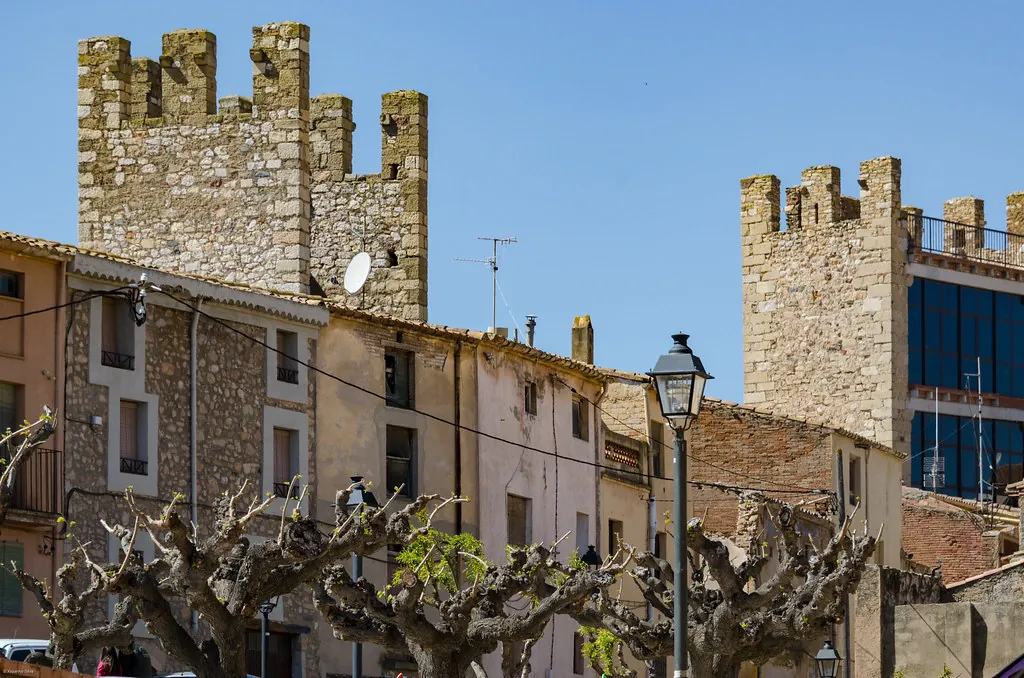
Village with a striking Modernist winery and a rebuilt castle at the entrance
Ocultar artículo Leer artículo completo
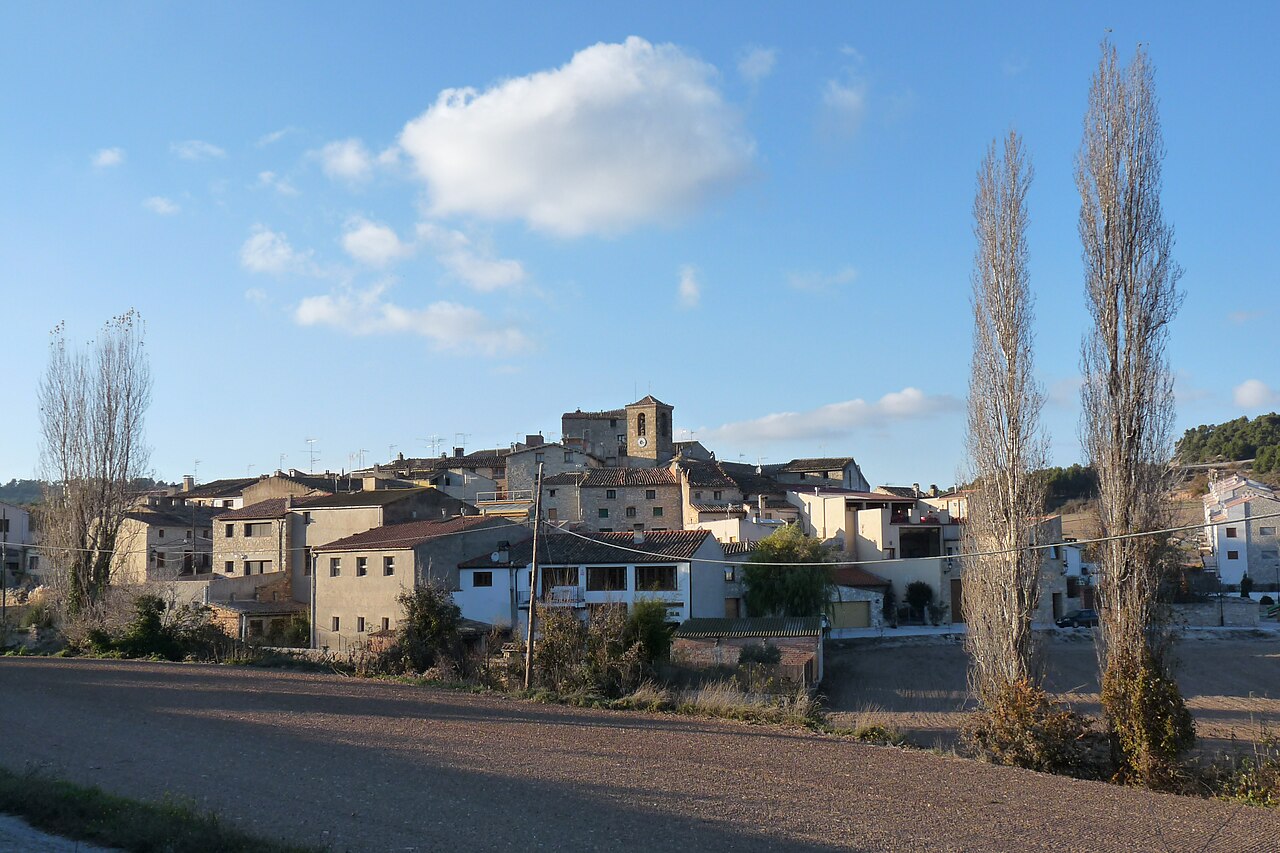
The tractors start at seven. By half past, their diesel rumble has replaced night-time silence and the scent of cold stone gives way to warm dust drifting up the single main street. Few British travellers ever hear this soundtrack—Rocafort de Queralt appears on so few itineraries that TripAdvisor still counts its reviews on one hand—yet that early-morning clatter is as revealing as any guidebook entry. It says the village is alive, not frozen for show, and that the 243 residents have fields to work at 566 m above sea level, whatever the calendar claims about “tourism season”.
A Fort With No Keep
Rocafort’s name—literally “hard rock”—promises battlements and banners. What you get is better described as archaeological whispers: short stretches of medieval wall sewn into later farmyards, a gateway now wearing a corrugated-iron porch, the private manor house that absorbed the castle’s last tower. Walk the perimeter in eight minutes and you will have seen the lot. Stay longer, though, and details emerge: Romanesque windows punched through later brick, a stone lintel carved with the Queralt family’s twin grooves, the sudden valley view where houses step back and the Conca de Barberà unfolds in vine-rows that shimmer silver-green after rain. No ticket office, no audio guide, just the feeling that you have pieced together the story yourself.
That do-it-yourself mood extends to Sant Miquel, the parish church whose bell tower doubles as the village’s time-piece. The door is usually unlocked. Inside, the nave is a palimpsest—thirteenth-century masonry, eighteenth-century gilt, a 1970s loudspeaker dangling like an afterthought. Light a tealight for 50 cents if you wish; the coin box helps pay for roof tiles undone by summer thermals that sweep in from the Prades mountains.
Wine, Wind and Legwork
The surrounding fields belong to the DO Conca de Barberà, a denomination sometimes overshadowed by neighbouring Priorat but quietly respected for its limestone freshness. Cèsar Martinell, Gaudí’s disciple in everything but fame, designed the local cooperative in 1918: a cathedral of brickwork with parabolic arches high enough for carts to turn inside. Visits must be arranged a day ahead through the ajuntament (email works; phone Spanish is met with friendly patience). If you time it right, a volunteer will unlock the iron gates and let you sniff the fermenting must while swallows loop overhead. Bottles bearing the cooperative’s label sell for €6–€9; the brut nature cava tastes drier than most British supermarket fizz and travels well in a suitcase corner.
Walkers can pick up way-marked farm tracks that fan out towards scattered masías. None of the routes is longer than 10 km and the cumulative climb rarely tops 250 m—more afternoon leg-stretch than hardcore hike. Spring brings poppies between the wheat; autumn smells of fennel and second-cut alfalfa. Whichever season you choose, carry water: there are no cafés on the lanes and mobile signal vanishes after the first kilometre.
Cyclists arrive in increasing numbers, drawn by empty tarmac that rolls rather than punches. The loop south to Vallbona de les Monges and back is 42 km with 600 m of ascent—comparable to a Surrey Hills outing minus the traffic. Start early; by noon the same thermals that rattle roof tiles work against pedals.
One Bar, Closed Mondays
Gastronomic choice boils down to Mircla, the bar-restaurant wedged into an arcaded house on Plaça Major. Its three-course menú del dia costs €14 and treads the safe line between local and recognisable: grilled lamb cutlets, chips and salad, followed by crema catalana that arrives with a blow-torched sugar lid. Ask for pa amb tomàquet and they’ll bring bread, tomato halves and a bottle of olive oil to assemble yourself—an easy introduction for children who won’t touch anything resembling a vegetable at home. Inside, the walls display faded photos of the village handball team; outside, terrace tables look onto stone façades the colour of digestive biscuits. Mircla shuts on Mondays and doesn’t reopen for evening service, a routine worth remembering if you are staying overnight.
There is no shop, so stock up in Montblanc (15 km) before the final climb. The nearest cash machine is there too; the cooperative winery accepts cards only when the terminal feels like working, and Mircla prefers notes to contactless.
Where to Sleep and How to Reach It
Accommodation is limited to three rural houses signed up to the Generalitat’s tourism registry. Expect ceiling beams, steep stairs and Wi-Fi that copes with email but buckles under Netflix. Prices hover around €90 a night for a two-bedroom unit—mid-range by rural-Spain standards—with valley views that justify getting up for sunrise. Book directly; owners often knock €10 off if they avoid commission sites.
Public transport exists on paper: daily buses link Barcelona with Montblanc in 1 hr 30 min, and a pre-booked taxi covers the remaining quarter-hour for about €25. Car hire is simpler and usually cheaper for two or more people; from Reus airport the drive is 50 minutes, mostly on the AP-2 toll road (€7.50 each way). In winter the C-241 ascent can frost over—carry chains if a northerly tramuntana has been blowing.
When the Village Parties
Rocafort’s main festival, Festa Major de Sant Miquel, lands on the weekend nearest 29 September. The programme is reassuringly small-town: Saturday evening brass band, Sunday morning sardana dance in the square, communal paella cooked over vine prunings. Visitors are welcome but not catered to; bring a folding chair if you dislike standing and prepare to accept plastic cups of cava thrust into your hand by total strangers. Fireworks are modest, over by 23:00—no midnight barrage like larger coastal towns.
A secondary summer gathering happens around 15 August when returned emigrants swell the population to maybe 400. Streets echo with Catalan spoken through French or Belgian accents; the bar stays open past 01:00, an anomaly it never attempts the rest of the year.
Part of a Wider Loop
Rocafort works best as a breather within a longer circuit. The Cistercian triangle—Poblet, Santes Creus, Vallbona de les Monges—lies within 25 km and offers abbeys grand enough to fill entire mornings. Montblanc’s medieval walls, Tarragona’s Roman amphitheatre and the Gaudí wine cellars of Nulles are all day-trip distance. Base yourself in Rocafort and you trade nightlife for silence, hotel breakfast for self-sliced crusty bread, but you also dodge tour-bus queues and pay village prices.
Come if you want to overhear farmers arguing over tractor parts rather than sommeliers quoting Parker points. Come prepared to create your own entertainment and to accept that Mondays mean an empty stomach unless you planned ahead. The reward is one of inland Catalonia’s least cluttered viewpoints—and the smug knowledge that, back home, almost no one you know has ever heard the name Rocafort de Queralt.