Full Article
about Sarral
Famed for its alabaster crafts and Pere Domènech i Roura’s Modernist winery.
Hide article Read full article
Sarral: A Village of Stone and Vine
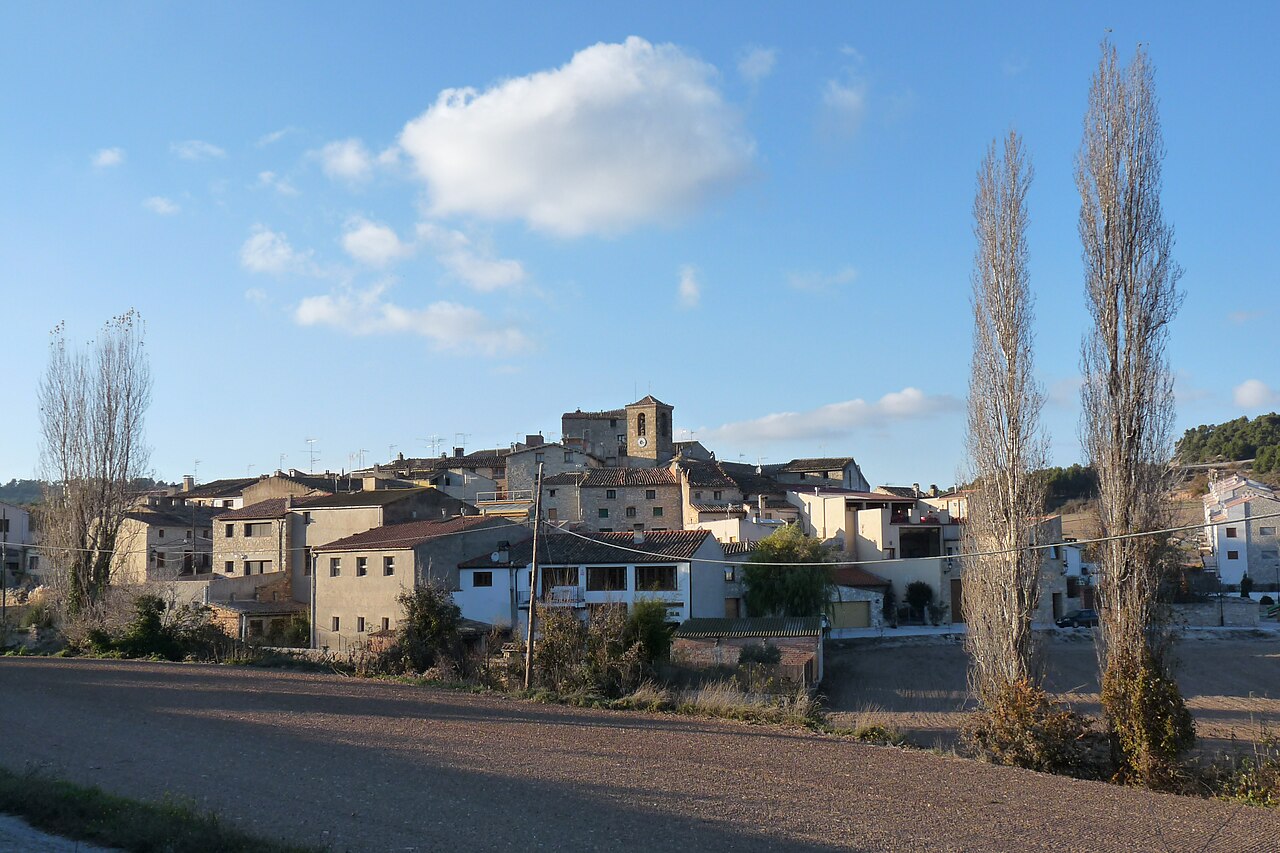
Sarral sits on the plain of the Conca de Barberà, at just under 500 metres above sea level. Its identity is inseparable from the land that surrounds it: a geometry of vineyards, cereal fields, and almond groves. With a population just over 1,600, this is a working village. The agricultural cooperatives and farm buildings you pass are active, not decorative. The rhythm here is set by the seasons, not by a tourist calendar.
The historic centre, with its narrow lanes, follows the irregular footprint of the old medieval enclosure. Life was once contained within these walls, while work happened beyond them in the fields. That fundamental relationship between settlement and farmland still defines the place. You see it in the farm machinery parked in courtyards and in the pragmatic layout of the streets.
The Church, the Gate, and the Old Quarter
The church of Santa María presides over the rooftops. Its bell tower, visible from kilometres away on the approach roads, served for centuries as much as a territorial marker as a religious one. The building’s architecture shows layers of modification from the medieval period onward. Inside, the artistic pieces reflect those successive eras of change.
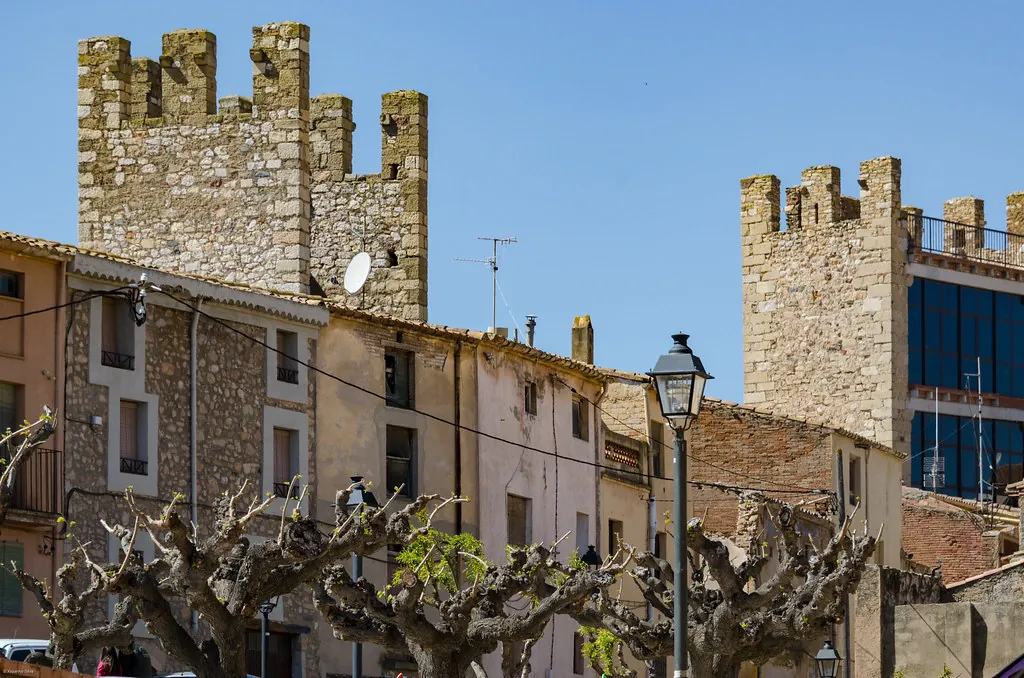
One of the clearest vestiges of the fortified village is the Portal de la Vila, the old main gate. Nearby, fragments of the wall survive, integrated into later structures. The street plan here makes little logical sense until you consider defence; lanes bend and narrow abruptly, following the contours of the vanished walls.
Several houses from the 16th and 17th centuries stand in the old quarter. Their carved stone portals and wrought-iron balconies speak of the local families whose status was built on land and agricultural trade. These are private homes, not museums. Their value is in how they contribute to the continuous fabric of the village, not in isolated preservation.
A path leads from the edge of town up to the Calvario, a small hilltop sanctuary. The walk passes a series of chapels that form a traditional via crucis. From the top, the view lays bare the village’s context: a vast agricultural plain of vineyards, divided by dry stone walls and dotted with pockets of pine woodland. The perspective clarifies Sarral’s reason for being here.
A Working Landscape
The Parellada grape, common to this part of Catalonia, defines much of the local wine and cava production. Viticulture is not an attraction here; it is the primary economy. Some wineries do arrange visits, but many are focused on production, so confirming arrangements in advance is necessary.
The network of agricultural tracks that encircles Sarral is its most accessible trail system. You can walk for an hour or two through vineyards and light woodland without a detailed map, following clear, unpaved lanes. These are working roads, so you may share them with a tractor, especially around harvest time.
Secondary roads connect Sarral to Montblanc and l’Espluga de Francolí. For cyclists, they offer gentle gradients and relatively calm traffic during the week, though you should always be mindful of agricultural vehicles.
Local food follows the produce of the comarca. Grilled meats, cured sausages, and dishes based on wild mushrooms (in season) are typical. Olive oil from nearby groves is a constant presence, reinforcing the direct link between the table and the surrounding fields.
The Annual Cycle
The Fiesta Mayor, held in late July for Santa María Magdalena, transforms the village’s pace for a few days. The plaza fills with music and events organised by local associations. It is a communal celebration whose scale matches the size of the community itself.
In early autumn, the grape harvest begins. It is not staged for visitors; it is the busiest period in the agricultural year. The landscape becomes quietly animated with workers in the vines and trailers loaded with grapes moving toward the cooperatives. The centrality of wine to everything here is never more apparent.
Sarral reveals itself through observation rather than checklist tourism. A slow walk through its stony centre, followed by time on a vineyard track, shows how village and countryside operate as a single, enduring system. The interest lies in witnessing that continuity.