Full Article
about Savallà del Comtat
Small village with a ruined castle overlooking the northern Conca landscape.
Hide article Read full article
A Village That Moves at Its Own Pace
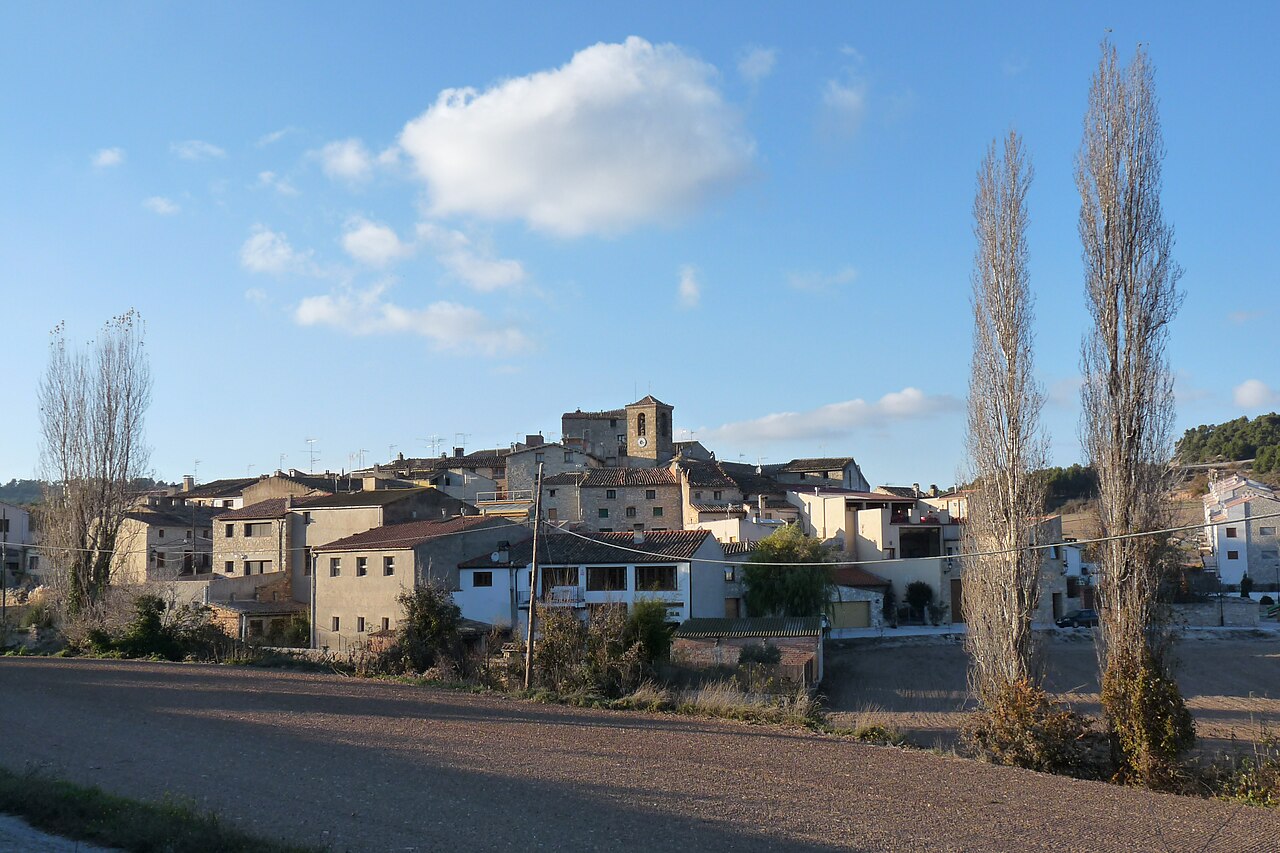
Early in the morning, when the air still drifts down cold from the higher fields, Savallà del Comtat wakes slowly. A shutter lifts, a wooden door opens, and the sound of bells carries along the narrow streets. The village sits at around 825 metres above sea level, in one of the quietest corners of the Conca de Barberà comarca in inland Catalonia. Fewer than fifty people live here, and that is immediately apparent. There is no traffic, no shop windows, no sense of a place arranged for visitors. It is simply a village where daily life follows its own rhythm.
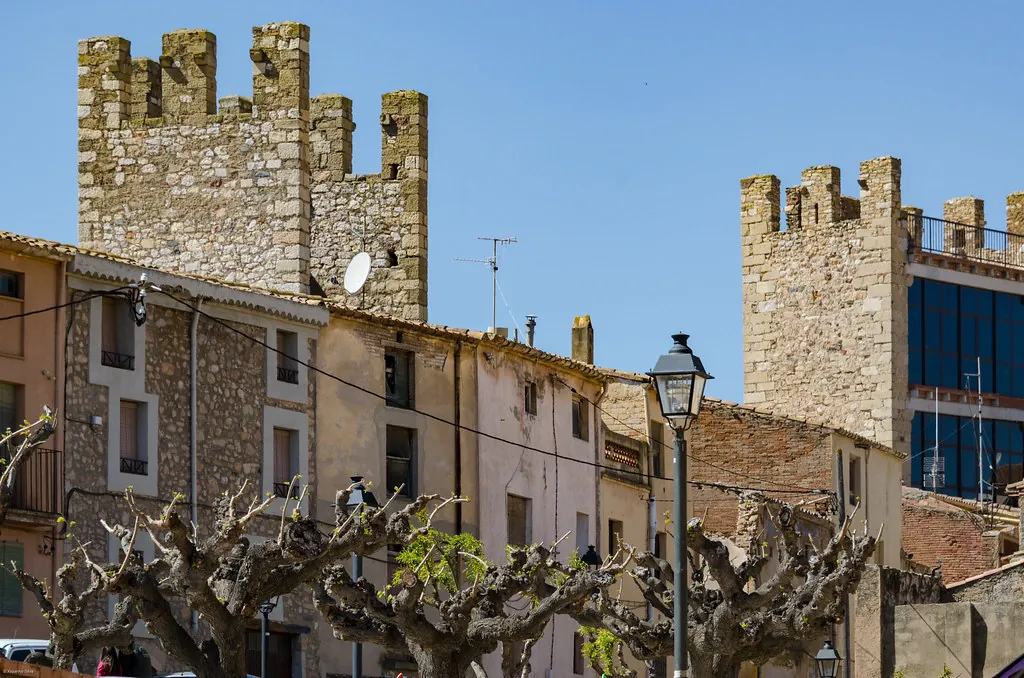
The houses cluster around the church and a handful of gently sloping cobbled streets. Pale stone walls, reddish roof tiles, thick masonry built with winter in mind. From the edges of the built-up area, the view opens out across a patchwork of vineyards, cereal fields and small areas of woodland. In autumn, when the vine leaves turn, the landscape shifts to copper tones that stand out under the clear light typical of this inland part of Catalonia.
Savallà’s scale is modest. A short walk is enough to cross it, yet there is no rush. The village feels shaped by climate and agriculture rather than by tourism. Its position, slightly elevated and exposed, explains the solid construction of the houses and the compact layout, designed to offer some shelter from wind and cold.
Sant Andreu and Traces of the Past
At the centre stands the parish church of Sant Andreu. Its origins are medieval, although it has been altered over time. From the outside, the solid walls and simple arches recall the rural Romanesque style common in the area. The interior is plain. If the door happens to be open, which is not always the case, it is worth stepping inside, especially in summer when the change in temperature and the hush are noticeable as soon as you cross the threshold.
Walking through Savallà del Comtat does not take long, but it rewards a slower pace. Details on the façades speak of another era: wrought-iron grilles, wide doorways once used by carts, stone steps worn down by years of use. Many of the houses have been restored, yet they retain their traditional structure. The overall impression remains that of a small agricultural settlement in low mountain terrain, built to cope with cold seasons rather than to impress.
From several points along the village’s edge there are wide views across the Conca de Barberà. Vineyards occupy much of the surrounding land, their neat rows shaping the terrain. Between them appear small patches of holm oak and oak woodland. During mushroom season, it is common at weekends to see people walking the nearby tracks with a basket and a small knife, following a long-standing autumn habit in many parts of Catalonia.
Walking into the Fields and Woods
In Savallà del Comtat, the simplest plan is to go for a walk. Agricultural tracks and footpaths link the village with fields and small wooded areas. These are not waymarked hiking routes in the formal sense. They are working paths, used by local residents to move between plots of land. That is precisely why the landscape feels close and unfiltered. A tractor may pass from time to time, dogs bark somewhere in the distance, and after a night of rain there is the smell of damp earth.
The altitude makes itself felt as the day goes on. Even in summer, late afternoon can turn cool. It is sensible to have an extra layer if staying until sunset, as the temperature drops quickly once the light fades. In return, the sky is often exceptionally clear. On cloudless nights, the lack of strong artificial lighting allows a good number of stars to be seen.
For meals or a wider range of services, a car journey is necessary. Larger towns in the comarca, such as Montblanc or Barberà de la Conca, are relatively close and concentrate much of the area’s daily activity. They are also the places where it is easier to explore cooking linked to the local landscape and wines produced under the Conca de Barberà designation of origin, a recognised wine region in Catalonia.
A Discreet Festive Calendar
The festive calendar in Savallà del Comtat is low-key and closely tied to those with family connections to the village. The main festival is usually held around Sant Andreu, at the end of November. During those days, some residents who live elsewhere return, and the village briefly regains a little more movement and noise.
Beyond these dates, life continues in a steady, everyday way: agricultural work, brief conversations in the street, the sound of the bells at certain hours. For anyone arriving from outside, Savallà is not a place of major attractions or packed schedules. What it offers is different. It is a small settlement set high in the comarca, where landscape and silence still carry more weight than any organised plan.
There are no grand monuments beyond Sant Andreu, no long list of sights to tick off. Instead, there is coherence between the village and its surroundings. The vineyards are not a backdrop arranged for photographs but part of the working environment. The cereal fields and patches of woodland form part of daily routines. Even the mushroom pickers seen in autumn are following seasonal rhythms rather than staging a scene.
Savallà del Comtat remains defined by its scale and its altitude. At 825 metres, seasons are marked. Autumn colours arrive clearly, winter cold shapes the architecture, summer evenings cool down quickly. With fewer than fifty residents, the absence of noise or commercial activity is not a stylistic choice but a simple reflection of how small the community is.
For travellers used to destinations built around landmarks or entertainment, this corner of the Conca de Barberà may feel almost too quiet. Yet that quiet is precisely its defining feature. Savallà does not try to draw attention. It continues, as it has for generations, centred on Sant Andreu, surrounded by vines and fields, attentive to the weather and the agricultural calendar. In that sense, visiting is less about doing and more about observing how a rural Catalan village carries on, largely unchanged, at the top of the comarca.