Full Article
about Solivella
Town dominated by the ruins of the Llorac castle and streets steeped in history
Ocultar artículo Leer artículo completo
The church bell strikes noon and the village stops. A woman balancing groceries pauses mid-stride. Two elderly men freeze over their dominoes. Even the tractor on the edge of town idles, as if waiting for permission to continue. In Solivella, 489 metres above sea level in Catalonia's Conca de Barberà, time hasn't so much stood still as learned to move at a more deliberate pace.
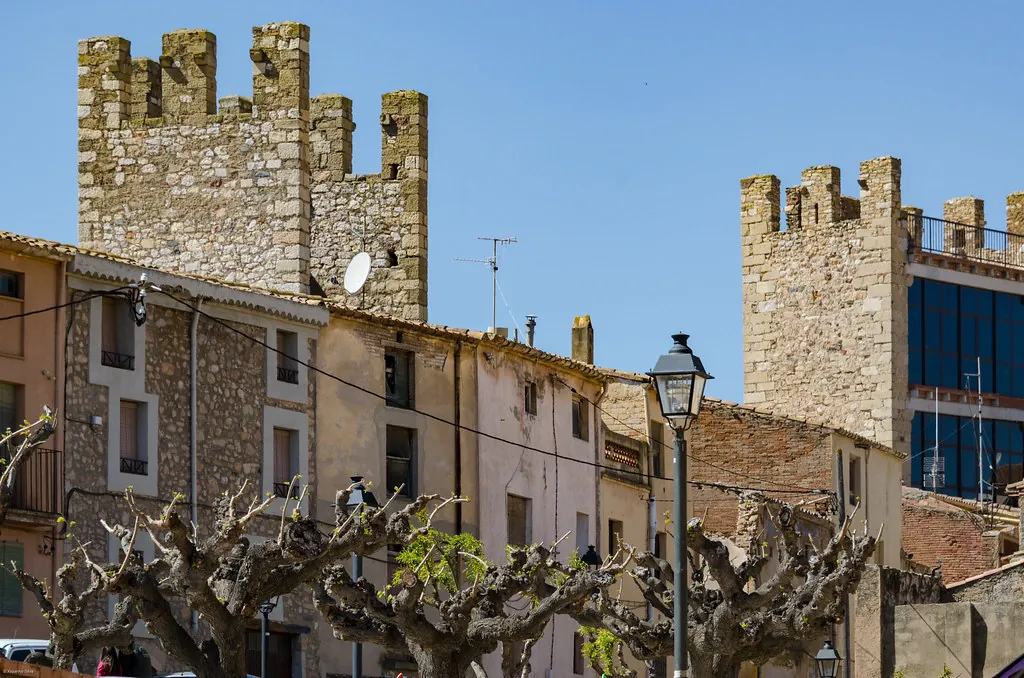
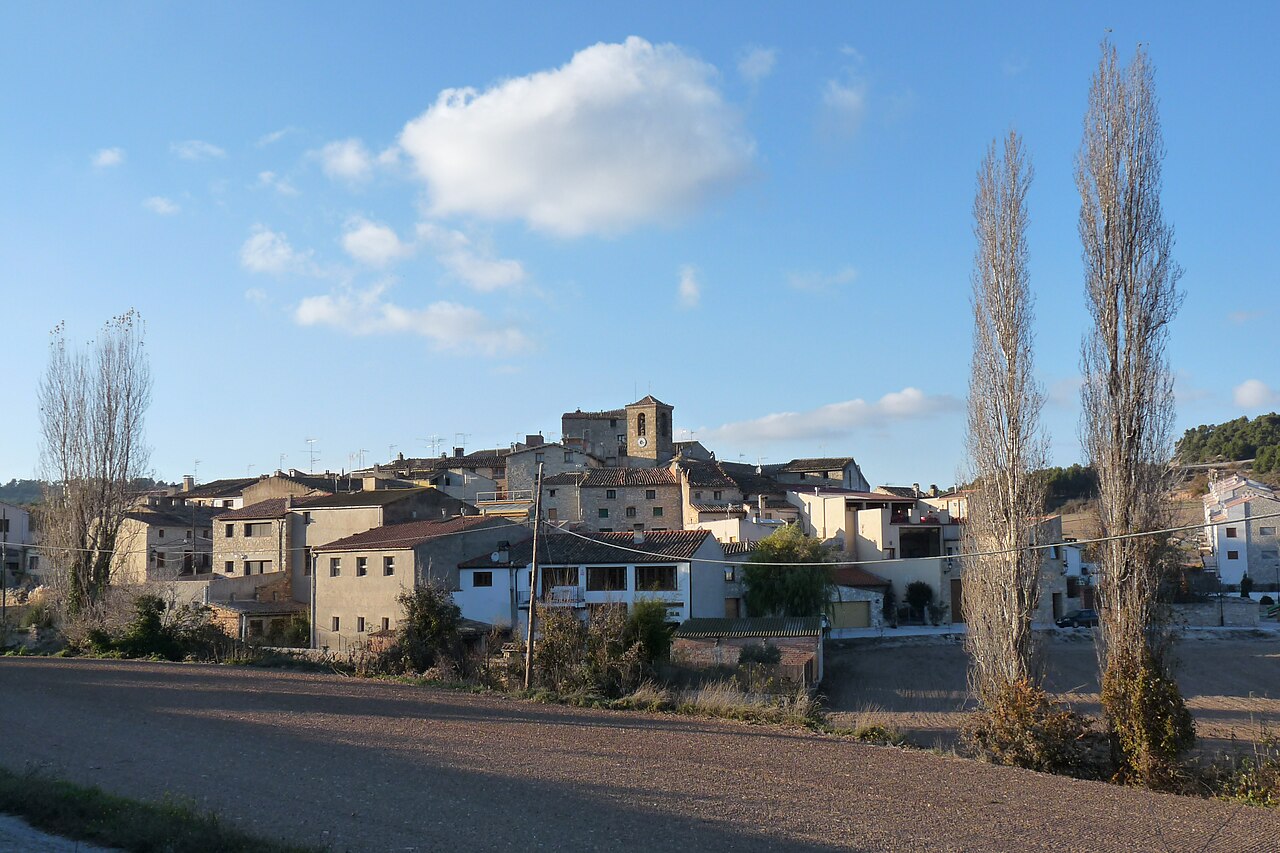
This medieval settlement of barely 600 souls sits anchored between seas of cereal fields and vineyards that flush gold in late spring, then rust towards harvest. The landscape announces itself long before the village proper: almond trees scattered like afterthoughts, stone terraces stitched into hillsides, the occasional farmhouse (masia) with its Roman-tiled roof and wooden balcony. Approach from the west and Solivella appears as a sandstone wave breaking against the horizon – houses stacked one above the other, the church tower acting as mast.
Stone, Bread and Trepat
Park on Plaça Major before 11 am or you'll circle for space with local farmers who've nipped in for newspaper and brandy. The square is barely the size of a tennis court, flanked by a 16th-century townhouse whose ground floor now sells diesel additive alongside tinned tuna. No one thought to pretty it up for visitors; authenticity here is accidental, not curated.
Wander downhill and the lanes funnel into a miniature labyrinth just three streets wide. Doorways shrink to five foot six – centuries of short ancestors. Look up and you'll spot 1714 carved into a lintel, or a coat of arms worn smooth by rain. These houses grew organically, rooms added when a son married or a goat needed shelter. The stone absorbs midday heat, releasing it after dusk so residents can sleep with windows shut against mosquitoes.
San Juan Bautista church squats at the highest point, its bell tower patched with mismatched brick where earthquakes and civil war took bites. Inside, the air smells of beeswax and mouse. A single fluorescent tube illuminates a Baroque altarpiece gilded so thickly it looks embossed. Drop a euro in the box and lights stay on for two minutes – long enough to notice the priest's vestments stitched by local women who recorded their names on the hem in 1923.
Outside, a narrow path corkscrews up to the ruined castle. The climb takes six minutes if you're fit, ten if you're carrying a camera and conscience about photographing someone's backyard. From the top you can trace the agricultural calendar in colour blocks: green wheat, red earth, black vine stumps. On very clear days the Pyrenees float like a paper cut-out 80 kilometres north.
What Grows Here
Solivella's altitude tempers summer heat – mornings stay cool enough to walk without collapsing into the nearest bar. That bar, by the way, is Cal Trave, halfway down Carrer Major. Plastic tablecloths, bullfighting posters, grandmother behind the till. Order pa amb tomàquet and you'll get half a baguette rubbed with garden tomato, crowned with a glug of local olive oil that tastes of green apples. The house wine comes from a co-op two valleys over; it's young, purple, and costs €2.50 a glass. Locals treat it like water, which in truth it once was.
Food runs to the solid: grilled lamb chops that arrive eight at a time, tiny snails in clay pots, almond cake that drinks coffee like a sponge. Vegetarians can cobble together roasted peppers and cheese, but this is carnivore country. Portions assume you've spent the morning behind a plough rather than a laptop. Arrive before 1.30 pm or the daily menu del dia (three courses, bread, wine, €14) sells out.
The surrounding vineyards work with Trepat, a grape that refuses to behave anywhere else. Light, almost rosé in colour, it tastes of pomegranate and cracked pepper. Three wineries within 15 minutes accept visitors, but you must phone ahead – if the farmer is spraying he won't answer, and there's no reception among the vines. Celler Carles Andreu in nearby Pira offers tastings in a converted stable; his daughter speaks enough English to explain why Trepat stubbornly produces tiny berries and low yields.
Walking Off the Wine
Solivella sits on the GR-175, a long-distance footpath that stitches together 140 km of Conca de Barberà vineyards. The stretch east to Montblanc rolls gently through almond and olive groves, passing a 12th-century bridge where frogs chorus in the culverts. Allow two hours, carry more water than you think – shade is negotiable. In April the air smells of broom and cut grass; by July it's thyme and hot pine. Farmers wave from tractors; dogs bark, then lose interest.
If that sounds energetic, a 45-minute loop circles the village outskirts, dipping past dry-stone walls where giant fennel grows wild. You might meet Pep gathering snails after rain, or Margarita cutting wild asparagus sold by the bundle for €1. Evening light turns the stone amber; swifts shriek around the church tower. It's ridiculously peaceful, broken only by the occasional Moto Guzzi echoing up from the valley road.
Winter brings a different proposition. Night temperatures drop to freezing; mist pools so thickly you can't see the end of the street. The village empties further as locals head to coastal second homes. Cal Trave reduces hours, opening only Friday to Sunday. Come now if you want total solitude, but pack layers and a sense of self-sufficiency – the nearest pharmacy is 12 km away in L'Espluga de Francolí.
The Small Print
Monday is ghost-town day. Cal Trave shuts, the bakery operates on whim, and even the church stays locked. Plan around it or you'll lunch on crisps in the car. Cash is king: no ATM exists, cards aren't always welcome, and the next machine sits beside a petrol station that closes siesta-time (2-5 pm). Parking is free but spaces are sized for a SEAT 600; if you've hired a SUV, prepare for creative manoeuvring.
Mobile signal hops between one bar and none. Download offline maps before leaving Tarragona or you'll navigate by church tower and hope. English is thin on the ground – Catalan phrases earn genuine smiles. Try "Bon dia" before noon, "Bona tarda" after, and locals will switch to slow, helpful Spanish if your Catalan stalls.
Stay in the village itself and you'll find two self-catering houses and a room above the bakery that smells of 5 am dough. Rocafort de Queralt looks closer on the map than it drives: the road narrows to a single cliff-hugging track after dark, not funny after wine. Better to book in Montblanc, 15 minutes away, where medieval walls enclose decent hotels and Friday-night tapas crawl.
Fly to Reus (Ryanair from Manchester, May-October) or Barcelona year-round. Hire car is non-negotiable: buses exist but align with school runs, not tourist whims. From Reus take the AP-2 toll (€6) then navigate by vineyard rather than sat-nav – the turning appears immediately after a wind turbine that looks like a gleaming cross.
Solivella doesn't do drama. It offers instead a calibration reset: eat when hungry, sleep when dark, greet whoever passes. The bells still mark quarters of an hour; the village answers. Leave before you adjust and the world outside feels rushed, unnecessarily loud.