Full Article
about Cunit
Residential coastal municipality with long beaches protected by breakwaters and a Romanesque church near the sea.
Hide article Read full article
At nine on a Tuesday morning in June, the sand in Cunit still holds the marks of the first swimmers. Children have built castles with moats that have yet to dry. The water arrives gently, forming a wide blue basin where many children take their first strokes. From one of the breakwaters you can see the whole sweep of the coast: Calafell on one side, Cubelles on the other, and in between Cunit curving around its broad beach.
A beach beyond the postcards
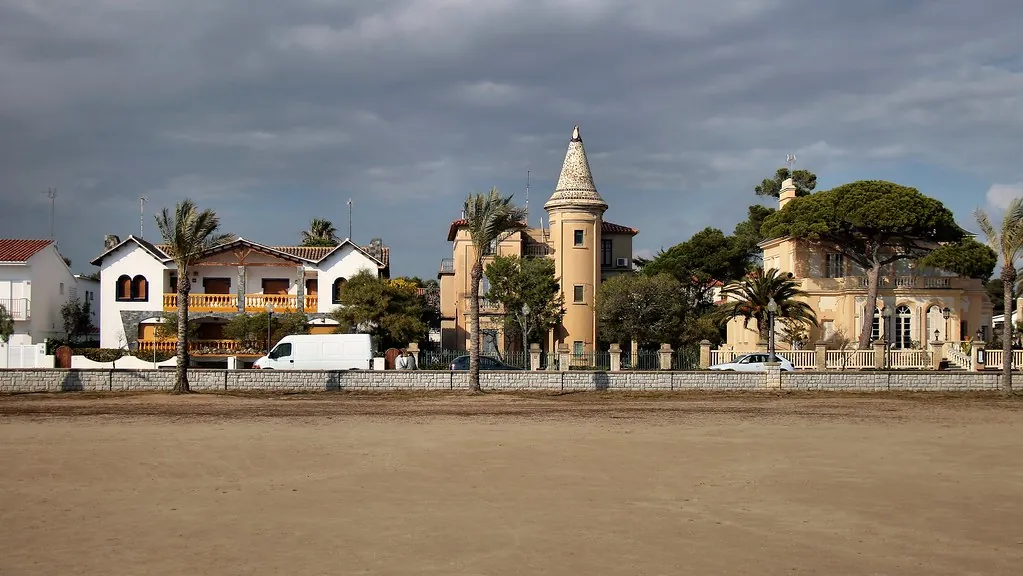
Old postcards once described this bay as one of the summer corners of the former Garraf coastline. The view has changed. The sand remains fine and pale, but the old villas gave way decades ago to apartment blocks built during the tourist expansion along the coast.
Even so, when the sun stands almost directly overhead at midday and the water turns transparent at the edge, it is easy to understand why so many people began spending their summers here.
The beach stretches for just over two and a half kilometres. Breakwaters placed along the bay soften the waves and create areas of very calm water. Families often spend hours close to the shore while children dig channels in the sand with buckets and spades.
In August the atmosphere shifts. Towels line up between breakwaters and finding space calls for patience. If there is a choice, come during the week or outside July and August. In June or September the seafront promenade moves at a different pace: early walkers, anglers at the end of the breakwaters, terraces opening without hurry.
Into the hills behind the sea
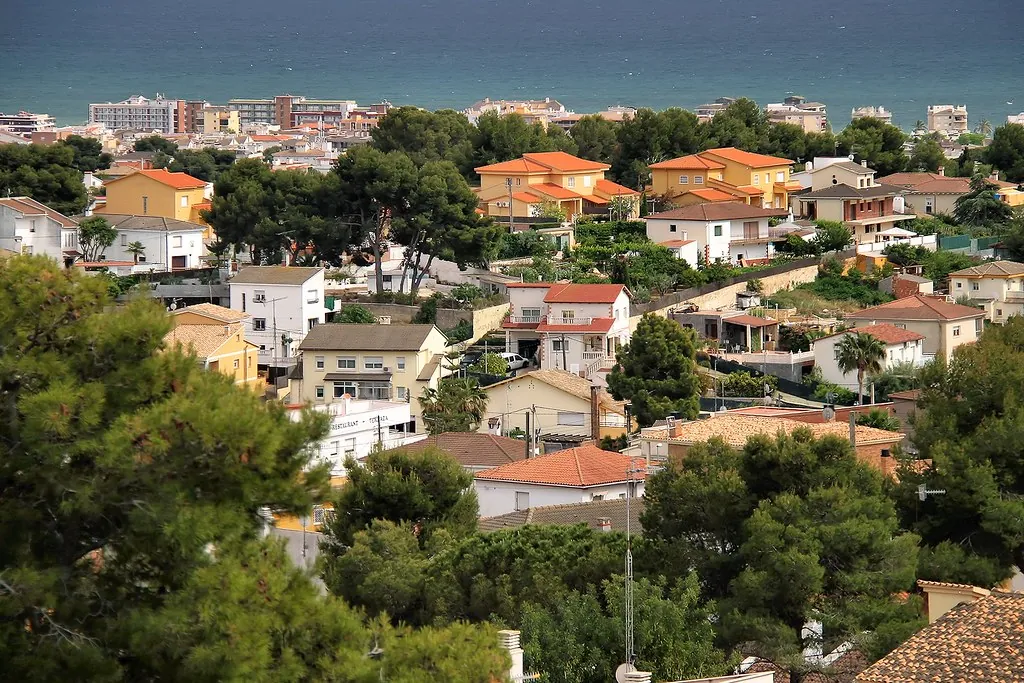
Behind the first line of buildings the land begins to rise. These are not mountains but gentle hills covered in pines and Mediterranean scrub. The cerro de l’Avenc reaches around 140 metres and the turó de la Nina comes close to 200, the highest points in the municipality.
From the top the contrast is clear: the Mediterranean almost flat ahead, and behind it the patchwork of vineyards and fields that signal the Penedès region.
Several dirt tracks cross areas once dotted with masías, traditional Catalan farmhouses. Walking here, the scent of rosemary mixes with the dry dust of the path and, when a southerly breeze blows, a faint trace of salt from the coast. Some of these rural houses still stand, others have been absorbed into more recent residential developments.
At the upper end of the municipality are the remains of the old castle of Cunit, documented in medieval times. Today what can be made out is mainly the tower and a few sections of wall. Nearby stands the church of Sant Cristòfol, of Romanesque origin though much altered over the centuries. The stone is rough and pale, and inside the light filters softly through narrow windows.
Traditionally, on the day of Sant Cristòfol at the beginning of July, a romería takes place that descends towards the sea. A romería is a local pilgrimage or community procession. Here it is not a large event but a gathering of neighbours who keep the custom alive.
Dates that shape the year
In winter, Carnival brings a few lively days to the town. It does not match the scale of other celebrations along the Catalan coast, but many local residents take part with comparsas, organised groups in costume, music and the symbolic ending known as the burial of the sardine near the beach.
The night of Sant Joan, marking the summer solstice in late June, is probably the most animated date of the year along the seafront. At dusk the first bonfires appear on the sand and the smell of burning wood drifts into the sea breeze. Later come firecrackers, music and people walking down to dip their feet in the water at midnight.
As in many coastal towns, most of the festive calendar is concentrated in summer, when the population practically doubles.
Eating at an unhurried pace
The cooking found in Cunit follows the traditions of the Penedès coast. Rice dishes are prepared slowly, often with chicken and rabbit rather than seafood. Coca de recapte, a flatbread topped with escalivada, slow-roasted vegetables, and butifarra sausage, appears on many tables. In winter, calçots, long spring onions typical of Catalonia, are grilled over open flames that leave the air scented with burning vine shoots.
Xató sometimes features on menus, although it is more closely associated with inland Penedès and the Garraf area. When well made, the thick romesco sauce and crisp escarole make it worthwhile.
At the municipal market in the morning the scene is everyday rather than staged: fruit, the catch of the day, freshly baked bread. On Tuesdays and Fridays there are usually additional stalls set up in the square. It is not a market designed for visitors but the place where local residents do their shopping.
Getting there and choosing your moment
Cunit is connected to Barcelona by commuter train. The journey typically takes a little over an hour, depending on the service. The station is about a ten minute walk from the beach.
By car it is a straightforward drive along the coast, although in high summer parking near the promenade can mean circling more than once in search of a space. A practical option is to leave the car near the station or on streets slightly further inland and walk down.
The most pleasant months are usually June and September, when the light is still bright, the sea remains inviting and the town settles into a steadier rhythm. Outside the height of summer, Cunit shows its more everyday face: a long curve of sand, low hills behind it and a community that moves in time with the seasons rather than the crowds.