Full Article
about Cubelles
Quiet coastal town with family beaches and the Foix estuary
Hide article Read full article
Cubelles: entre el mar y el huerto
Cubelles aparece documentado en el siglo XI vinculado a su castillo, aunque el lugar estuvo habitado mucho antes. Se han hallado restos romanos en distintos puntos del término, algo lógico dada su situación: una pequeña llanura que se abre al Mediterráneo, junto a la desembocadura del río Foix, en el límite occidental de la comarca del Garraf. A medio camino entre Barcelona y Tarragona, el pueblo ha vivido siempre entre dos ambientes, el mar y la tierra de cultivo del interior.
Esa dualidad aún se nota. La costa se extiende en una línea continua, mientras que hacia dentro el terreno se abre a las zonas agrícolas y al valle del Foix. La geografía es fácil de leer y ayuda a entender por qué el pueblo se desarrolló así.
Un mar de trabajo
La relación de Cubelles con el Mediterráneo es práctica, no escénica. La costa es baja y abierta, con playas largas y rectas que parecen más funcionales que dramáticas. Durante siglos, esto fue un lugar de trabajo, no de espectáculo.
La desembocadura del Foix ofrecía un modesto abrigo natural para barcas pequeñas, dedicadas a la pesca y al transporte de mercancías a escala local. Esta actividad nunca alcanzó el volumen de los puertos mayores de Cataluña, pero dejó su huella en la vida diaria y en la forma de construir.
En el núcleo antiguo, las casas reflejan aún esa mentalidad práctica. Sus estructuras son sencillas, pensadas para vivir, no para exhibir. Algunas conservan elementos de la arquitectura mediterránea tradicional: patios interiores, muros gruesos y aperturas orientadas con cuidado para aprovechar el sol y protegerse del viento. Son rasgos que hablan de un clima concreto y de una economía modesta.
El Cubelles moderno funciona también como lugar residencial y de veraneo, sobre todo en las zonas más próximas a la playa. Aun así, mantiene una escala más tranquila que otros puntos de la costa del Garraf. El giro hacia lo residencial estacional no ha borrado del todo su carácter anterior, y ambos aspectos conviven sin demasiado roce.
Piedra con memoria
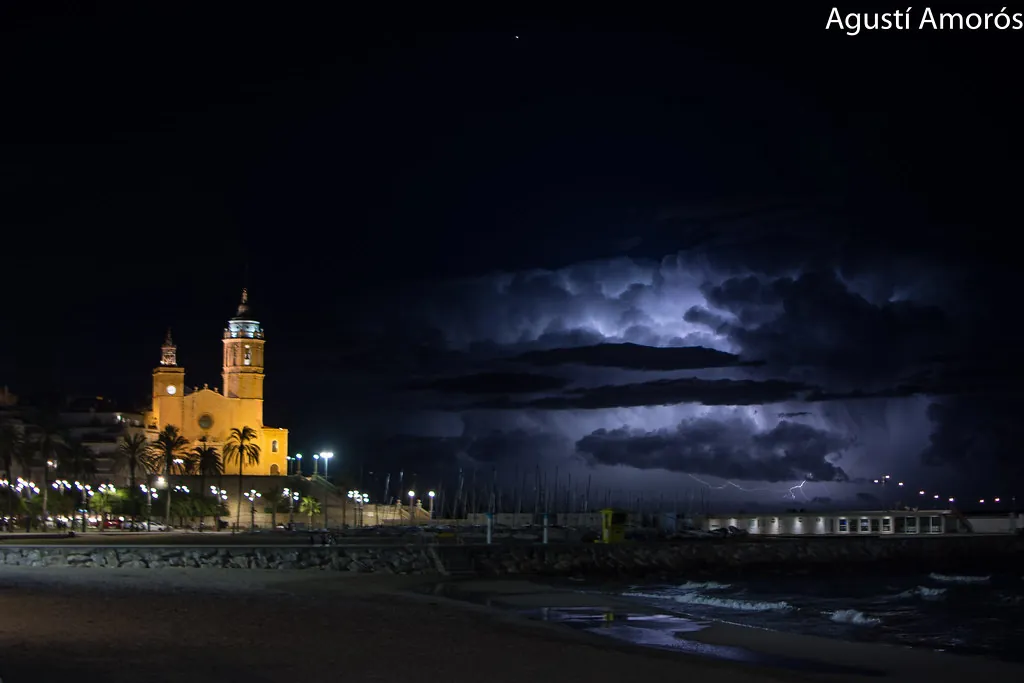
La iglesia de Santa María se alza en la parte alta del casco antiguo. La mayor parte del edificio actual es del siglo XVIII, una época en que muchas parroquias costeras se ampliaron o reconstruyeron tras siglos marcados por incursiones y conflictos en la línea de litoral. Su fachada es contenida, y la nave única responde a soluciones prácticas comunes en pueblos marítimos, con estructuras sólidas y relativamente compactas.
Desde los alrededores de la iglesia, la geografía local se entiende especialmente bien. Hacia el interior está el valle del Foix, mientras que a ambos lados se extiende la línea continua de la costa. Es un mirador que ayuda a comprender la posición del pueblo entre el mar y el huerto.
El castillo de Cubelles forma parte del mismo marco histórico. Durante siglos estuvo vinculado a distintas familias nobles catalanas y tuvo un papel en la organización defensiva y administrativa del territorio medieval. Con el tiempo, la construcción se ha transformado y ha quedado absorbida por la trama urbana del centro histórico. En lugar de erguirse como una fortaleza aislada, actúa ahora como un recordatorio del antiguo sistema feudal que condicionó la vida del lugar.
Un payaso y una poeta
Cubelles guarda una conexión inesperada con el mundo del espectáculo. Josep Andreu i Lasserre, nacido aquí en 1896 y conocido internacionalmente como Charlie Rivel, llegó a ser una de las figuras principales del circo europeo del siglo XX.
Una exposición municipal repasa su trayectoria. A través de fotografías, carteles y objetos personales, traza el camino de un artista que actuó durante décadas por toda Europa. Su personaje escénico, con peluca roja, camisa a rayas y una expresión a medio camino entre la inocencia y la melancolía, se volvió reconocible al instante y sigue asociado a la tradición clásica del payaso.
Otra figura vinculada a Cubelles es la poeta y periodista Ana María Martínez Sagi. Tras una vida marcada por el activismo cultural y político en la Barcelona de entreguerras, pasó temporadas en el pueblo buscando un lugar más tranquilo para escribir y traducir. Su presencia forma parte de una historia más callada y menos visible, la de los intelectuales que en distintos momentos encontraron refugio en localidades costeras como esta.
Sabores de mar y tierra
La cocina local en Cubelles sigue el repertorio tradicional de la costa catalana. Los platos son directos y están ligados tanto a la pesca como a las tierras de labranza cercanas.
Preparaciones como el all cremat aparecen con frecuencia en la cocina doméstica. Se trata de una salsa espesa hecha con ajo, pimentón y vino o brandy, que suele acompañar pescado o arroz. Los guisos de pescado con patata y tomate también son habituales, igual que los arroces hechos con caldo de pescado. Son recetas que surgieron de la necesidad de aprovechar lo que llegaba en la barca o sobraba del día anterior.
Los productos de temporada de las huertas de alrededor también tienen peso. Las habas tiernas, por ejemplo, se guisan tradicionalmente con embutido curado y hierbas aromáticas. En panaderías y casas particulares es común encontrar cocas, que pueden ser dulces o saladas y están ligadas al calendario festivo catalán.
Cómo moverse por Cubelles
Cubelles se recorre mejor sin prisa. El casco antiguo es pequeño y se puede ver andando en poco tiempo, aunque conviene detenerse en las calles alrededor de la iglesia y el castillo para entender cómo se dispuso el asentamiento original.
Si se camina hacia el interior, el curso del río Foix ofrece caminos relativamente llanos que conectan con zonas agrícolas y masías antiguas. Más arriba, el paisaje empieza a parecerse al del resto del Garraf, con colinas bajas y vegetación mediterránea que va ganando terreno a la llanura cercana a la costa.
La combinación de mar, río y tierra de cultivo define la experiencia del lugar. Nada parece exagerado, y gran parte de lo que da carácter a Cubelles está en estas continuidades calladas entre el pasado y el presente.