Full Article
about Els Omellons
Village known for its stone and olive oil; well-preserved stone houses
Ocultar artículo Leer artículo completo
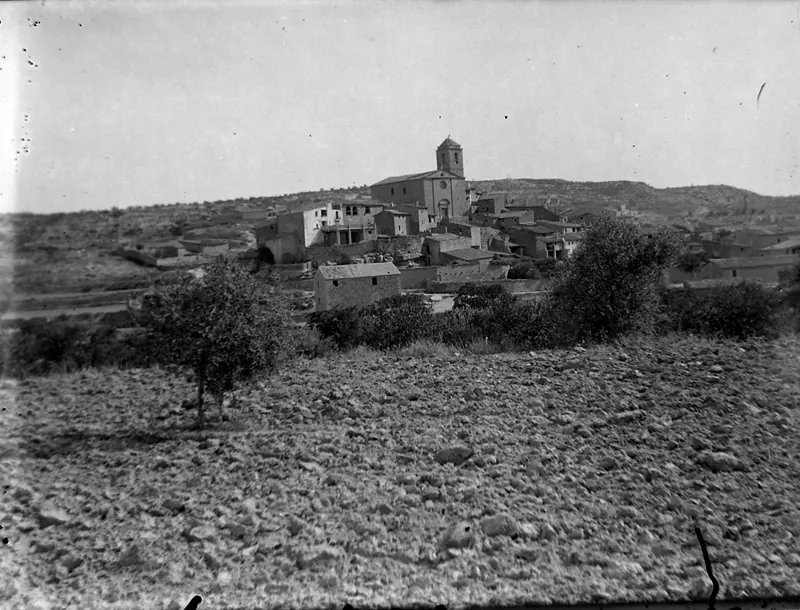
The church bell tolls eleven across a sea of silver-green leaves. From the stone bench beside Sant Martí's modest bell tower, you can count perhaps twelve roofs before the village dissolves into olive groves that stretch uninterrupted to the horizon. In Els Omellons, population 183 at last count, that's about one tree for every resident within the first hundred metres alone.
A Village That Measures Time in Harvests
This is farming country distilled to its essence. The Lleida comarca of Les Garrigues specialises in dry-stone landscapes where rainfall is measured in wishes and the calendar revolves around olives. At 385 metres above sea level, Els Omellons sits high enough to catch winter's bite yet low enough to bake under summer sun. The result is arbequina olives pressed into a gentle, almond-scented oil that carries the region's Denominació d'Origen.
Walk the narrow lanes between stone houses and you'll notice doors painted the same deep green as young fruit. Windows remain shuttered against heat rather than prying eyes; this isn't a show village but a working one. The bakery vanished years ago, the sole bar opens when the owner's arthritis permits, and the tiny corner shop keeps hours that would horrify Tesco. Yet there's dignity in this self-sufficiency. Electricity cables run underground, preserving views unchanged since the 1950s save for satellite dishes sprouting like metallic mushrooms.
Tracks Through the Trees
The real map of Els Omellons is traced by farm tracks. From the church, Camí de la Serra climbs gently south through terraces where some olive trunks exceed three metres in girth. These veterans survived the 1956 frost that wiped out half of Catalonia's groves; their swollen bases bear scars like melted wax. Walk fifteen minutes and you'll reach the Ermita de la Mare de Déu del Roser, a chapel the size of a London bedsit, locked except for the September festival when villagers carry the Virgin downhill by torchlight.
Spring brings the finest walking. Late March sees almond blossom drifting across paths like confetti, followed by poppies that splatter verges with reckless red. Temperatures hover around 18°C – perfect for the 13-kilometre Marxa de les Cabanes de Volta, an April walk linking dry-stone huts whose corbelled roofs predate Gothic cathedrals. Sign up early; it's the one day each year when cars outnumber tractors.
Summer demands different tactics. By August, thermometers breach 35°C by eleven o'clock. Locals emerge at dawn, disappear indoors by two, then reappear after seven for the evening passeig. Walking shifts to night; head-torches bob along tracks as dogs bark at shadows. Carry two litres of water minimum – the nearest spring is a 40-minute hike and fountains marked on old maps ran dry decades ago.
What Passes for Gastronomy
Food here follows the agricultural rhythm. Breakfast might be pa amb tomàquet – village baker Pere delivers yesterday's bread at 8am sharp, still warm if you're lucky. Rub with tomato, drizzle with last November's oil, add a scraping of salt. Lunch at El Drac, the roadside restaurant that doubles as social hub, serves grilled lamb cutlets and chips for €12. The menu won't win Michelin stars but the meat arrives from farms you drove past earlier. Vegetarians survive on escalivada – roasted peppers and aubergine dressed with that ubiquitous oil.
Wine comes from cooperatives in nearby Les Borges Blanques where Celler Cooperatiu, a Modernist cathedral to grapes, bottles decent tempranillo for €4. Bring your own container; locals judge visitors by their willingness to fill five-litre demijohns rather than posh labelled bottles. The village's single cash machine charges €2 per withdrawal – stock up in Lleida before you arrive.
Seasons of Silence
November transforms everything. Olive nets spread beneath trees like fishing grounds; families you've never seen materialise from Barcelona flats to help ageing parents. The Festa Major honouring Sant Martí coincides with harvest's start – suddenly 400 people occupy streets that felt abandoned in September. A marquee erected on the football pitch hosts sardana dancing; elderly men in berets argue over dominoes while teenagers sneak vodka into Coke bottles. By Sunday night's fireworks, half the visitors have already departed, leaving nets flapping like surrendered flags.
Winter strips the landscape to bones. Mist pools in valleys; from the village, surrounding peaks float like islands. Temperatures drop to -5°C but the dry air makes it bearable – think Madrid rather than Manchester. This is when photographers arrive, chasing minimalist shots of solitary trees against frost-whitened soil. They rarely stay longer than a day; restaurants close between Christmas and Three Kings, and even El Drac reduces hours to weekends only.
The Honest Truth
Els Omellons won't suit everyone. Public transport amounts to a Tuesday-only bus that terminates in Les Borges, eight kilometres distant. Phone signal drops to 3G inside stone houses; WhatsApp messages arrive in batches when you emerge onto the street. Rain turns clay tracks to axle-deep glue – hire cars return to Barcelona with ochre spray patterns like modern art.
Yet for those seeking space rather than stimulation, this village delivers. Sit on the church bench at dusk as swallows stitch patterns overhead and you'll understand why returning expats speak of decompressing, of lungs expanding, of clocks resetting to agricultural time. Just don't expect welcome banners or interpretive centres. Els Omellons offers something simpler: permission to do nothing more demanding than watch light change across 40,000 olive trees, knowing that tomorrow will look almost identical – and that this is precisely the point.





