Full Article
about L'Albi
Town with an imposing medieval castle and a well-preserved old quarter; producer of quality olive oil.
Hide article Read full article
L'Albi: A Village in the Garrigues
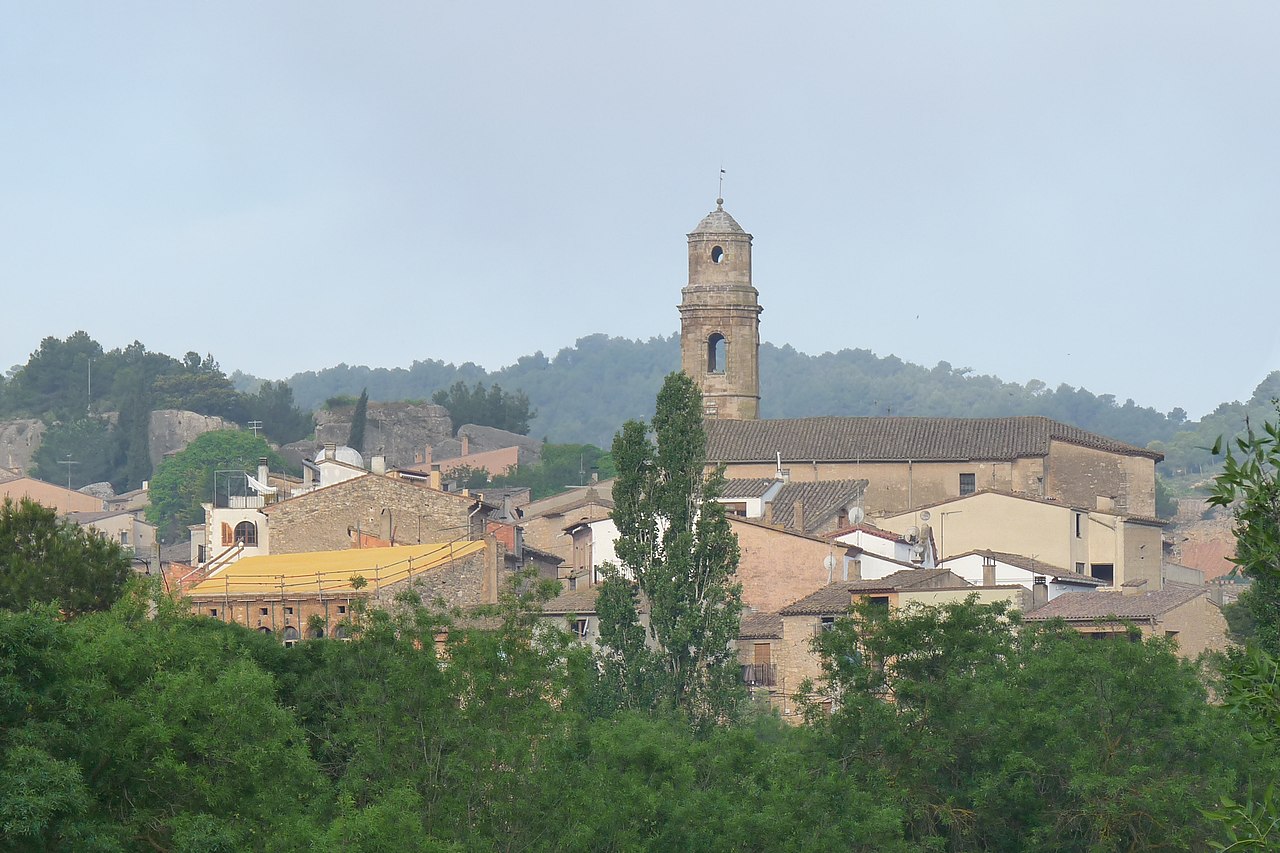
L'Albi sits at 1,725 feet in the comarca of Les Garrigues, a landscape defined by its olive groves. The village, with a population of 764, is arranged on a slope, its stone houses facing south over the terraced fields. Its history is tied to the 12th-century castle that overlooks it, a structure built for control rather than ornament, watching over what was once a contested frontier.
Life here follows the agricultural calendar. The sound is often just the wind through the olive trees, a low rustle that replaces urban noise. The rhythm is slow, measured by the sun and the needs of the groves.
The Castle and the Church
The Castillo de l'Albi is a ruin, its stone walls eroded but still outlining the keep and parts of the perimeter. It was a strategic point for the County of Urgell. What remains now is the geometry of its footprint against the sky and a panoramic view of the Garrigues—a sea of olive trees that reaches the horizon. Access is usually unrestricted, but the path up is uneven.
Below it stands the Iglesia de Santa María. The building is sober, with a Romanesque foundation visible in its lower sections and a later Gothic nave. The interior is plain, without elaborate decoration. Its significance is local; it’s where the community gathers for festivals and harvest blessings, a continuity that outlasts architectural styles.
On Olive Oil and Territory
The economy and identity of L'Albi are inseparable from olive oil. The groves contain some thousand-year-old trees, their trunks twisted into sculptural forms. The oil produced here, from the Arbequina variety, is notably smooth and fruity.
During the harvest, from late October into December, you may see nets under the trees and hear the mechanical combs. Some local cooperatives allow visitors to observe the pressing; it’s a process that hasn’t changed in essence for centuries, even if the machinery has. This isn’t a generic product. The taste is specific to this dry, limestone terrain.
Practical Notes for a Visit
You will need a car. Public transport does not effectively serve this area. The roads from Cervera or from the L-241 are well-paved but winding, following the contours of the hills. A small car is easier for navigating the village streets and for finding parking, which is limited to a few small lots and street sides.
Spring and autumn are the most temperate seasons for walking. Summer is hot and dry; if you visit then, activity is best reserved for early morning and late afternoon. In winter, days can be crisp and clear, though nights are cold.
Accommodation consists of rural tourism apartments or rooms in restored village houses. These are few, so booking in advance is necessary. They provide a practical base and a sense of the architecture—thick stone walls, tile floors, small windows.
For groceries, the village has basic shops. A wider selection requires a trip to Cervera. Meals in local establishments are straightforward: grilled meats, pa amb tomàquet, stews, all relying on local oil and produce.
The social center is the village bar. It functions as a common room for residents. Going in for a coffee means hearing Catalan spoken, and discussions about the weather or the price of oil are more common than tourist chatter.
L'Albi makes no special effort to entertain visitors. Its value lies in its consistency—a place shaped by its geography and a single, enduring crop. You come here to see that relationship between land and life, still clearly legible in the lines of the terraces and the quiet order of the streets.