Full Article
about La Pobla de Cérvoles
Village at the foot of the Llena range; known for vineyards and beekeeping.
Hide article Read full article
A Quiet Corner of Les Garrigues
Some places feel like a quick stop on the way somewhere else. You pull over expecting ten minutes, then find yourself stretching your legs far longer than planned. Tourism in La Pobla de Cérvoles works a bit like that. You arrive with modest expectations and, before you realise it, you have spent a good while walking slowly, looking out over fields and noticing a kind of silence that is increasingly rare.
La Pobla de Cérvoles lies around 20 kilometres from Les Borges Blanques, in the comarca of Les Garrigues in Catalonia. Just over two hundred people live here, though the number shifts slightly from year to year. Life remains closely tied to the land. Olive groves dominate, alongside almond trees and some cereal crops. At first glance the landscape can seem harsh and dry, but the longer you look, the more variation you begin to see in its colours and textures.
This is inland Catalonia, away from the coast and far from the larger cities. The rhythm is steady and agricultural, shaped by harvests and rainfall rather than by tourism.
A Village Without a Script
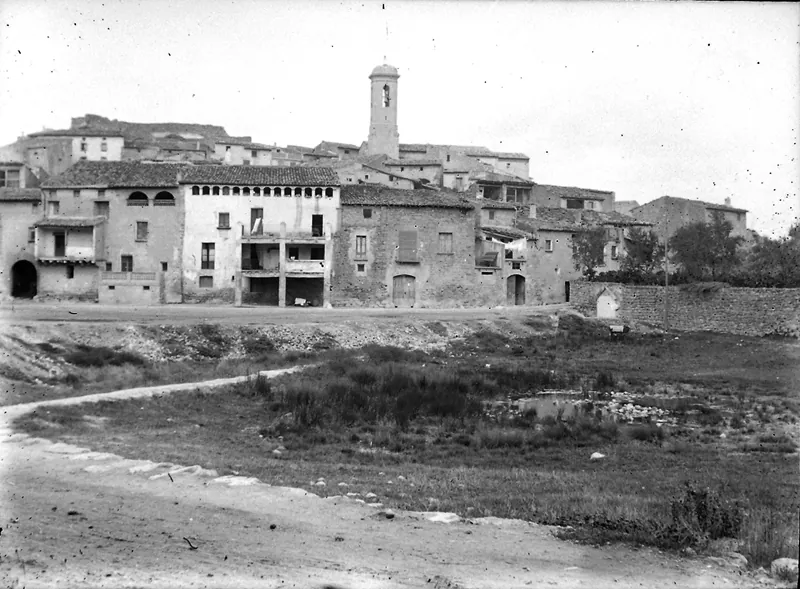
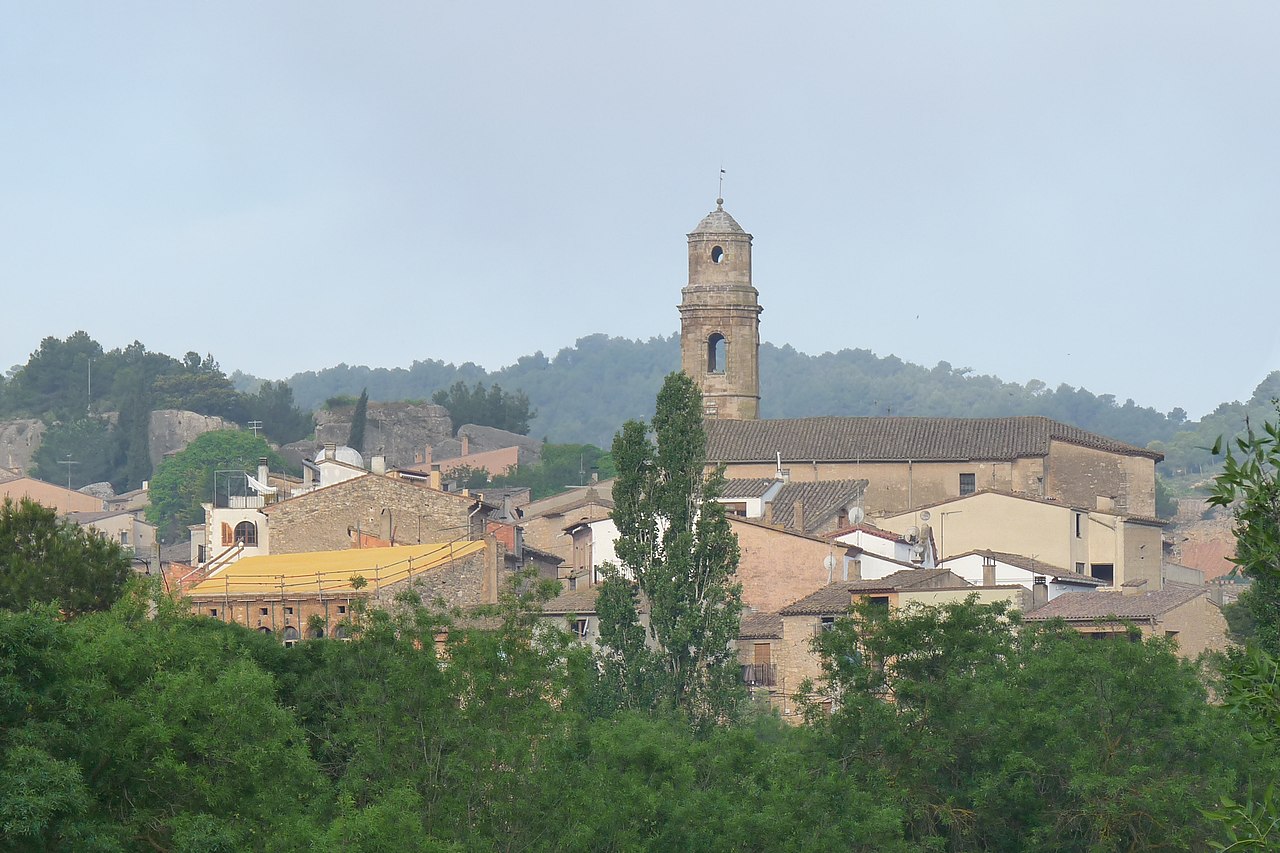
La Pobla de Cérvoles does not revolve around major monuments or grand squares. It is a small inland settlement where the interest lies in the details: narrow streets, solid stone houses with a restrained look, and the parish church set at the highest point, as happens in many villages across the region.
The architecture is direct and practical. Houses were built to withstand hot summers and cold winters, with thick walls and simple façades. There is little in the way of decoration. Everything feels functional, designed for daily life rather than display.
A walk through the centre does not take long. In fact, you can see the village in a short space of time. Yet this is somewhere that benefits from slowing down. If you rush, you might be finished in twenty minutes and feel none the wiser. Taken at an unhurried pace, small details begin to stand out: the texture of the stone, the way the streets rise gently towards the church, the quiet presence of the surrounding countryside just beyond the last houses.
There is no fixed route, no checklist. It is simply a matter of wandering and letting the place set the tempo.
Among Olive Groves and Almond Trees
The real setting of La Pobla de Cérvoles begins once you step beyond the built-up area. Any of the rural tracks leading out of the village quickly bring you into the fields that define Les Garrigues.
Olive trees and almond orchards shape the territory. In late winter, the almond trees often come into blossom and the landscape shifts noticeably. Pale blooms appear against the ochre soil, creating patches of white across the fields. By summer, golden tones from the cereal crops take over, alongside the more muted green of the olive trees. Throughout the year there is a sense of open space that characterises this part of Catalonia.
There are no prepared viewpoints or wooden walkways. These are traditional agricultural tracks, used for generations. That is precisely what gives walking here its straightforward feel. You might hear a tractor in the distance or spot birds gliding above the fields, but little else interrupts the calm.
The routes are easy, with no significant climbs. They are more about strolling than hiking. The point is not to conquer distance or reach a summit, but to move through a working landscape and observe how it functions.
Olive Oil, Almonds and a Touch of Vine
In this area of the province of Lleida, olive oil is central. Les Garrigues has long been associated with a distinctive oil, known locally for its intensity and strong presence in regional cooking. In many households it remains an everyday staple rather than a luxury product.
Almonds also play an important role. They appear in traditional sweets or simply toasted and served alongside a coffee during a long after-lunch conversation. The produce here is not presented as a showpiece for visitors. It is part of daily life, rooted in the surrounding fields.
There are also vineyards in the area around La Pobla de Cérvoles. Small wineries have worked these slopes for years. Conversations with local residents often turn naturally towards the countryside, the harvest or how the year’s rainfall has affected crops. These topics remain at the centre of village life. The land is not a backdrop but the main subject.
For anyone passing through, it becomes clear that agriculture is not an accessory to tourism. It is the framework that shapes everything else.
When August Changes the Mood
For much of the year, La Pobla de Cérvoles is very quiet. Then summer arrives and the atmosphere shifts. In August the village celebrates its fiesta mayor, the main annual festival. Many residents who live elsewhere return during this period.
The population increases noticeably. There are open-air dances and popular events, and for a few days the streets carry more noise and movement than usual. It is a pattern repeated in many small Spanish villages: calm for most of the year, then a brief, lively reunion when festivities bring people back.
Outside these dates, tranquillity returns. The contrast makes the quieter months feel even more pronounced.
A Stop That Makes Sense
La Pobla de Cérvoles is not a destination around which to plan an entire trip. It works far better as a pause while travelling through Les Garrigues. Arrive, walk through the village, head out along the tracks between olive trees and almond orchards, and you quickly grasp how this landscape operates.
Spending a few hours here is like observing rural life in this part of Catalonia at close range. It is discreet and rather austere, closely tied to the fields that surround it. There are no grand attractions demanding attention, no packed schedule to follow.
Sometimes that is exactly the appeal. A place where very little happens on the surface, and where that absence of spectacle becomes the reason to stop for a while.