Full Article
about Argelaguer
Small municipality on the banks of the Fluvià; known for its quiet and the Garrell cabin park.
Hide article Read full article
Early in the morning, when the sun slips low between the pines that descend towards the Fluvià, Argelaguer is reduced to a handful of sounds: solitary footsteps and the scrape of a shutter being raised. In the streets that fall away from the church, the air can carry the scent of firewood or damp stone, depending on the season. Tourism in Argelaguer arrives slowly, usually as part of a wider route through La Garrotxa, and the village keeps to its own rhythm, more concerned with the surrounding fields than with anyone turning up with a camera.
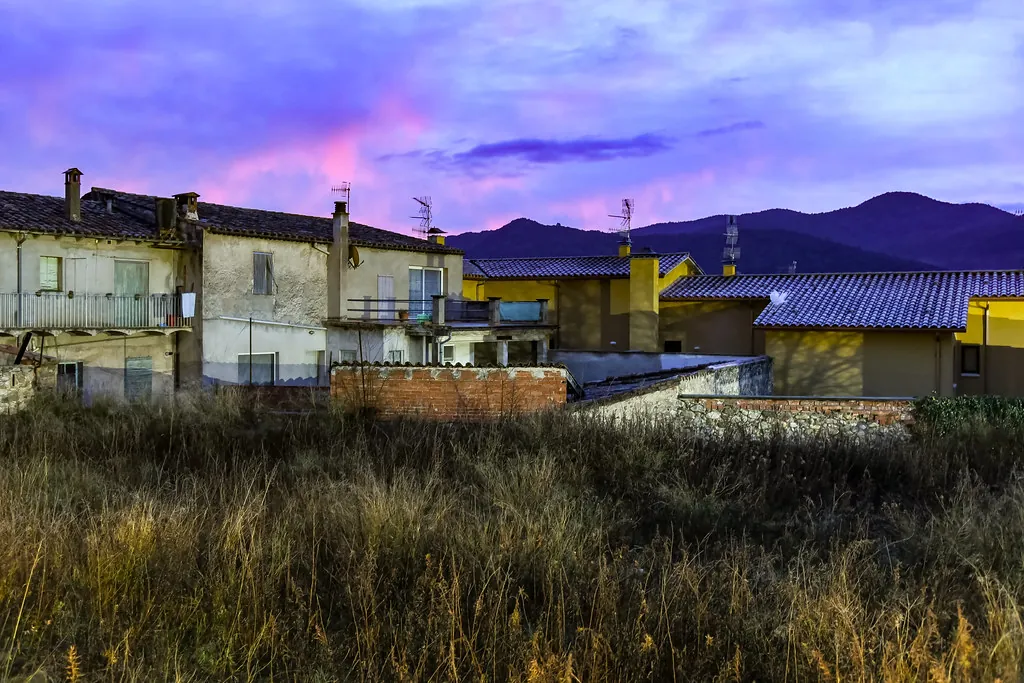
Argelaguer has around 468 inhabitants and lies in the western part of the comarca, a Catalan county, at about 180 metres above sea level. There are no grand monuments or sweeping squares. Instead, there is a small cluster of pale stone houses with reddish roofs, encircled by farmland and patches of woodland. Besalú is very close, just a few kilometres by road, and many visitors combine the two in a single day. Here, though, the atmosphere is noticeably calmer.
Around Sant Feliu: Stone and Silence
The church of Sant Feliu marks the centre of the village. Its thick walls and muted stone hint at its Romanesque origins, although parts have been altered and added over the centuries. In the square outside, the sound of the bells often echoes off the low façades that frame the space.
Several narrow streets lead away from the church. Houses retain old doorways, some with well-worn stone lintels. The historic core is not large and can be covered in a matter of minutes. It is still worth wandering without a plan, paying attention to small details: a vine climbing a wall, a courtyard glimpsed through a half-open door, the faint sound of water running along a nearby irrigation channel.
Beyond the centre, scattered masías appear among the fields. These traditional rural farmhouses are built in stone with sloping roofs. Many remain tied to the agricultural activity that continues to shape the landscape around Argelaguer. The countryside here is not decorative background. It is working land, and the layout of paths and buildings reflects that.
The Fluvià and the Paths of the Valley
A short distance from the village centre runs the river Fluvià. It is not a dramatic watercourse, but it is constant: clear water moving between riverside trees, with thick vegetation often growing along the banks in spring. Paths trace its course and are used both for walking and cycling.
From Argelaguer, rural tracks branch out across cultivated fields and through small areas of Mediterranean woodland, with holm oaks and oaks. These are not long or demanding routes. Many can be completed in a relaxed morning, linking paths that connect masías or climbing gently towards slightly higher points in the valley.
In summer, an early start is advisable. From midday onwards the sun can be strong, and there are stretches with little shade.
Argelaguer’s position also makes it easy to reach other parts of La Garrotxa by car in under half an hour. The comarca is known for its volcanic zones and beech forests, which offer a clear contrast to the flatter agricultural setting around the village.
A Village That Keeps Its Routine
Life in Argelaguer revolves above all around the people who live here year round. In the square, long conversations are common in the late afternoon. Cars pause briefly before heading on towards nearby fields. The pace is unhurried and largely unchanged by passing visitors.
In August, the village celebrates its fiesta mayor, the annual main festival that many Catalan towns and villages hold in honour of their patron saint or local tradition. In Argelaguer, events take place around the church and in the central streets. During those days the atmosphere shifts: more music, more people outdoors, and neighbours who return to the village for a few days.
Outside those dates, the prevailing feeling is one of calm. This is not a place of constant movement or a packed calendar of activities. Its appeal lies in its ordinariness, in the steady repetition of daily life against a backdrop of fields and low hills.
When to Visit the Valley
Spring and autumn are the most pleasant times to explore the valley paths on foot. In spring, the riverbanks turn bright green and the air often carries the scent of damp earth after rain. In autumn, leaves change colour and the late afternoon light becomes more golden across the fields.
High summer can bring intense heat from midday onwards, so early mornings are best for walking. In winter, it is not unusual for fog to settle in the valley for hours at a time, leaving the village wrapped in thick silence. Even then, Argelaguer does not feel dramatic or theatrical. It simply continues at its own pace, between the Fluvià and the fields, close to Besalú yet distinctly quieter.
For those travelling through La Garrotxa, Argelaguer offers a pause rather than a headline attraction. A compact centre around Sant Feliu, a network of rural paths, and a river that keeps a steady course through the valley define the experience. It is a place best approached without hurry, allowing the small details of stone, water and cultivated land to set the tone.