Full Article
about Beuda
Scattered rural municipality rich in Romanesque heritage, set amid forests and alabaster quarries.
Hide article Read full article
A Small Village That Slows Everything Down
There are moments on a secondary road when expectations are low and the landscape feels predictable, fields, woodland, the odd farmhouse. Then a village appears almost without warning, so small it makes you check you have not taken a wrong turn. That is the feeling on arriving in Beuda, in the comarca of La Garrotxa. One minute the road runs through open countryside, the next you are entering a municipality of just over 200 residents where life seems to move at a gentler pace.
Tourism in Beuda does not operate in the way it does elsewhere in the area. There are no busy shopping streets and no long checklist of monuments. Instead there is quiet, scattered masías, traditional Catalan farmhouses, and the sense that everyday routines still matter more than weekend plans.
This is not a place that tries to impress. It simply carries on.
A Different Side of La Garrotxa
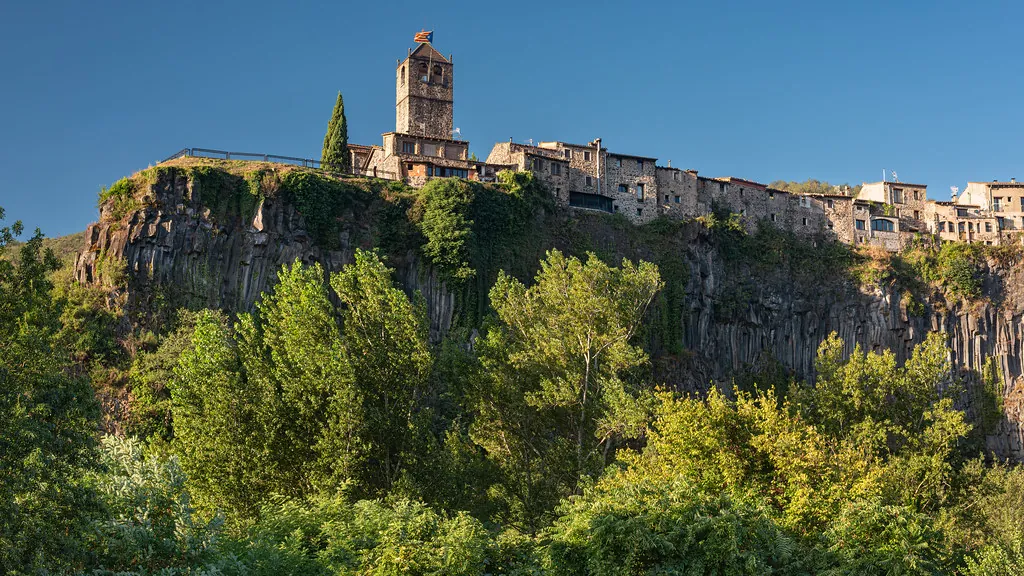
When La Garrotxa is mentioned, the conversation usually turns to volcanoes. Olot, Santa Pau and the famous lava flows tend to dominate the image of the region. In Beuda, the landscape shifts. Here limestone rock is more prominent, along with woodland and the valley of the Fluvià river.
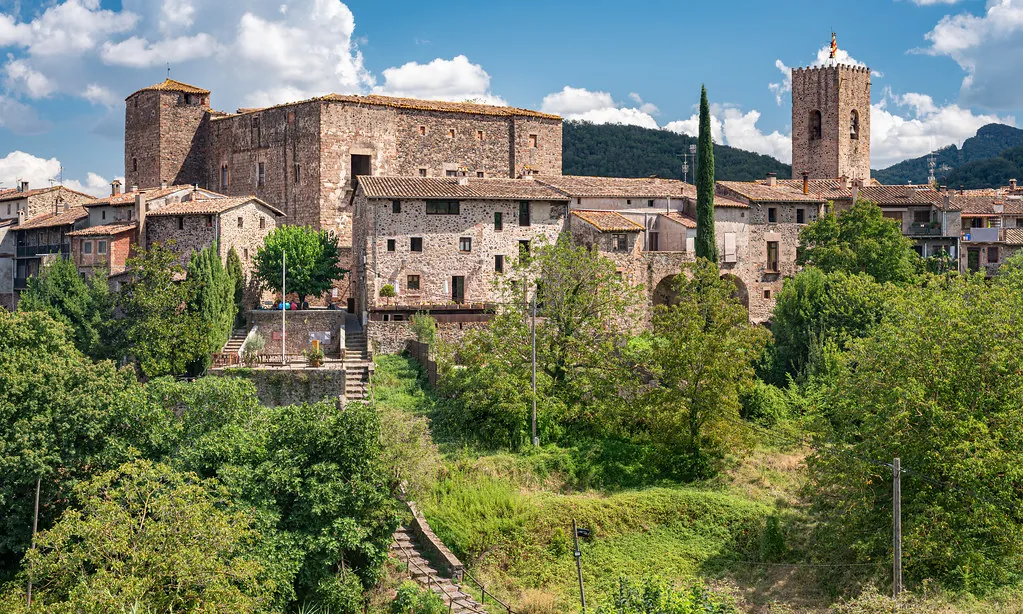
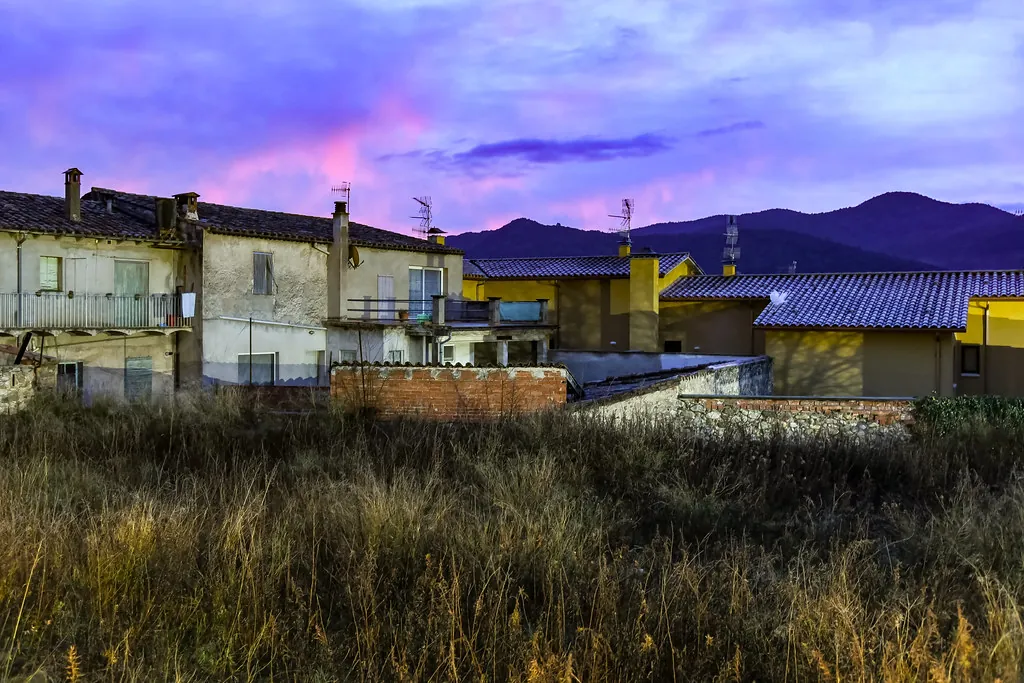
The municipality has only a little over 200 inhabitants. It consists of a small village centre and several masías spread across the surrounding countryside. Many are still connected to farming or livestock. That is immediately clear when travelling along the local roads, tractors pass by, fields are actively worked and rural tracks branch off in every direction.
The architecture is typical of inland Girona province. Stone walls, sloping roofs and solid structures built to withstand damp winters rather than to decorate postcards. Many of the houses are private homes, so it is important to move around respectfully and avoid wandering into courtyards or onto private land.
Beuda feels lived in rather than curated.
The Fluvià and the Shape of the Land
The Fluvià crosses the municipality and plays a quiet but steady role in shaping the scenery. It is not dramatic at this point in its course, yet it is constant. In summer, people from the surrounding area often look for a calm pool where they can cool off or sit in the shade for a while.
There are no formal bathing areas, no wooden walkways, no facilities. This is the kind of place where each person finds a corner and leaves it exactly as they found it.
For those interested in geology, the terrain around Beuda offers an unusual mix. Limestone outcrops appear in places, while not far away there are volcanic soils typical of La Garrotxa. The contrast can be seen in the colour of the earth and in the rock formations that line some of the paths. It is a subtle difference, but noticeable if you pay attention to the ground beneath your feet.
The landscape here is less about spectacle and more about texture.
Paths Towards Besalú and Beyond
One of the best ways to understand Beuda is on foot. Several paths leave the municipality and connect it with nearby villages, including Besalú and Sales de Llierca.
These are not especially technical routes. They are mainly rural tracks that cross fields and woodland, sometimes running alongside the river. Walks here tend to unfold slowly. There is always a reason to pause, a photograph, an improvised viewpoint, or simply a stretch of shade that invites a short stop.
If you enjoy walking at an unhurried pace, allow more time than the map suggests. Plans have a habit of stretching out in places like this. The appeal lies in the unplanned stops rather than in reaching a specific landmark.
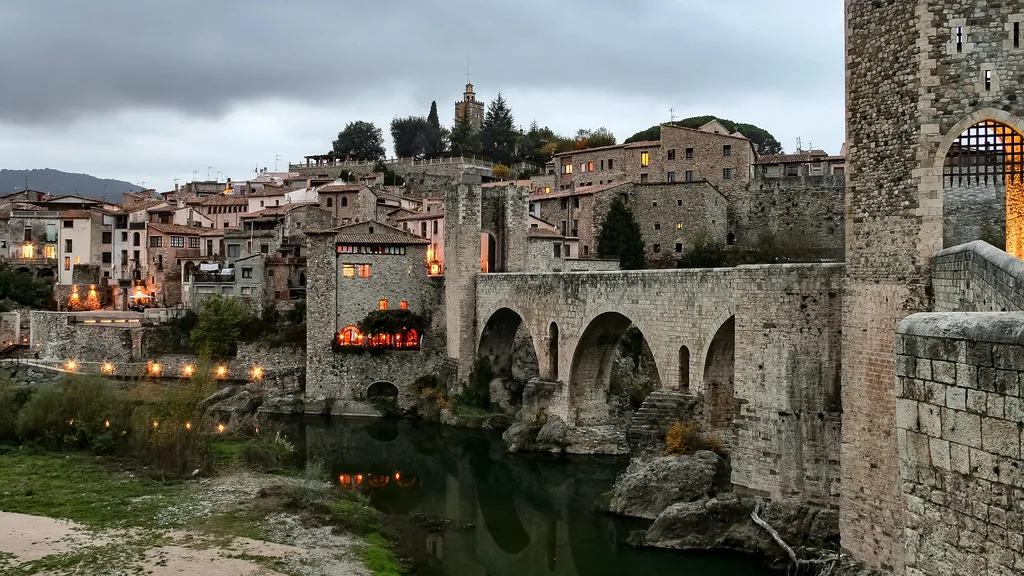
Besalú, with its historic centre, is close enough to combine with a visit to Beuda, while Sales de Llierca offers another rural extension of the same landscape. The connections between these villages help place Beuda within its wider setting, even if it remains quieter than its neighbours.
Quiet Roads for Cycling
The area also works well for cycling. Local roads carry little traffic and link Beuda with other parts of La Garrotxa.
The terrain is not entirely flat. Short climbs appear along the way and, after several kilometres, they begin to make themselves felt. They are not extreme, but enough to give a route some character and variety.
Many cyclists use Beuda as part of longer rides towards Olot or further into the interior of the comarca. It functions as a peaceful stretch between more visited spots, a section where the rhythm of pedalling matches the calm of the surroundings.
Eating Nearby
Within Beuda itself, places to eat are limited and not always open throughout the year. That is common in villages of this size.
The advantage is proximity. Olot is about 15 kilometres away, and Besalú is even closer. In both, there is more activity and it is easy to find cooking based on local produce. Typical dishes and ingredients from the area include embutidos, cured sausages and cold meats, judías de Santa Pau, a local variety of beans, patatas de Olot, stuffed and fried potato parcels associated with the town, and hearty spoon dishes during winter.
A practical approach is simple: spend time walking the paths around Beuda or sitting by the river, then head to one of the nearby towns for a meal. The contrast between quiet countryside and a livelier dining scene works well.
When the Village Fills Out
For much of the year, Beuda is calm, sometimes very calm. In summer, however, it briefly changes pace during the Fiesta Mayor, usually held in August. At that time, many residents who live elsewhere return.
The village square sees more people than usual. There is music and gatherings of families. The shift does not last long, yet it highlights that even the smallest places maintain an active community behind their quiet appearance.
Outside those days, silence quickly settles back in.
Is It Worth the Detour?
Beuda is not a destination designed to fill an entire weekend with scheduled activities. It works better as a peaceful stop within a broader exploration of La Garrotxa.
After visiting Besalú or completing a route through the comarca, it makes sense to park the car, walk for a while and notice how little seems to be happening. That absence of spectacle is part of the appeal. There are no crowds to navigate, no major attractions to queue for, only fields, woodland and the steady presence of the Fluvià.
Sometimes that is enough.