Full Article
about Maià de Montcal
Rural municipality with the Romanesque church of Santa Magdalena; quiet and secluded
Ocultar artículo Leer artículo completo
The church bells ring at seven every morning. Not the muffled chime you hear in English cathedral towns, but a proper bronze clang that carries across wheat terraces and ricochets off stone walls. By half past, the only other sound is the occasional tractor heading out to work the fields. Maia de Montcal wakes early and settles back into quiet just as quickly.
This hamlet of 384 souls sits 241 metres above sea level on the upper edge of La Garrotxa’s volcanic plain. The landscape is gentler than the word “mountain” suggests – think rolling country rather than craggy peaks – yet the Pyrenees rise sharp and white on the northern horizon. From the tiny pool terrace of the single guesthouse you can breakfast with that view: snowy summits on one side, Mediterranean light warming ochre stone on the other. It is the sort of scene that makes British visitors cancel onward plans, then quietly re-book the same room for next year.
Stone, Tile and Tractors
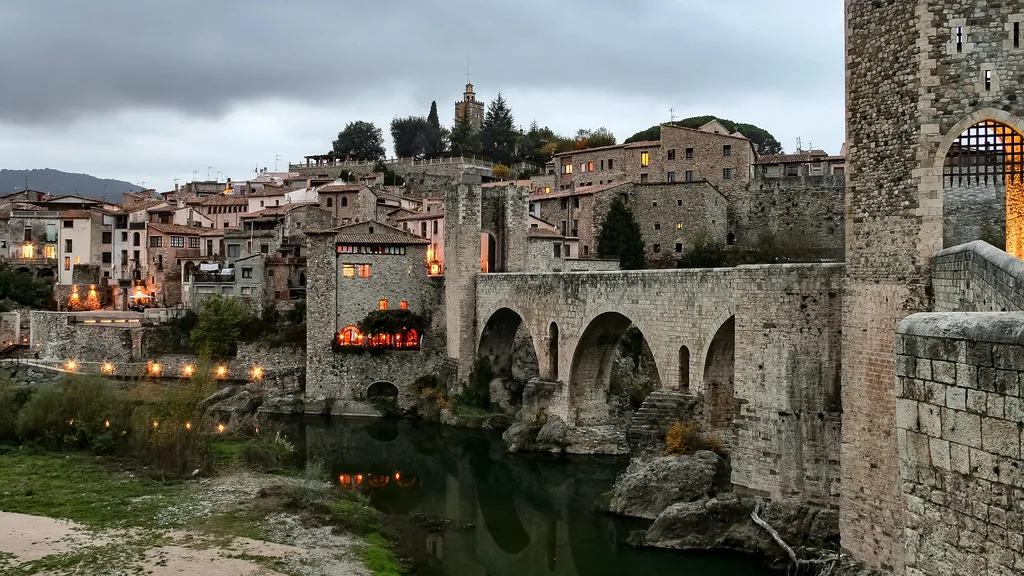
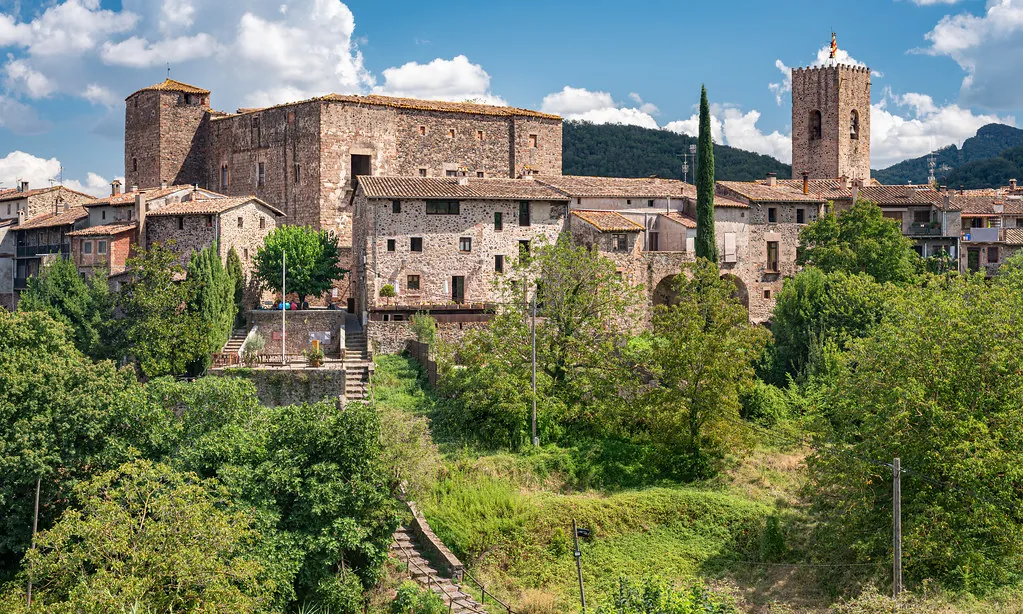
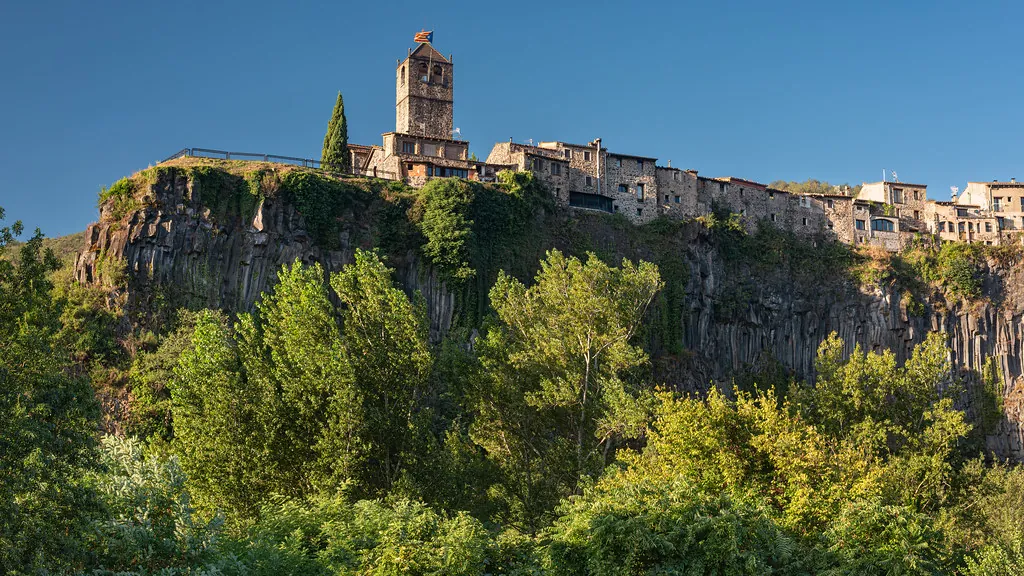
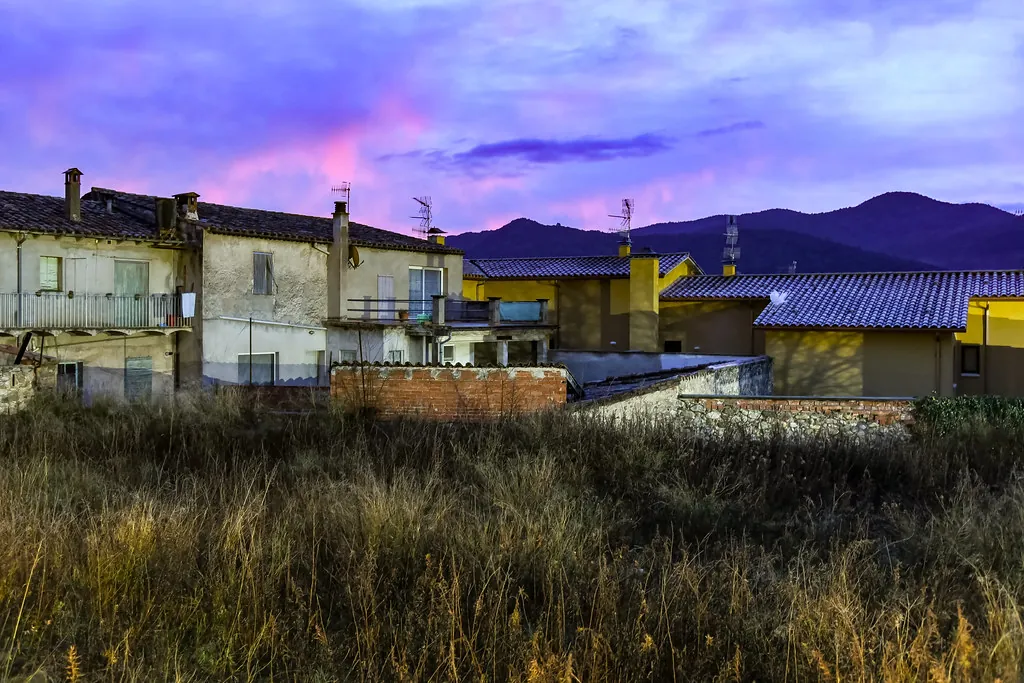
Maia is not pretty in the picture-postcard sense. Houses are the colour of local grit, roofed with curved Arab tiles lichened to soft greens and rusts. Laundry hangs from wrought-iron balconies; dogs patrol gateways; farm tools lean against walls. What the place offers is coherence: everything still fits its purpose, nothing has been sand-blasted for tourists. The Romanesque tower of Sant Esteve pokes above the roofs like a compass needle, useful rather than decorative. Step inside and you find cool shadow, candle smoke, a 16th-century font where babies continue to be christened. Don’t expect multilingual leaflets; if the door is locked, the key is usually with the woman in the house opposite.
Walk the single main lane at 11 am and you will meet the daily bread van. Pull up behind a tractor later in the afternoon and the driver will probably wave you past; patience is the local currency. The lanes are barely two cars wide, stone walls on each side – hire-car companies in Girona know Maia well by the number of wing-mirror scratches returned each Monday.
What to Do When There is Nothing to Do
The serious walking country begins ten minutes north by car, where old lava flows harden into beech forest. From the hamlet itself you can follow farm tracks that loop through wheat, sunflowers and olives for an undemanding hour. These paths are unsigned; download the regional map or simply keep the church spire in sight and you will find home again. Cyclists appreciate the secondary road that threads Maia to neighbouring Sales de Llierca – almost traffic-free, gently rolling, with shade from plane trees and the occasional river ford to wake you up.
Most visitors treat the hamlet as a dormitory for bigger names: medieval Besalú is 12 minutes south, the beech bowl of the Fageda d’en Jordà 20 minutes north-east, Figueres and the Dalí theatre-museum 25 minutes east. The advantage is returning at dusk to absolute stillness. Sit on a plastic chair outside the lone bar, order a small beer for €2, and listen to swifts slicing the sky. By ten o’clock the square is in darkness; the Milky Way looks close enough to snag on a cypress.
Eating, or Not
There is no restaurant in Maia. The bar opens at seven for coffee, serves omelette or squid-ring tapas at lunch, and closes the kitchen at four sharp. Even the crisps disappear after that. Plan accordingly: either book a table in Besalú (Cal Curé does excellent charcoal-grilled lamb, about €28 for three courses) or stock up at the Eroski supermarket on the way from Girona. Self-catering cottages come with decent knives, olive-wood chopping boards and, crucially, poolside barbecues. Local markets: Olot on Monday mornings, Besalú on Tuesday, both within 20 minutes.
Breakfast supplies appear without fanfare. Place an order with Can Coromines bakery before eight and a brown paper bag of still-warm croissants will be left on your terrace by nine. The village’s one dairy, Mas Riera, sells fresh goats’ cheese so mild it converts even the “I can’t stand goaty” brigade. Pair it with honey from the beehives behind the football pitch – the farmer keeps the jars in a fridge by the gate, honesty box taped to the lid.
Seasons, Silence and Small Print
Spring brings almond blossom and the smell of cut grass; daytime temperatures hover around 18 °C, perfect for walking without working up a sweat. Summer climbs steadily to 32 °C; the heat is dry, but rice paddies near the Fluvià river breed mosquitoes after dusk – pack repellent. Autumn is the locals’ favourite: clear air, vines turning scarlet, mushrooms in the woods. Winter is quiet to the point of closure; many self-catering houses shut November to March and the single guesthouse drops its rates by 40%. Snow rarely settles in the village, yet the Pyrenean backdrop turns white enough for photos that fool friends back home into thinking you tackled something far loftier.
Getting here requires wheels. Girona airport (served from Bristol, Manchester, Luton and Stansted) is 45 minutes south-west; Barcelona is two hours if the traffic gods smile. Car hire is essential – the weekday bus that once ran to Girona was axed in 2022. Fill the tank and the cash wallet before you arrive; the nearest ATM is in Besalú and the village shop keeps erratic hours. Sunday drivers should note: everything except the bar is shuttered, and even the bar stops serving food mid-afternoon.
Worth it?
Maia de Montcal will not suit travellers who measure holiday success by ticked boxes. There are no souvenir stalls, no guided tastings, no sunset yoga on a rooftop. What you get instead is space, cheap wine drunk under real stars, and the small epiphany that Catalan rural life is still happening, largely unconcerned whether you photograph it or not. Bring a car, a map and modest expectations; leave with wing-mirror scars, a camera roll of wheat fields, and the memory of church bells that beat any alarm clock.