Full Article
about Mieres
Town in the Ser valley; known for its Baroque church and alternative vibe.
Ocultar artículo Leer artículo completo
The Village That Google Maps Forgot
Search for Mieres online and you'll find yourself redirected to Asturias, some 800 kilometres west. The algorithm assumes you've made a mistake. After all, why would anyone purposefully seek out this Catalan hamlet of 354 souls, perched at 286 metres between dormant volcanoes and the Mediterranean coast?
The answer lies precisely in this obscurity. While tour buses clog the coastal resorts and Barcelona's ramblas heave with visitors, Mieres remains what travel brochures might call "authentic"—though here, authenticity isn't a marketing ploy but simply what happens when a place hasn't bothered to reinvent itself for outsiders.
The village squats inland from the Costa Brava, far enough from the sea to avoid the worst excesses of coastal development, yet close enough that salt air sometimes drifts up the valleys on easterly winds. It's neither mountain retreat nor beach destination, occupying that liminal space where Catalonia's interior begins its climb towards the Pyrenees.
Stone, Silence and the Scent of Wild Herbs
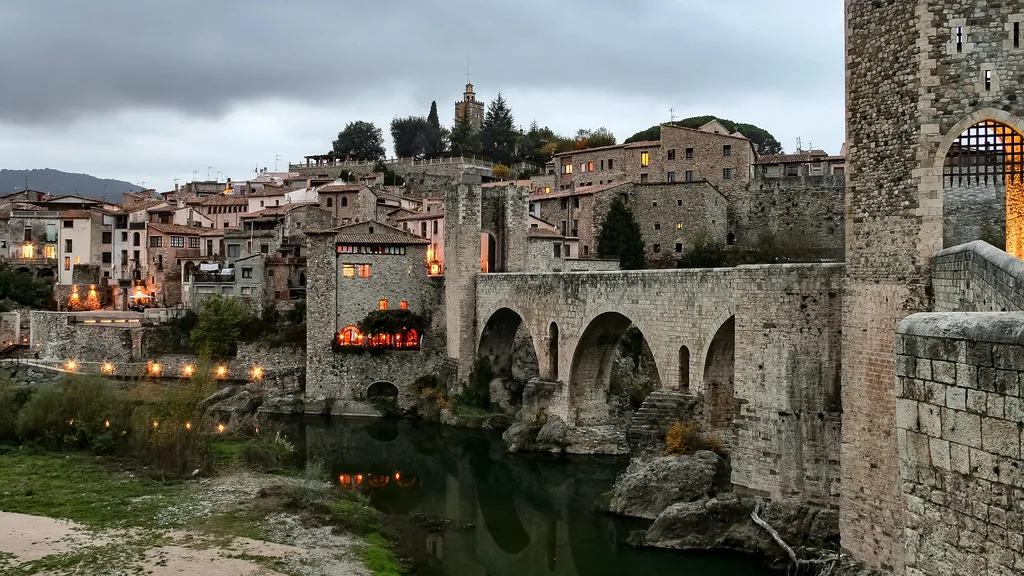
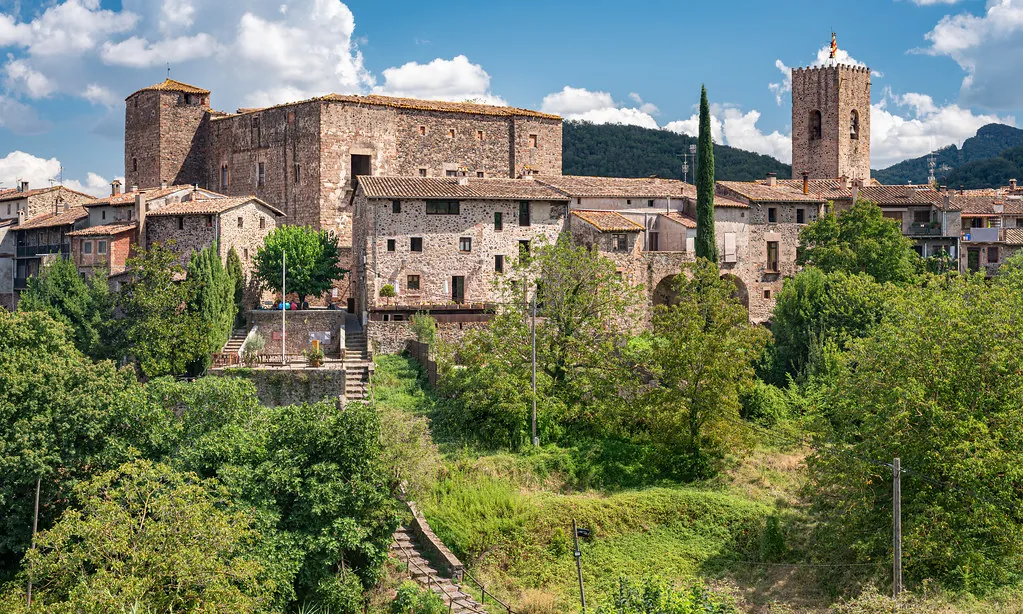
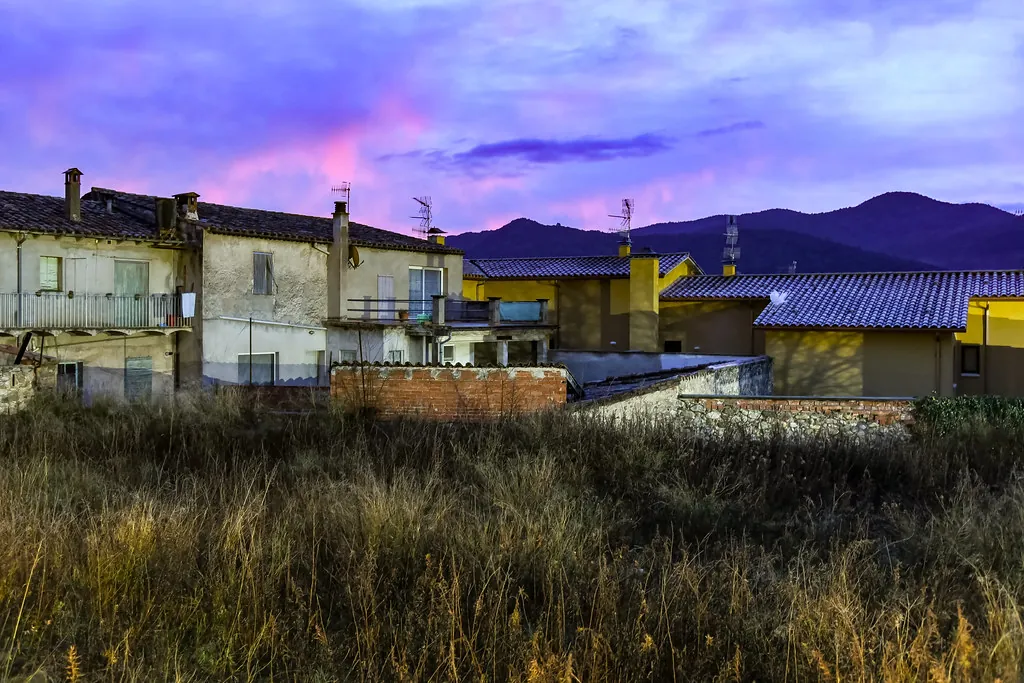
Approach from Girona and the landscape shifts subtly. Olive groves give way to oak forests. The earth reddens, volcanic soil betraying its geological history. Then Mieres appears—not dramatically, but as a gradual accumulation of stone buildings that seem to have grown from the hillside itself.
The village centre reveals itself slowly. There's no dramatic plaza mayor, no cathedral spire to draw the eye. Instead, narrow lanes wind between houses built from local limestone, their facades weathered to shades of honey and grey. Medieval in origin, though much rebuilt over centuries, the architecture follows a logic that predates cars and tourism: everything within walking distance, built to last, designed for shade in summer and warmth in winter.
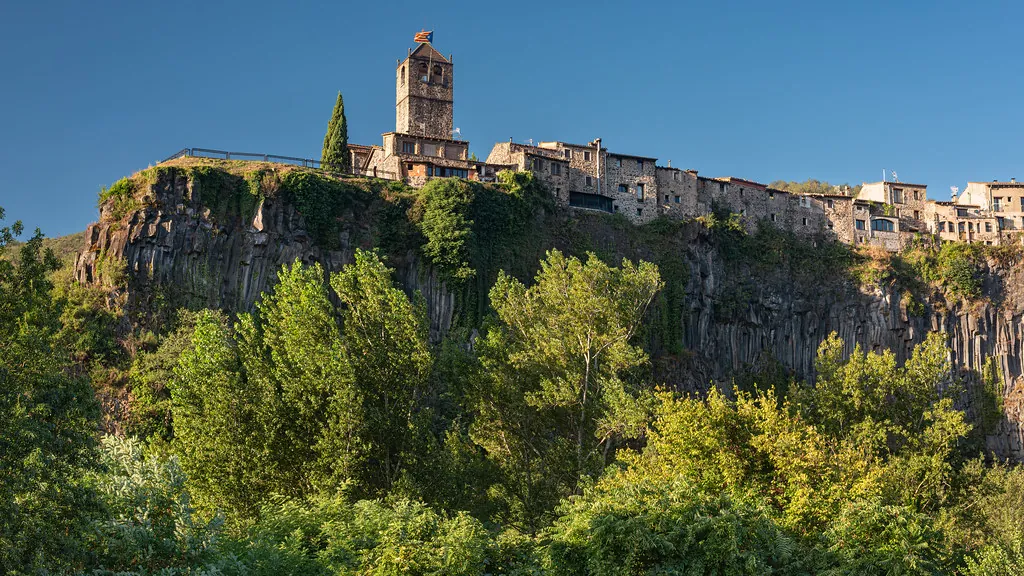
The parish church of Sant Martí stands at the village's highest point, its Romanesque origins visible in the simple stone arch above the door. Inside, the air carries centuries of incense and candle wax. The bell still marks the hours as it has since the fifteenth century, though now it competes with mobile phone chimes from passing hikers.
Medieval masías dot the surrounding countryside—fortified farmhouses built when this borderland between Christian Spain and Moorish territories required defensive architecture. Many now serve as weekend homes for Barcelona families, their restoration projects visible in the occasional architect-designed extension or swimming pool glimpsed through gates. Property prices remain reasonable by Catalan standards: around €200,000 for a habitable three-bedroom masía requiring minimal work.
Walking Where Volcanoes Once Roared
Mieres sits on the edge of the Garrotxa Volcanic Zone Natural Park, though "volcanic" conjures images rather more dramatic than the reality. The volcanoes here have been extinct for millennia, their cones now softened by forest, their craters filled with meadows where cattle graze.
Walking routes radiate from the village like spokes from a wheel. The GR-2 long-distance path passes nearby, but local trails offer more immediate rewards. Follow the yellow markers from the church and within twenty minutes you're among holm oaks and strawberry trees, the undergrowth thick with rosemary and thyme. In spring, the air fills with the sound of bees working the blossom; autumn brings mushrooms and the sharp scent of decaying leaves.
The Camí Ral, an ancient packhorse route, connects Mieres to neighbouring villages. It's a half-day walk to Santa Pau, whose medieval centre attracts more visitors than Mieres ever sees. The path climbs gently through farmland, offering views across the valley to the Pyrenees on clear days. Winter walking has its own rewards—crisp air, frost-silvered cobwebs, the possibility of snow above 600 metres—but check weather forecasts carefully. Sudden changes can make paths treacherous, and mobile phone coverage remains patchy in valleys.
Eating What the Land Provides
Food here follows the rhythms of the agricultural calendar, not tourist demand. The weekly market in nearby Olot (Thursdays) supplies most villagers, but several farms around Mieres sell direct. Look for signs reading "Venda directa"—eggs from hens that actually scratch in yards, honey from bees that work the surrounding forests, vegetables that taste of soil and sunshine.
Local restaurants, when they're open, serve mountain cuisine rather than coastal paella. Expect hearty stews made with Santa Pau beans, slow-cooked pork cheeks, and game when in season. Can Xel, ten minutes drive towards Sant Feliu de Pallerols, does excellent traditional cooking at prices that seem modest after Barcelona—around €25 for three courses including wine. Book ahead weekends; they close Tuesday and Wednesday, and throughout November when owners return to family farms for olive harvest.
The Practicalities of Purposeful Obscurity
Getting here requires commitment. There's no train station—Girona's high-speed link, 45 minutes from Barcelona, terminates 30 kilometres away. From Girona, buses run twice daily to nearby Sant Feliu de Pallerols, but you'll need a taxi for the final 8 kilometres. Car hire proves more practical: the journey from Barcelona takes 90 minutes via the C-25, though the last 20 minutes involve winding mountain roads that test clutch control and nerves.
Accommodation options remain limited. There's one rural guesthouse with four rooms, booked solid April through October by cyclists and hikers who've discovered the area's empty roads and marked trails. Alternative options lie scattered across the countryside—restored masías offering self-catering, though many require minimum week-long stays. Wild camping isn't permitted, and the Guardia Civil do patrol popular walking areas.
Weather surprises visitors expecting Mediterranean warmth. At 286 metres, Mieres sits substantially higher than coastal resorts. Summer temperatures peak around 28°C rather than the 35°C common on the coast, while winter brings frost and occasional snow. Spring arrives late—farmers don't plant tender crops before mid-April—and autumn lingers through November, when morning mists fill valleys like smoke from a thousand wood-burning stoves.
When to Come, When to Stay Away
May and September offer the best compromise: warm days, cool nights, clear skies. July and August bring Barcelona families fleeing city heat, swelling the village population and filling local parking with SUVs bearing city number plates. Restaurants extend hours, the bakery stays open past noon, but the silence that defines Mieres retreats before children's shouts and evening barbecues.
Winter reveals the village's true character. Many houses stand empty, their owners returned to cities. The bakery reduces to weekend opening, the single bar closes early when custom dwindles. Yet there's a stark beauty to the landscape—ochre fields against grey stone, the occasional burst of yellow from winter-flowering mimosas. Come prepared: accommodation options shrink to essentially one, and the nearest supermarket (in Sant Feliu) closes Sundays and festival days.
Mieres won't suit everyone. Those seeking nightlife, shopping, or Michelin-starred dining should look elsewhere. The village offers instead what mass tourism has erased from much of coastal Spain: the rhythms of rural life, landscapes shaped by centuries of farming, the luxury of silence. It's a place that rewards patience, where discoveries come slowly but prove lasting. Just don't expect Google to understand why you'd want to go.