Full Article
about Sales de Llierca
Scattered municipality in Alta Garrotxa; wild landscape and Romanesque hermitages
Hide article Read full article
A Landscape in Transition
Sales de Llierca sits in the comarca of La Garrotxa, in Catalonia, at a natural crossroads between two very different landscapes. To one side lies the better-known volcanic zone of La Garrotxa. To the other rises the rugged terrain of the Alta Garrotxa. In this corner, the scenery begins to shift. Volcanic cones become less common, replaced by narrow valleys, wooded slopes and scattered farmhouses.
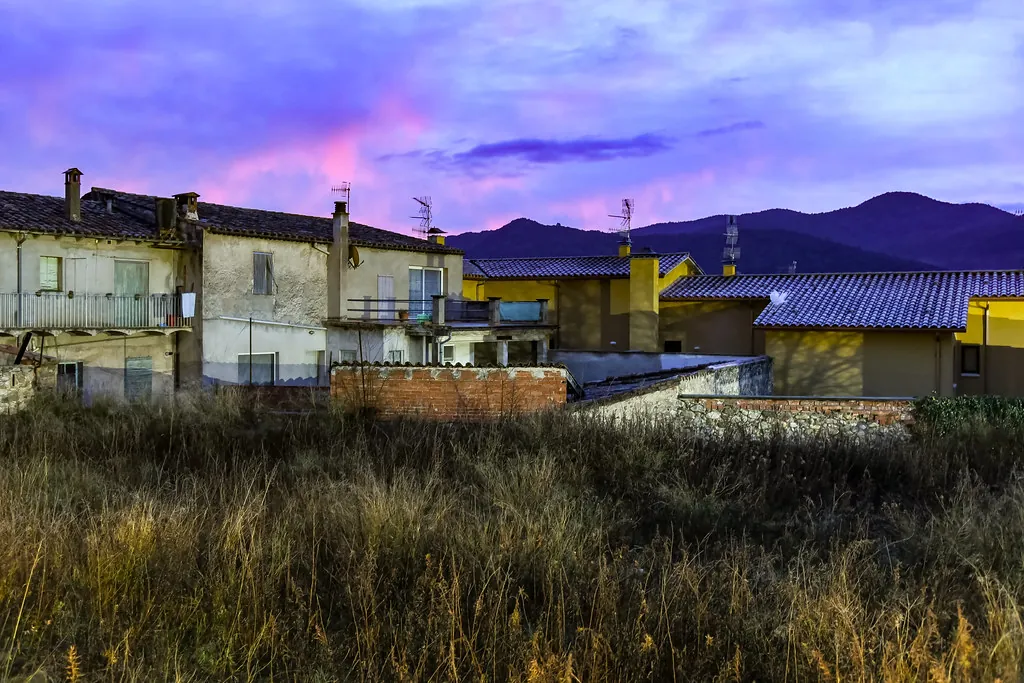
With just over one hundred and fifty inhabitants, Sales de Llierca does not function as a compact village. There is no single, tightly packed centre with streets and squares in the usual sense. Instead, the municipality feels like a small mosaic: isolated houses, rural tracks and patches of cultivated land. Homes are often separated by fields or woodland, and the distances between neighbours can be considerable.
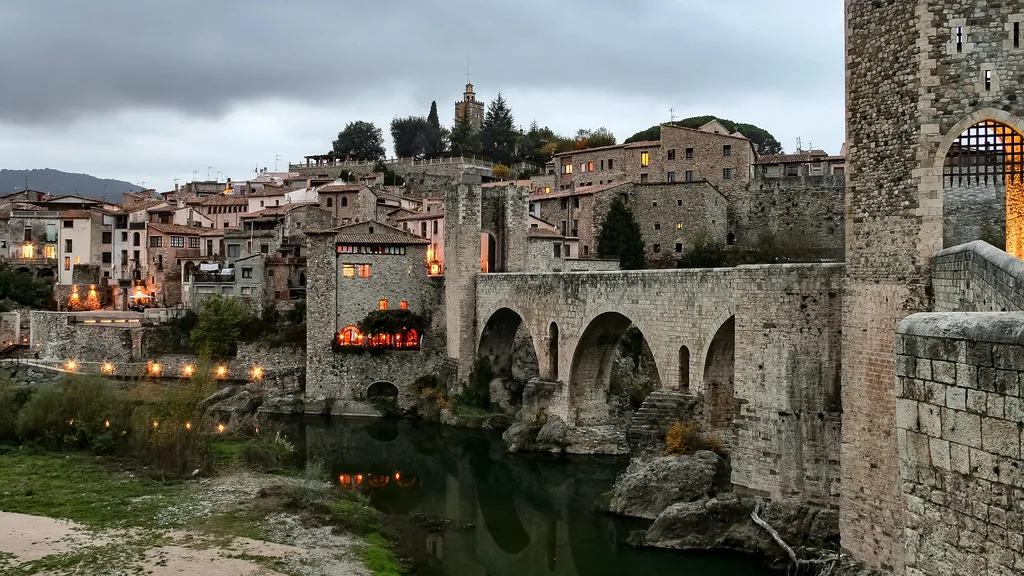
The river Llierca shapes much of the territory. It is not a large river, yet it has been a constant presence for centuries. Its course determined where crops could be grown, where a masía, a traditional Catalan farmhouse, could be built, and where routes could be opened through the surrounding hills. In several stretches, the river forms pools and small gorges carved into limestone rock, a common feature in this part of La Garrotxa.
Vegetation reflects the meeting of different environments. Mediterranean holm oak woods cover many slopes. Along the riverbanks, the scenery changes, with poplars, ash trees and willows appearing depending on the stretch of valley.
Rural Heritage and a Scattered Settlement
The small cluster of buildings where the church of Sant Martí stands acts more as a point of reference than as a true urban centre. The church has Romanesque origins, although it has been altered over the centuries. In many villages across this region, churches were built on slightly elevated ground. The aim was less about defence and more about visibility within a fragmented landscape where homes and fields were widely dispersed.
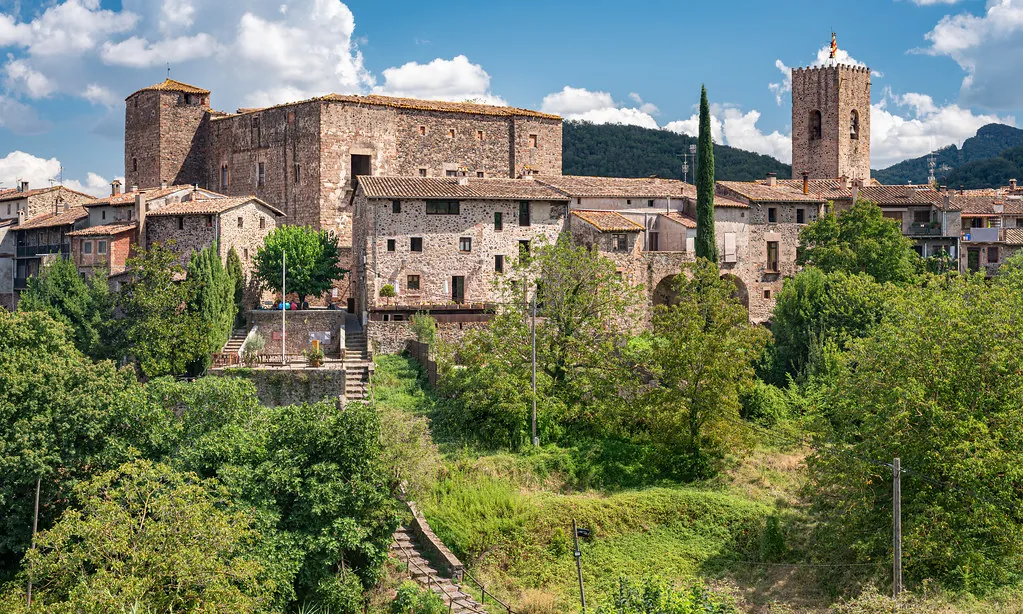
To understand the character of Sales de Llierca, it helps to follow its network of masías. Many stand alone among fields or beside old paths. These stone buildings are generally sober in style, designed for agricultural and livestock work. Over time, extensions were added according to the needs of each family, resulting in structures that reflect gradual change rather than a single building phase.
Elements typical of the rural landscape of La Garrotxa are still easy to recognise. Terraces cut into hillsides reveal where land was adapted for cultivation. Dry stone walls mark out plots. Old tracks once linked one farmhouse to another, or connected them to neighbouring villages. There are no headline monuments here. What stands out is the way the territory has been organised and used.
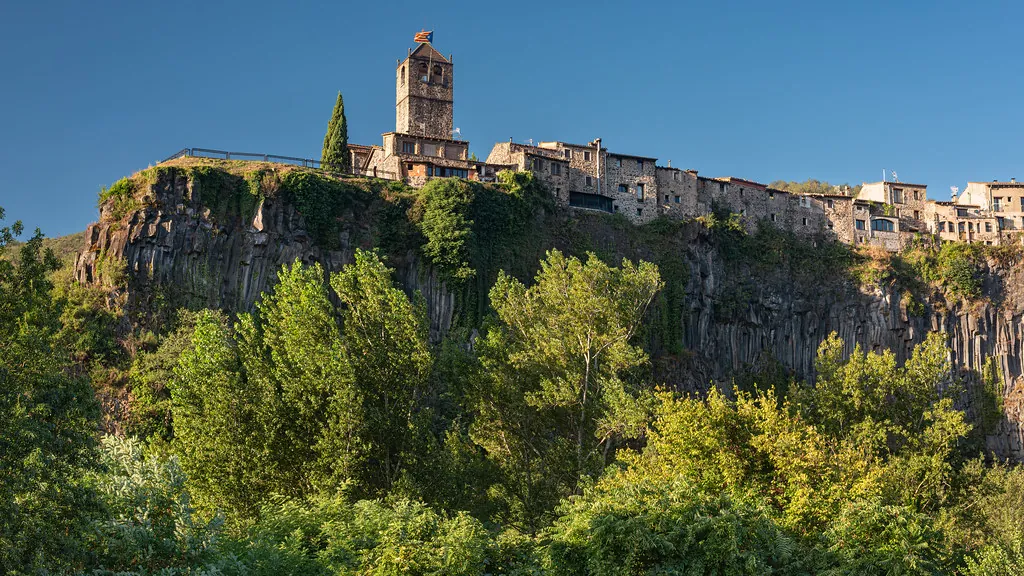
Sales de Llierca also lies close to the Alta Garrotxa, a natural area defined by its rugged limestone relief. From some of the higher paths, views open out towards these hills, where ravines and rock faces create a scene quite different from the volcanic areas that attract many visitors to La Garrotxa.
Quiet Routes by the River and Through the Hills
Walking routes that pass through Sales de Llierca tend to be peaceful journeys between woodland and cultivated land. Many follow old rural tracks that once connected masías. These are not high mountain trails, yet carrying a map or track is advisable. Crossroads can be confusing, especially where paths split in wooded areas.
The river Llierca is one of the most frequented spots for a stroll. In several sections, it is possible to descend to the water and find smooth rock surfaces and small pools. During summer, these riverbanks are used for cooling off, although the water level varies considerably depending on the season.
Local roads also lend themselves to exploring the area by bicycle. They are narrow and carry little traffic, linking small clusters of houses and secondary valleys. Gradients appear gradually. There are no major mountain passes, but the terrain rises steadily, with constant climbs rather than dramatic ascents.
The overall pace of movement in Sales de Llierca is unhurried. Paths are lightly used. Houses are separated from one another. The shape of the land dictates routes and distances.
Traditions and Everyday Life
The festive calendar follows the rhythm typical of small inland villages in Catalonia. The church of Sant Martí marks one of the municipality’s main celebrations, linked to its patron saint. On these dates, residents from the various masías and from nearby municipalities gather together. This is common in areas where the population lives in a scattered pattern, as festivities provide moments of reunion.
Outside these celebrations, daily life remains closely tied to the land. Agriculture and livestock have long shaped the way the territory is structured. Anyone walking through Sales de Llierca quickly senses this connection. Quiet paths, separated houses and cultivated clearings tell the story of how people have historically lived in this part of La Garrotxa.
There is no sense of a place designed around tourism. The appeal lies in observing how landscape and settlement relate to one another, and how natural features such as the river Llierca have influenced patterns of habitation.
Practical Orientation
Sales de Llierca is located in the northern part of La Garrotxa, between valleys that connect with the area of the Alta Garrotxa. Travelling by car is the usual way to move between different points within the municipality. From there, exploration continues on foot along rural tracks and footpaths.
The terrain is uneven. Distances that appear short on a map can take longer than expected because of the orography. Suitable footwear and some water are generally enough to explore the area at a relaxed pace.
Sales de Llierca does not present itself through major landmarks or busy streets. Its identity emerges through valleys shaped by the river Llierca, stone farmhouses set apart from one another, and a landscape that marks the gradual transition from volcanic Garrotxa to the limestone heights of the Alta Garrotxa.