Full Article
about Sant Aniol de Finestres
Municipality at the head of the Llémena valley; known for the castle of Finestres and its shrines.
Ocultar artículo Leer artículo completo
The church bell strikes eleven, yet the only other sound is a farmer starting his tractor two fields away. In Sant Aniol de Finestres, silence is measured by how clearly you can hear the River Brugent turning over the stones thirty metres below the Romanesque porch.
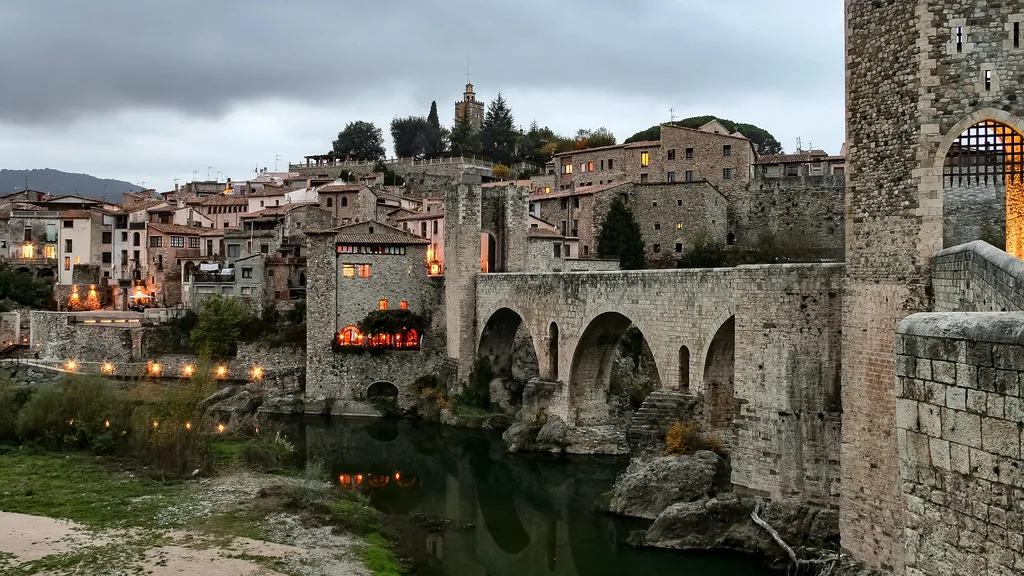
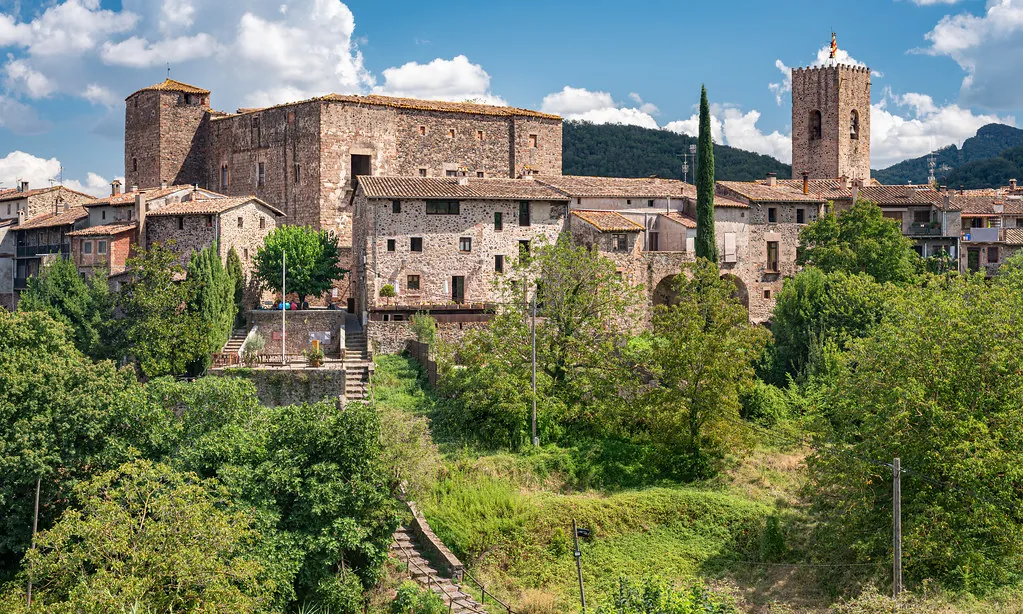
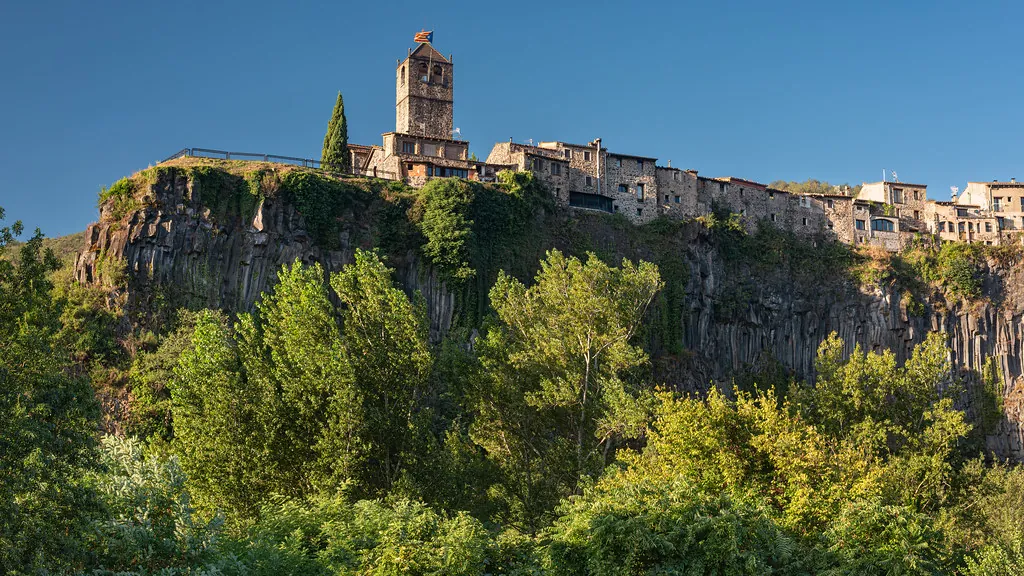
This is not the Catalonia of Gaudí selfies or beachfront paella. It is the upper Garrotxa, 40 km inland from the Costa Brava’s last hotel towel, where oak and beech forest replace olive terraces and the air smells of damp leaf rather than salt. The municipality counts barely 300 permanent souls, scattered among stone farmhouses that often sit a kilometre apart. Their roofs of weathered slate turn the same graphite shade as the basalt that pokes through the paths, a reminder that thirty volcanic cones smoulder gently 20 km to the north.
Walking into Yesterday, Without a Turnstile
Park by the twelfth-century church of Sant Aniol (there is room for six cars; on busy Sundays you will be car seven). From the lychgate, three way-marked footpaths leave immediately: one follows the Brugent gorge, one climbs to the ruined hermitage of Santa Margarida, and the third rolls out along an old mule track that once carried chestnuts to Girona’s merchants. No ticket office, no audio guide—just a wooden post painted yellow and white.
The gorge walk is the most dramatic, though “dramatic” here means you might need to duck under a fallen holm oak. Vertical walls of volcanic tuff rise 25 m, streaked black by winter spate. Mid-summer the river shrinks to emerald pools deep enough for a brisk swim, but the water stays at 14 °C even in August—think Lake District, not Lanzarote. Climbers grade the overhangs 5a to 7b; if you cannot tell a Friend from a nut, content yourself with watching from the path and the occasional cheer when someone tops out.
Allow two hours for the full 6 km loop. Mobile reception flickers out after the first five minutes; download the map beforehand. Proper footwear matters: the stone is slick as glass where centuries of floodwater have polished it. A French family in flip-flops were recently rescued after sliding into the gorge—embarrassing, chilly, and expensive.
Stone, Slate and the Smell of Woodsmoke
Turn away from the river and you are in a mosaic of small meadows stitched together by dry-stone walls. Many still hold cattle; the local brown cows produce the milk for Garrotxa’s mildly nutty cheese, sold at Saturday market in Olot for 22 € a kilo. The farmhouses, called masias, are built end-on to the prevailing wind, their balconies stacked with beech logs that will smoulder in open hearths until late April. You are welcome to photograph from the lane, but do not wander into the yard: dogs are territorial and Catalan farmers famously taciturn.
The altitude—520 m at the church, 860 m if you hike to the Santa Margarida crest—means nights stay cool. Even in July you will be grateful for a fleece once the sun drops behind the ridge. Spring and autumn are the sweet spots: wild cherries flower in late March, while October paints the beech copper and brings porcini thick enough to slice for breakfast. Winter is perfectly doable—roads are gritted—but daylight is short and mist can sit in the valleys for days. If you fancy Christmas here, book early; there are only four rental cottages inside the parish boundary.
Calories and Cash: the Practical Bit
There is no shop, no cash machine, and the two bars keep erratic winter hours. The smarter move is to stock up in Amer (15 min by car) where the BonPreu supermarket opens 09:00–21:00 and sells local sausages for 8 € a pair. For an unhurried lunch, drive ten minutes to Sant Esteve d’en Bas and walk into Cal Tino before 13:30. Their three-course menú del dia—perhaps trinxat (a cabbage-and-potato fry-up), grilled botifarra, and crema catalana—costs 17 € including half a bottle of house red. Brits who discovered it on the Walking World forum now fill half the tables on Sunday; the waiter will still address you in Catalan first, Spanish second, and surprise you with the bill in perfect English third.
Evening eating inside the village itself is limited to Bar Pla, where the menu is written on a paper napkin and changes according to whatever Joan has shot or grown. Thursday is rabbit stew night; if that sounds too Watership Down, ask for the omelette. They shut the kitchen at 21:30 sharp—no bargaining.
Beyond the Village: Volcanoes and Roman Walls
Sant Aniol works best as a base for wider Garrotxa. Olot, 20 min north, has four dormant volcanoes inside the town limits; the crater of Montsacopa is a five-minute stroll from the car park and gives views west to the Pyrenees. From Olot, the converted narrow-gauge railway line, now the Via Verde, pedals gently 54 km to Girona through abandoned stations and brick viaducts. Bike hire is 18 € a day at the Olot depot; they will lend you a helmet without being asked and refuse a deposit, trusting you to return by 18:00.
Girona itself is 50 min by car. Game of Thrones fans will recognise the cathedral steps, but the city’s real pleasure is the warren of medieval lanes inside the old walls. Park in the underground beneath Plaça de la Independència (2.10 € per hour) and emerge two minutes from a coffee that costs 1.40 € if you stand at the bar like the locals.
How to Get Here Without the Stress
Ryanair flies Girona direct from Stansted, Manchester and Bristol between March and October. A five-day car hire booked at Girona airport starts around 85 €; the drive to Sant Aniol is 50 min, almost entirely on smooth C-roads. Ignore Google if it tempts you off the C-152 after Olot—the dirt short-cut shaves three kilometres but will scrape your exhaust on basalt ridges. There is no public transport worth risking: the school bus leaves Girona at 06:55 and returns at 14:05, so unless you fancy a sleepover in the playground, hire wheels or stay home.
Leave the Costa crowds behind, but bring them with you in one sense: pack a reusable water bottle and take your litter out. The village has no street cleaning contract; if the bin by the church overflows, the next collection is Tuesday.
Worth It?
Sant Aniol de Finestres will never tick the box marked “nightlife” or “retail therapy”. What it offers instead is a conversation with a landscape that has been worked, walked and worshipped for a thousand years without bothering to advertise the fact. If that sounds like your sort of quiet, come before the rest of Britain realises the bell only strikes twice a day—and even then, you can miss it if the river is running loud.