Full Article
about Sant Ferriol
Scattered municipality near Besalú; home to a peculiar sanctuary and nature.
Hide article Read full article
At eleven in the morning, inside the church of Sant Feliu, light slips through the Romanesque windows at an angle and settles on the stone floor in an almost golden tone. The air carries the scent of old damp and candle wax. Stand still for a while and the only sounds are the creak of a wooden pew and, now and then, a car passing very slowly along the nearby road. In moments like this, the pace of tourism in Sant Ferriol becomes clear. Life here unfolds without hurry.
Sant Ferriol appears on the map of La Garrotxa as a very small municipality, made up of scattered settlements set between farmland and patches of woodland. The landscape combines holm oaks, oak trees and open meadows where isolated masías, traditional Catalan farmhouses, still stand. On clear days, from some of the higher points in the area, it is possible to make out the undulating forms of the volcanic landscape that defines the comarca, although the best-known volcanoes lie some distance away towards Olot.
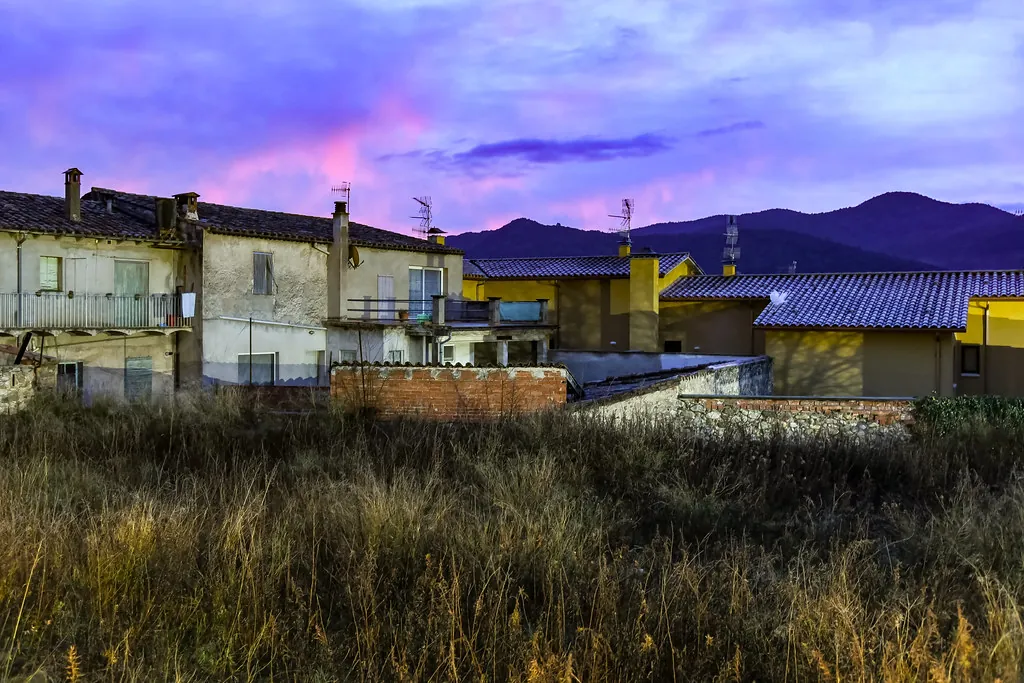
The hamlet where the church stands is compact. A handful of stone houses line narrow lanes that open onto the fields, their iron balconies catching the light. By mid-afternoon the sun strikes the façades from the side, drawing out irregular shades of grey and ochre. There is no steady flow of traffic and no shopfronts to disturb the quiet. More often than not, the only encounters are with a neighbour or the distant sound of tools at work on a nearby property.
Rural tracks between fields and masías
Getting around Sant Ferriol means travelling on foot or by car along very minor roads. Several rural tracks branch out from the area around the church, crossing cultivated land, small woods and old masías. Some of these routes connect with paths that continue towards neighbouring municipalities such as Mieres or Besalú.
Signposting is not always plentiful. Anyone planning a longer walk would be wise to carry a map or have a route downloaded in advance. In return, the paths tend to remain quiet, even at weekends. Autumn covers the ground with damp leaves and fills the air with the smell of turned earth. Summer brings a drier, more yellow landscape, with cicadas sounding from the edges of the fields.
The appeal lies in the simplicity of these routes. There are no grand landmarks along the way, just cultivated plots, low woodland and the sense of moving through a lived-in rural environment where agriculture still shapes daily life.
By bike on quiet local roads
Cyclists will find a small maze of gentle bends and short climbs on the local roads that criss-cross the area. Traffic is usually light. Even so, caution is sensible, as tractors and agricultural machinery can appear unexpectedly at junctions or raise dust along unpaved tracks.
This is not a destination defined by major mountain passes or long-distance mileage. The pleasure comes from riding at an unhurried pace between open fields and low forest, with the impression that the view shifts slightly with every curve in the road. One moment the route runs alongside cultivated land, the next it dips past a cluster of trees or an isolated farmhouse.
The scale remains modest throughout. Sant Ferriol does not seek to impress with dramatic gradients or famous cycling challenges. Its roads simply offer space and quiet, two qualities that can be harder to find in more frequented parts of Catalonia.
Eating in the surrounding villages
Within Sant Ferriol itself there is very little in the way of places to eat, something common in municipalities of this size. A short drive is needed to reach nearby towns in La Garrotxa for a meal.
Across the area it is easy to find cooking rooted in local produce. Embutidos, traditional cured sausages, appear frequently, alongside grilled meats and the well-known fesols de Santa Pau, small white beans associated with the comarca. Cheeses made locally are also part of the culinary landscape. These are solid, hearty dishes tied to the rural rhythm and to seasonal ingredients.
The food reflects the surroundings. Agriculture and livestock farming shape both the scenery and the table, and meals tend to follow that same practical, grounded logic.
The village festival
The main celebration revolves around Sant Fèlix and usually takes place in summer, when many residents who live elsewhere return for a few days. At that time, the square and the area around the church fill with long tables, conversations that stretch into the night and activities organised by the people of the municipality themselves.
It is not a festival designed to draw crowds from afar. Instead, it functions as a reunion, a moment when the village gathers and reconnects. Visitors who happen to be there will find an atmosphere centred on familiarity rather than spectacle.
Outside these dates, Sant Ferriol returns to its usual calm. The church square regains its stillness, and daily routines once again set the tone.
A small place to understand rural Garrotxa
Sant Ferriol does not offer major monuments or a structured sightseeing programme. What it does offer is agricultural landscape, quiet tracks and a rhythm of life that can still be sensed in small details. Laundry hangs from balconies. Chickens move behind a fence. Smoke rises from a chimney as evening approaches.
The municipality’s scale is part of its character. Its scattered settlements, fields and wooded patches form a setting where the passing of the day is marked more by light and weather than by schedules. Even the nearby road seems to respect that tempo, with cars moving through slowly rather than rushing past.
Those who come through Sant Ferriol will get most from the experience by keeping expectations simple. A walk along a rural track, a pause to look across the fields, a moment inside the church of Sant Feliu when the light falls just so. Silence does much of the work here.
In a comarca known for its volcanic terrain, Sant Ferriol offers a different angle on La Garrotxa. The famous cones near Olot may draw attention, but this small municipality shows another side of the region: cultivated land, modest hamlets and the persistence of a rural way of life. It is a place where very little seems to happen at first glance, yet that apparent stillness reveals the everyday texture of the countryside.
Time, in Sant Ferriol, is measured quietly.