Full Article
about Cervià de Ter
Historic town with a major monastery; cobbled streets and a medieval feel.
Hide article Read full article
A Small Village Near Girona
If you are considering tourism in Cervià de Ter, it helps to know what to expect before you arrive. This is a small village in Catalonia, a few kilometres from Girona, and it does not try to be more than it is. There are no major monuments and no extensive historic quarter to explore for hours. Many people arrive by car, have a walk around, and then continue their journey.
Cervià de Ter feels compact from the outset. You can cross it on foot without effort. It suits travellers who are already in the Gironès area or those following the course of the river Ter and looking for a quiet pause rather than a packed itinerary.
The village does not demand a long visit. Its scale is part of its character. The experience is simple: park, walk, look around, and move on when you feel ready.
Parking and the Best Moment of the Day
Because the centre is small, parking is usually straightforward. Cars are generally left along the access streets without too much circling. On weekends or during a local event, you may need to leave the car slightly farther out and walk in, but distances are short.
Midday tends to be very quiet. In summer especially, the light can be strong and there is limited shade in some streets. Early morning or late afternoon makes for a more comfortable stroll. The pace of the village rarely changes dramatically, yet the softer light and lower temperatures make walking easier.
There is no sense of congestion or rush. Outside specific local celebrations, the atmosphere remains calm and unhurried.
Around Sant Cebrià: The Old Centre
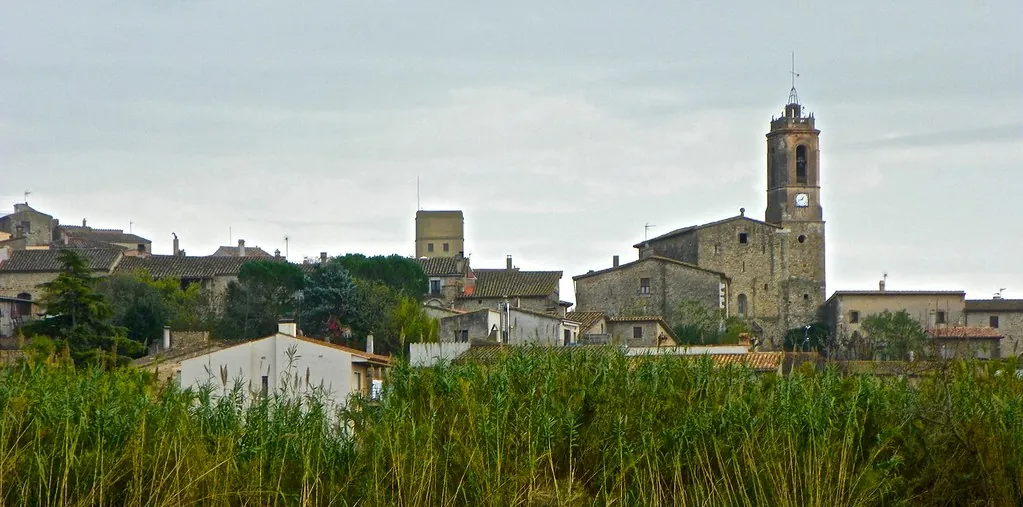
The historic core revolves around the church of Sant Cebrià. It is a sober building, with simple volume and little decoration. Stone defines its exterior. The church fulfils its role as a parish centre and focal point of the village, rather than as a grand architectural statement.
Nearby streets preserve older houses, some with noticeably worn stone doorways. Time shows in these details. The setting is not an intact medieval quarter nor a reconstructed backdrop. It is a small cluster of streets that still carry traces of the past in everyday façades.
You can see the centre quickly. In half an hour, most visitors will have formed a clear impression of what Cervià de Ter offers. A brief circuit around the church and adjoining lanes gives you the essence of the place.
There are no large squares filled with terraces, no sequence of landmark buildings to tick off. The appeal lies in observing the scale of the houses, the texture of the stone, and the quiet rhythm of village life.
The River Ter and the Surrounding Tracks
The river Ter runs close to Cervià de Ter and shapes the surrounding landscape. It is an important river in this part of Catalonia, and here it flows past natural banks rather than through a formal riverside promenade. Do not expect a landscaped walkway with railings and benches. What you find instead are stretches of vegetation and dirt paths.
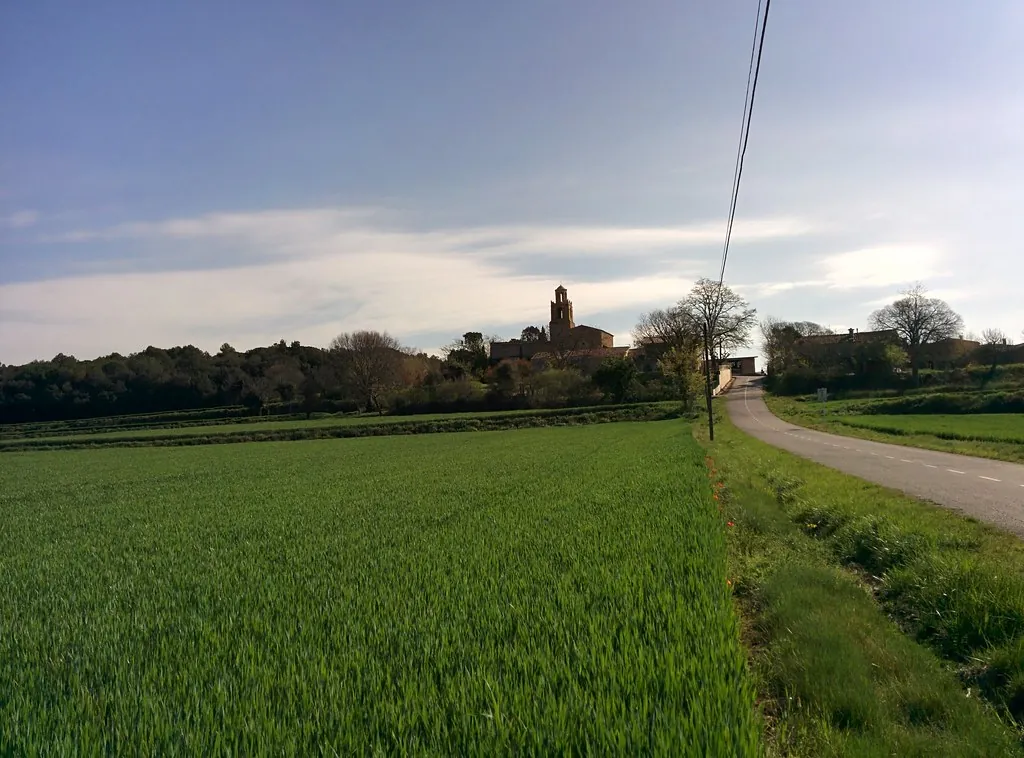
These margins feel rural and open. The terrain around the village is flat, which makes walking or cycling uncomplicated. Agricultural tracks lead out from the settlement, used by local residents and cyclists. Fields stretch around the village, with the occasional masía, a traditional Catalan farmhouse, set back from the road.
Many of these masías remain connected to agricultural work. Most are private properties, so they are viewed from the outside only. Their presence, scattered across the plain, reinforces the sense that Cervià de Ter is still tied to the land.
During the week, there is often a notable quiet. The soundscape is minimal. A walk along the tracks or near the Ter offers open views and a straightforward route without gradients or technical challenges.
This is not a destination for dramatic scenery. It is a place for an easy walk beside fields and riverbanks, for pedalling along flat ground, or for taking a short detour from a longer journey through the province of Girona.
Local Celebrations and Everyday Life
Cervià de Ter maintains local celebrations throughout the year. The main festival, known as the festa major, usually centres on Sant Cebrià, the village’s patron saint. In many Catalan towns, the festa major is the key annual event, and here it follows that pattern on a modest scale.
These are simple, community-focused occasions. They are designed first and foremost for residents. Visitors who happen to be in the village at the right time may come across small events or gatherings, but they are not staged as large spectacles.
Some traditions are linked to the agricultural calendar, reflecting the rural setting. Others connect to widely observed dates in Catalonia and across Spain, such as the night of Sant Joan in June. Sant Joan, celebrated on the eve of 24 June, marks the summer solstice with bonfires and gatherings in many places. In Cervià de Ter, as elsewhere, it forms part of the traditional yearly rhythm.
If you visit outside these moments, the atmosphere remains largely the same. The village does not transform dramatically according to the season. Life continues at a steady pace.
A Brief Stop in the Gironès
Proximity to Girona shapes the way Cervià de Ter is experienced. Many travellers reach it by car for a short stop, often while exploring other parts of the province. From here, it is easy to continue towards different areas of Girona province without significant detours.
Cervià de Ter works best as a pause rather than a destination in its own right. If you are already in the Gironès region or following the course of the Ter, it makes sense to spend some time here. Walk through the centre without hurry. Circle the church of Sant Cebrià. Take one of the agricultural tracks for a stretch of fresh air.
The village does not require more than that. Its scale, its quiet streets and its proximity to the river define the visit. After a short wander, you will have seen what there is to see, and you can continue your route through Catalonia with a clearer sense of this small riverside community.