Full Article
about Juià
Small rural settlement at the foot of the Gavarres; it keeps a medieval feel and nearby woods.
Hide article Read full article
A Small Village in the Gironès
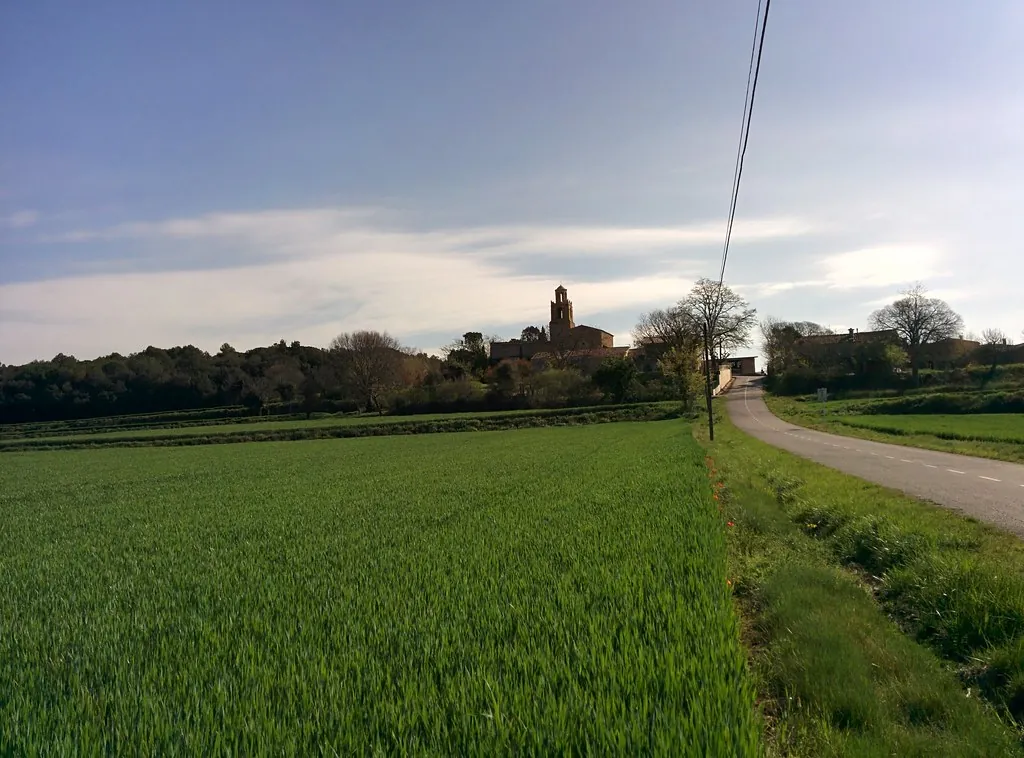
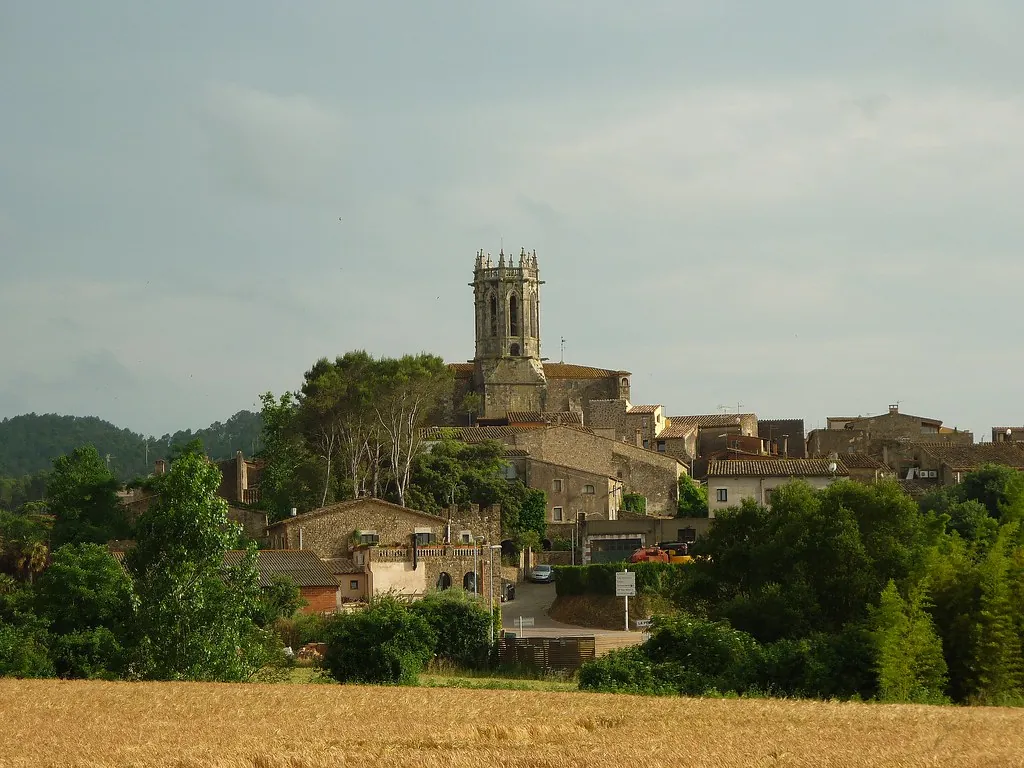
Early in the morning, when there is still moisture along the edges of the fields, the bell tower of Sant Martí rises above stone rooftops and rows of almond trees. The village is half-quiet at that hour: a door opening, a car passing slowly along the local road, the measured sound of bells marking time. Tourism in Juià has something of that same rhythm. It is a small place, set between farmland and woodland, where very little happens in a hurry.
Juià lies in the comarca of the Gironès, a short distance from Girona, in a transition zone between the flatlands of the Empordà and the first gentle slopes of the Les Gavarres massif. The landscape is soft rather than dramatic. Cultivated fields stretch out between dry stone walls, patches of pine woodland break up the view, and dirt tracks link scattered masías, traditional Catalan farmhouses that still shape the countryside.
The village centre itself is compact and can be explored in a few minutes, yet the surrounding territory offers plenty of space for walking. Juià feels defined as much by what lies around it as by its small cluster of streets.
Stone Streets and Sant Martí
The heart of Juià gathers around the church of Sant Martí, the clearest landmark in the village. The building has medieval origins and retains Romanesque features in its structure, although it has been altered over the centuries. Inside, the space is simple: a single nave, stone walls that keep the interior cool during the summer, and an atmosphere that reflects the scale of the community it serves. The bell tower, visible from nearby fields, continues to set the pace of the day with discreet chimes.
Around this central area, the old quarter unfolds in narrow streets, some paved with uneven stone. The houses have thick walls and doorways crowned with carved lintels. Many façades are finished with dark iron balconies and wooden shutters faded by the sun. It is common to see neighbours pausing in one of the small squares for a brief conversation before continuing on their way.
This is not a monumental historic centre filled with grand buildings. Instead, it is a modest network of streets where traces of agricultural life remain visible. Large gateways once allowed access to stables. Interior courtyards sometimes reveal stacks of firewood or farming tools. The past is not staged for visitors, it simply lingers in everyday details.
Step a few minutes beyond the last houses and the rural paths begin almost immediately. Fields of cereal lie alongside a few vineyards and many almond trees. At the end of winter, when the almond blossom appears, the landscape shifts suddenly. White and pale pink patches stand out against soil that is still cold from the season. In summer, the scene changes again, dominated by the ochre tones of harvested fields.
Walking and Cycling at an Easy Pace
Several country tracks leave from the square beside the church and loop around the village. In spring, the verges fill with wildflowers and the air carries the scent of damp grass. In autumn, dry leaves and fallen almonds often cover the ground. Comfortable footwear is advisable, as some stretches are unpaved and after several days of rain the mud can cling stubbornly to soles.
The routes around Juià are suitable for walking or cycling without major climbs. Many follow former agricultural paths that once connected masías and neighbouring villages. There are no long ascents, but there are sections of gravel and earth that require a steady, unhurried pace, particularly on a bike.
Late afternoon is a good moment to head out. The light drops behind the hills of Les Gavarres and lengthens the shadows of almond trees across the fields. In summer this time of day is also more comfortable, as the heat eases and a light breeze moves through the pines.
Given its size, Juià is often used as a stopping point while exploring this part of the Gironès. From here it is easy to reach other nearby villages such as Sant Martí Vell or Madremanya, which share the same open farmland and network of rural tracks. Together they form a landscape where distances are short and the scenery changes gradually rather than abruptly.
Local Life and Celebrations
As in many small villages in the comarca, community life in Juià revolves around the festa major and a handful of celebrations linked to the religious calendar. The festa major is the main annual festival, typically held in summer when the weather allows activities to take place outdoors and brings back residents who live elsewhere during the rest of the year.
Around the feast day of Sant Martí, the village’s patron saint, simple events are also held in the church or in the square. These are not large-scale festivities drawing big crowds. They are modest gatherings during which the village briefly adopts a livelier rhythm before settling back into its usual calm.
Anyone interested in experiencing this atmosphere should check dates in advance with the town hall or at comarca level, as they can vary from year to year. In small places like Juià, the calendar is flexible and shaped by local organisation rather than fixed tourist schedules.
Getting There and Finding Your Way
Juià is located around ten kilometres from Girona. The simplest access is usually by local road, crossing agricultural areas of the Gironès. By car, the journey is short and straightforward.
Public transport in villages of this size tends to be limited, so arriving by private vehicle is often the most practical option. Cycling from Girona is also possible for those who feel like a longer but manageable ride through the countryside.
On entering the village, it quickly becomes clear that there are no large car parks. Visitors typically leave their car along one of the streets near the centre and continue on foot. Within a few minutes, the square by the church comes into view. It acts as a natural reference point for getting oriented and for setting out along the rural paths that circle Juià.
In the end, tourism here is less about ticking off sights and more about adjusting to a slower tempo. The sound of bells, the changing colours of the fields, and the quiet conversation in a small square define the experience. Juià offers space to walk, to look around, and to follow tracks that connect farms and neighbouring villages across a gently shifting landscape.