Full Article
about Llagostera
Strategic town between Girona and the Costa Brava; walled old quarter and greenway route
Hide article Read full article
Llagostera is the kind of place you drive through on the way to the beach. You see the sign, maybe glance at a few houses from the road, and keep going. I did that for years. But then I stopped for a coffee, and later for a bike ride, and the place started to make a quiet kind of sense.
It’s not Girona, and it’s definitely not a Costa Brava resort. It’s a working town where things happen because people live here, not because tourists visit. That’s its main virtue.
The cork is gone, but the shape remains
You come in on the C-65 and the vibe is immediately clear: this isn’t the mountains and it isn’t the sea. For over a century, the smell here was toasted cork. The town made stoppers, millions of them, and that industry paid for a lot of what you see.
That noise is gone now, though a few related businesses hang on. You can get a feel for that past in the local museum, set up in an old manor house. It’s full of tools and scale models—the kind of place that shows you how things worked, not just how they looked.
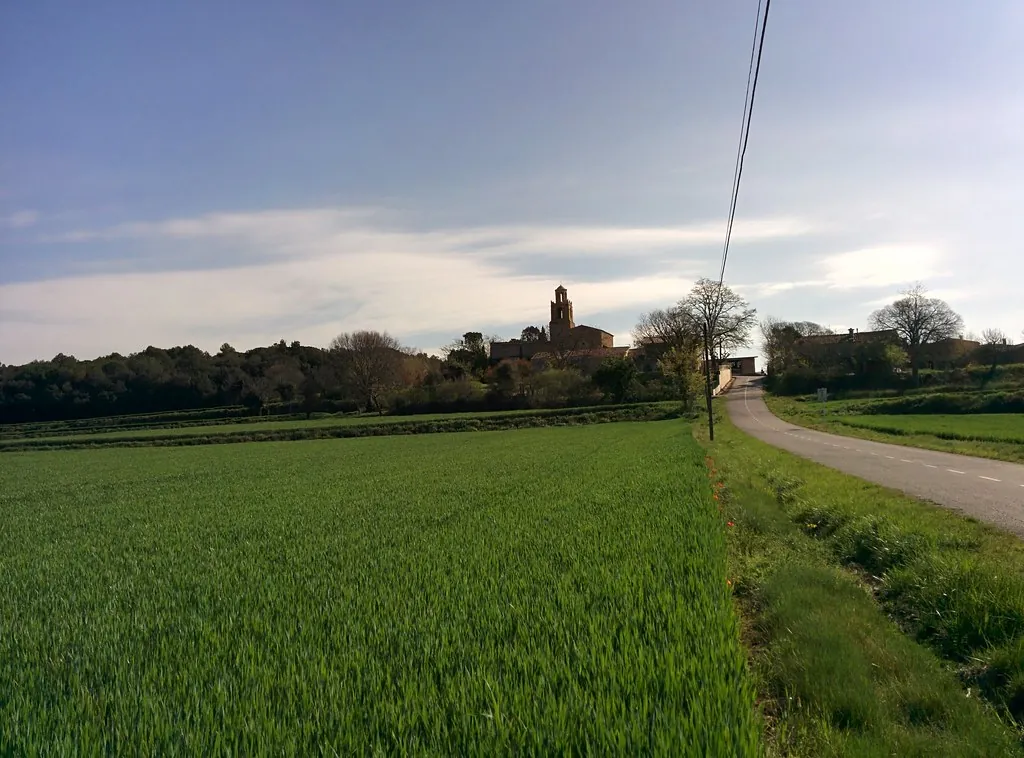
The old town is small. You can walk its heart in twenty minutes if you’re brisk. But if you slow down, you start seeing things: a chunk of medieval wall used as someone's garden fence, an archway that was once a gate, houses leaning together like they’re sharing gossip. The castle is long gone, replaced by the town hall on the same high point. The church bell tower still rules the skyline. If you hit it right during a local festival, they sometimes let people up. The view over the plain towards Les Gavarres is worth the climb.
This town runs on two wheels
If you want to understand Llagostera's rhythm, come on a Sunday morning. The Via Verde del Carrilet—the old train line from Girona to Sant Feliu—runs right through here, and it brings a flood of cyclists. Bikes are stacked against every bench and wall while groups refuel on coffee and bikini sandwiches.
That greenway is the main artery, but just north you hit Les Gavarres. That whole massif is crisscrossed with mountain bike trails. Some are gentle dirt tracks anyone can handle. Others… well, let's just say they start friendly before turning into leg-burning climbs that separate the keen from the committed. Know your level.
A weekend where mushrooms are king
The one time Llagostera truly puts on a show is during the Fira del Bolet. The mushroom fair takes over the town. Stalls pop up everywhere, restaurants do special menus, and everyone seems to have a wicker basket.
You'll see families with their ganxets (the little curved knives) comparing finds. Even if you don't know a rovelló from a cep, the energy is contagious. It feels less like a tourist event and more like the town showing off its favourite hobby.
There are other food fairs across the year, usually tied to whatever's in season locally. They're low-key affairs that change what's on your plate for a few days.
Football fame and local pride
For a while, Llagostera punched way above its weight in football. The local club climbed to professional leagues—a pretty wild feat for a town this size.
The municipal stadium tells that story. It's tiny and intimate; you're right on top of the pitch. You hear every shout from the bench and every comment from the stands. That connection is still there even though the team plays at a more modest level now. If your visit lines up with a home game, pop in for half an hour. It shows you how sport fits into community here.
The useful bits for your visit
A few practical things stick out after spending time there. In summer, they sometimes hold a Roman market in the old quarter. It's oddly charming to see people in tunics buying olives next to someone checking their phone. Don't miss the menhir in Plaça Major. It's a prehistoric stone slab they brought here from Montagut decades ago. It feels surreal standing next to it—a piece of deep history plonked in front of town hall. And remember nature is right there: walk ten minutes from any edge of town and you're on a dirt path between fields or heading into oak woods.
So, should you go? Don't come expecting fairy-tale perfection or dramatic vistas; other towns in Girona do that better. Come if you're cycling the greenway and need a proper stop. Come if you want to see an inland Catalan town that hasn't been packaged for visitors. Use it as part of something bigger: walk its streets when heading back from coast to city. It works best as part of your day rather than being your entire destination