Full Article
about Madremanya
Golden stone village with medieval charm; set in the Gavarres
Hide article Read full article
A village that reveals itself slowly
Early in the morning, before the sun has fully cleared the holm oaks that surround the village, Madremanya feels almost still. A wooden door opens somewhere, footsteps echo briefly on stone, and little else disturbs the quiet. Light gradually slips into the narrow lanes and settles on the sandstone walls, which here glow in warm tones between ochre and honey.
That sense of unhurried discovery defines travel in Madremanya. It is less about ticking off sights and more about walking at an easy pace, letting the place come into view bit by bit.
A compact medieval layout
Madremanya is a very small municipality in the Gironès region, made up of just a handful of streets gathered around its church. The historic centre retains a clearly medieval structure, with narrow alleys, arched passageways and stretches of old wall that appear unexpectedly between restored houses.
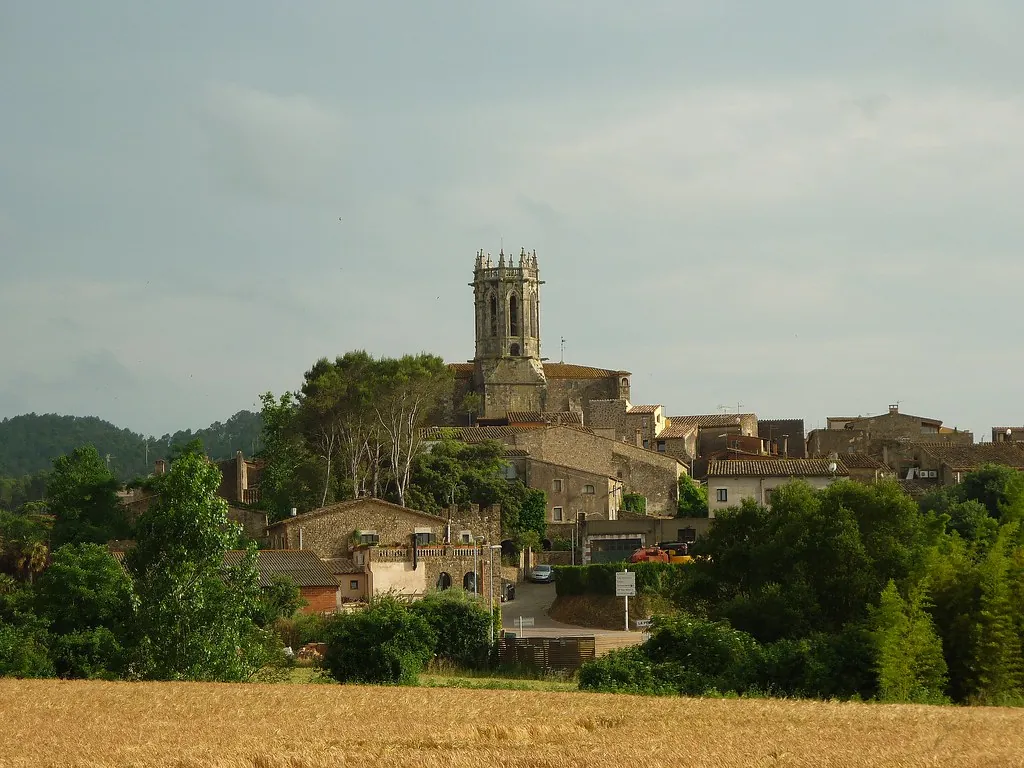
The buildings follow the same logic they did centuries ago. Thick stone walls, relatively small windows and roofs of reddish tiles shape the streetscape. Some façades display carved coats of arms or lintels marked with old dates. Others are more stripped back, showing bare stone worn down by rain and sun.
There are no grand squares or long, open views here. The experience is more intimate. Turning a corner might reveal an old doorway; climbing a short slope brings the outline of the bell tower into view above the rooftops. The village invites wandering without a fixed route, where small details take the place of major landmarks.
Sant Esteve and traces of the fortified past
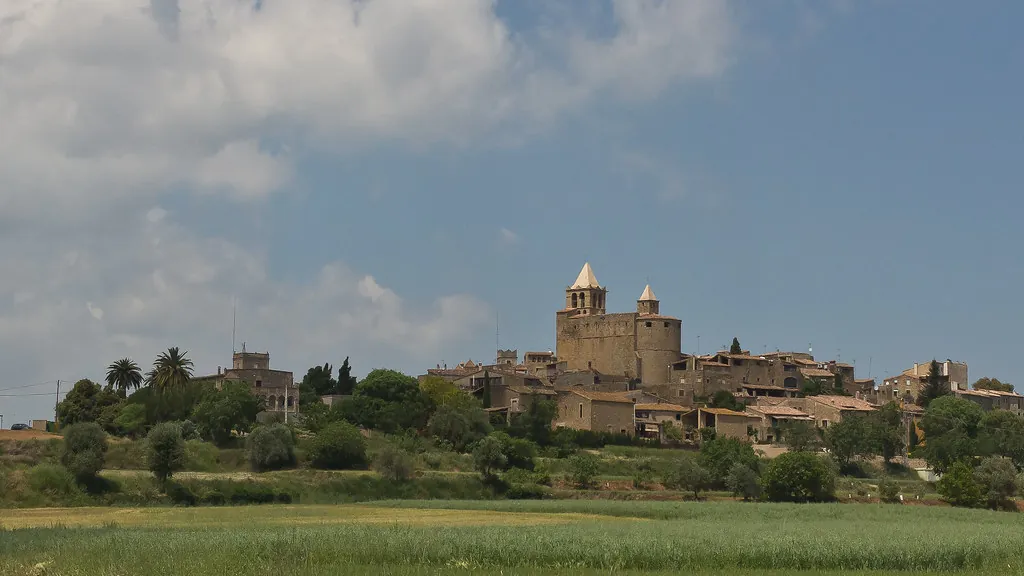
The church of Sant Esteve serves as the main reference point within the village. Its origins are Romanesque, though later modifications are clearly visible in the mix of styles and in parts of the façade. The bell tower rises above the surrounding houses and shifts in appearance depending on where you stand, sometimes tucked tightly among rooftops, sometimes visible beyond nearby gardens.
Walking through the centre, it is still possible to recognise parts of what was once a fortified enclosure. Old gateways hint at former entrances, and thick walls now form part of private homes.
The castle is also still present, integrated into the fabric of the village. It is privately owned and cannot be visited, but its tower and sections of wall are easy to pick out among the stone buildings. These elements, scattered rather than concentrated, give a sense of how the settlement once functioned without turning it into an obvious historical display.
Beyond the streets: fields and quiet paths
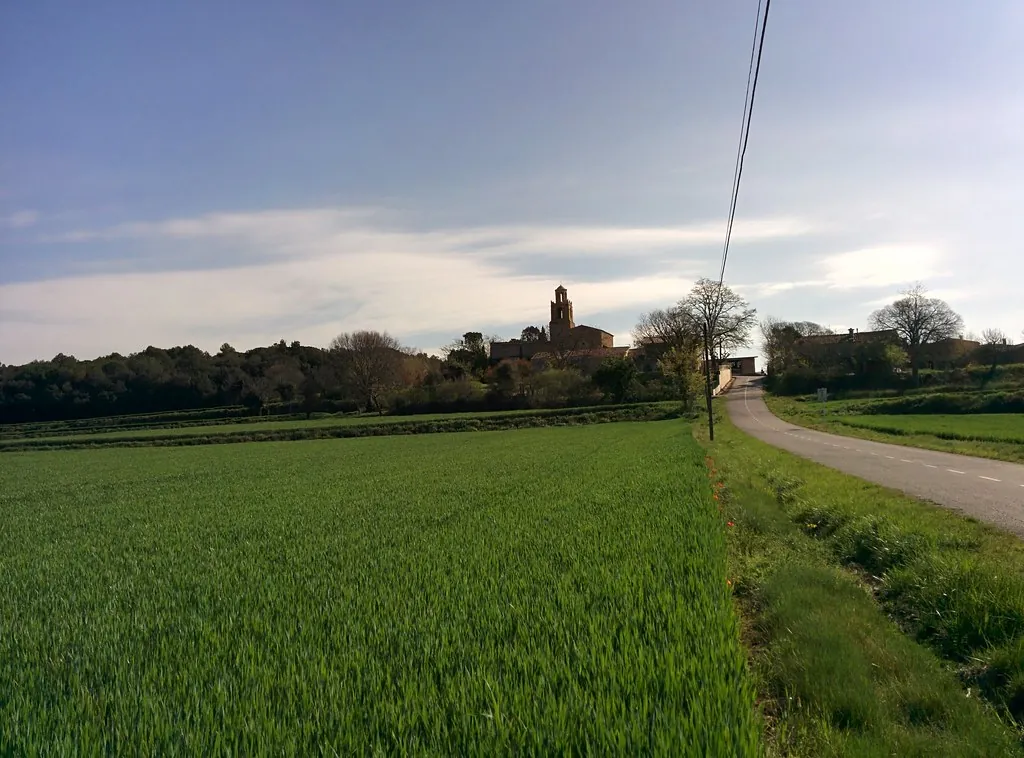
Step outside the village and the setting changes quickly. Cultivated fields begin almost immediately, along with a few isolated farmhouses and dirt tracks that wind through gently rolling hills. The atmosphere shifts with the seasons. In spring, the air often carries the scent of damp earth and fresh grass. In summer, it becomes drier, with hints of straw and dust rising from the paths.
There are routes linking Madremanya to nearby villages in the inland Empordà area, such as Monells and Cruïlles. Many of these paths can be followed on foot or by bicycle without steep gradients, provided the heat is not too intense.
During the warmer months, timing makes a difference. Early morning or late afternoon are the most comfortable moments to head out. Around midday, the sun falls directly on the paths and there is very little shade.
A quiet rhythm that shifts at weekends
With just over two hundred inhabitants, Madremanya maintains a notably calm pace of life during the week. This is especially noticeable in winter or outside the main travel periods, when it is entirely possible to walk through the village without encountering more than a handful of people.
At weekends and during holidays, the atmosphere changes. Visitors arrive from Girona, Barcelona and other nearby areas. Even then, it remains a quiet place, though the near-total silence of weekday mornings gives way to a more gentle flow of people.
For those looking to experience the village at its most tranquil, earlier in the day or midweek tends to be the best choice. The historic centre can be comfortably explored in one or two hours, though it is common to stay longer, either lingering in the streets or heading out along the surrounding paths.
Getting to Madremanya
Madremanya lies a short distance from Girona and is reached via local roads that pass through farmland and scattered residential areas. The final approach follows a narrow road that leads directly into the village.
Public transport in this area is limited, so travelling by car is usually the most practical option. It is best to leave the car in the designated areas at the entrance and continue on foot. The streets inside are narrow, and many of them slope.