Full Article
about Sant Julià de Ramis
Municipality with archaeological sites and a fortress; it overlooks the Ter crossing.
Ocultar artículo Leer artículo completo
The morning mist lifts from the Ter valley to reveal something unexpected: a limestone ridge rising 200 metres above the flatlands, crowned by broken stone walls that once watched over the Roman road to Gaul. This is Sant Julià de Ramis, a commuter village that most visitors sprint past on the C-66, unaware that ten minutes off the dual carriageway buys you 2,600 years of history and a view that stretches from Girona's cathedral spires to the snow-tipped Pyrenees.
At 127 metres above sea level the village itself sits midway between coastal plain and pre-coastal range, which explains the schizophrenic weather. Winter mornings can be 5°C cooler than Girona's centre thanks to the katabatic drift off the Pyrenees; by midday the same ridge traps heat, so you'll shed layers faster than expected. Spring and autumn are the sweet spots—clear air, 22°C afternoons, and the ridge walk free of summer's thistle scratches.
The Ridge and Its Ruins
Start in the lower barrio where modern houses peter out at the river. From here a stony track climbs 150 metres in twenty minutes, switch-backing through holm oak and rosemary. Trainers are adequate; the council laid stone dust last year after too many twisted ankles. Halfway up you'll pass a Roman cistern cut into the rock—still collects winter rain, still tastes of limestone if you're brave enough to try.
The summit isn't a castle in the Disney sense. What remains are foot-high walls, the outline of Iberian round huts, and a medieval tower base now sprouting wild fennel. Interpretation panels explain the stratigraphy: sixth-century BC Iberian settlement, first-century BC Roman signal tower, eleventh-century medieval watch post. The panels are bilingual Catalan-English, a nod to the growing number of British second-home owners who've discovered they can buy a three-bedroom village house for £220,000—half the price of comparable property in the Cotswolds.
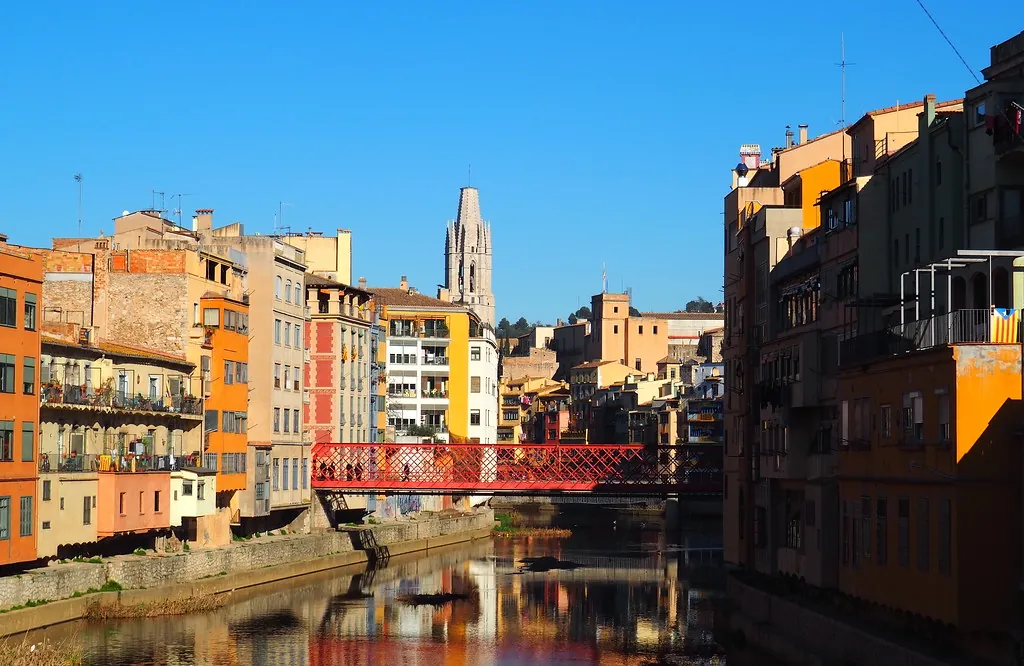
The 360-degree payoff comes at the northern parapet. Below, the Ter loops like a silver ribbon; beyond, Girona's cathedral and the coloured houses of Onyar river stand in miniature. On very clear days you can pick out the white radar dome atop Canigó, 90 kilometres away. Bring binoculars: griffon vultures use the thermals here, wingspan two metres plus, cruising at eye level.
Between River and Ridge
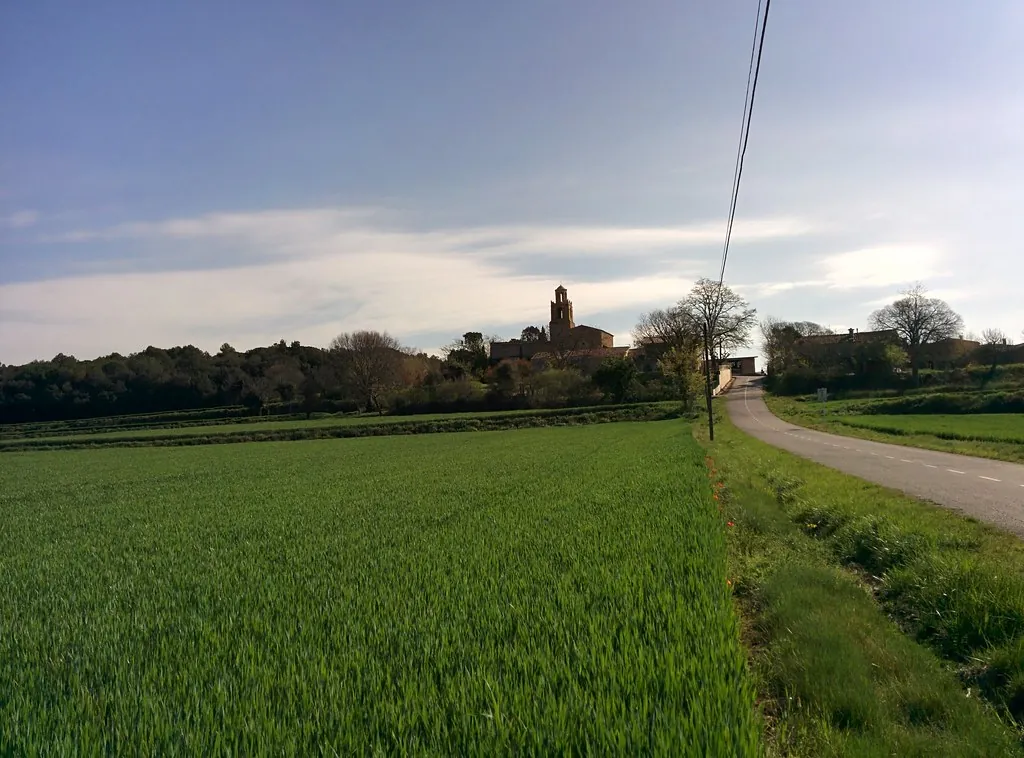
Back in the village grid, the sixteenth-century church of Sant Julià squats on a ledge half-way up the slope. Its square bell tower doubles as the local mobile-phone mast—look up and you'll notice the discreet antennae. Inside, the single nave smells of candle wax and damp stone; restoration paused in 2020 when EU funds dried up, leaving a patch of fresco flaking above the altar. Drop a euro in the box and lights flicker on just long enough to spot the Roman altar stone repurposed as the priest's credence table.
Five minutes downhill, the river path starts behind the football pitch. This is flat walking on compressed earth, shaded by poplars and plane trees. Cyclists share the track, but it's wide enough for everyone and the gradient is negligible. Follow it east for 3 km and you reach the medieval Pont del Dimoni, a two-arch aqueduct built by monks who weren't above a bit of myth-making—local legend claims the devil helped after losing a bet. The structure is only four metres high, more a curiosity than a photo stop, yet it's a favourite picnic spot for weekend families from Girona.
Eating: From Farmhouse to Michelin
Village gastronomy splits into two camps. At Mas les Goges, a 1790 farmhouse on the road out to Medinyà, the €16 menu del dia arrives on checked tablecloths: roasted chicken with proper chips, followed by crema catalana blow-torched at the table. They'll do plain omelette for fussy children without the Spanish eye-roll you sometimes get inland.
The other extreme is Esperit Roca, the Roca brothers' casual outpost on the main street. Tasting menus start at €65, but the booking wait is shorter than at El Celler de Can Roca in Girona. British visitors appreciate the allergen icons and the canapé that looks suspiciously like cod & chips—chef's wink to the Costa Brits who once filled nearby Empuriabrava. They open Wednesday-Sunday; arrive on a Monday and you'll be eating farmhouse chips whether you planned to or not.
Hotel Sants Metges occupies the old military hospital on the ridge road. Rooms start at €280 in shoulder season, but check the restaurant schedule before splashing out. When the kitchen closes, the nearest alternative is a 15-minute taxi to Girona (€18-22). Reviews swing between "exceptional luxury" and "overpriced boutique with patchy service", the truth probably lying in whether you catch them on a fully-staffed weekend.
Practicalities Without the Platitudes
Cash is king in the village bars—there's no ATM. Withdraw euros at Girona bus station before you arrive. Saturday morning traffic on the C-66 can add 20 minutes to the airport run; if your flight is before noon, leave at 08:30 to be safe. Buses back to Girona run hourly until 21:30, but the last service from Girona to Sant Julià is 22:15—miss it and you're in a €30 taxi.
English is thin on the ground. Younger bar staff cope, yet ordering a coffee can still turn into a game of charades. Learn three Catalan basics—"bon dia", "café amb llet", "gràcies"—and you'll be greeted with the surprised warmth reserved for visitors who bothered.
Worth the Detour?
Sant Julià de Ramis won't keep you busy for a week. What it offers is a manageable slice of inland Catalonia within arm's reach of Girona's museums and restaurants. Come for the ridge walk and river loop, stay for lunch, then decide whether to push on to the volcanic landscapes of Garrotxa or retreat to the coast. Think of it as the pause button between city buzz and mountain solitude—press it, and the view alone justifies the climb.