Full Article
about Sant Martí Vell
Picturesque village at the foot of the Gavarres; near the Els Àngels sanctuary
Hide article Read full article
A Quarter of an Hour from Girona, a Different Pace
Leave Girona behind, drive for barely fifteen minutes, and the tempo shifts almost without warning. That is the feeling on arriving in Sant Martí Vell. You park, look around, and find a small cluster of stone houses gathered around a square, near silence, perhaps a dog barking somewhere in the distance. There is no steady flow of traffic and no row of shops designed with visitors in mind.
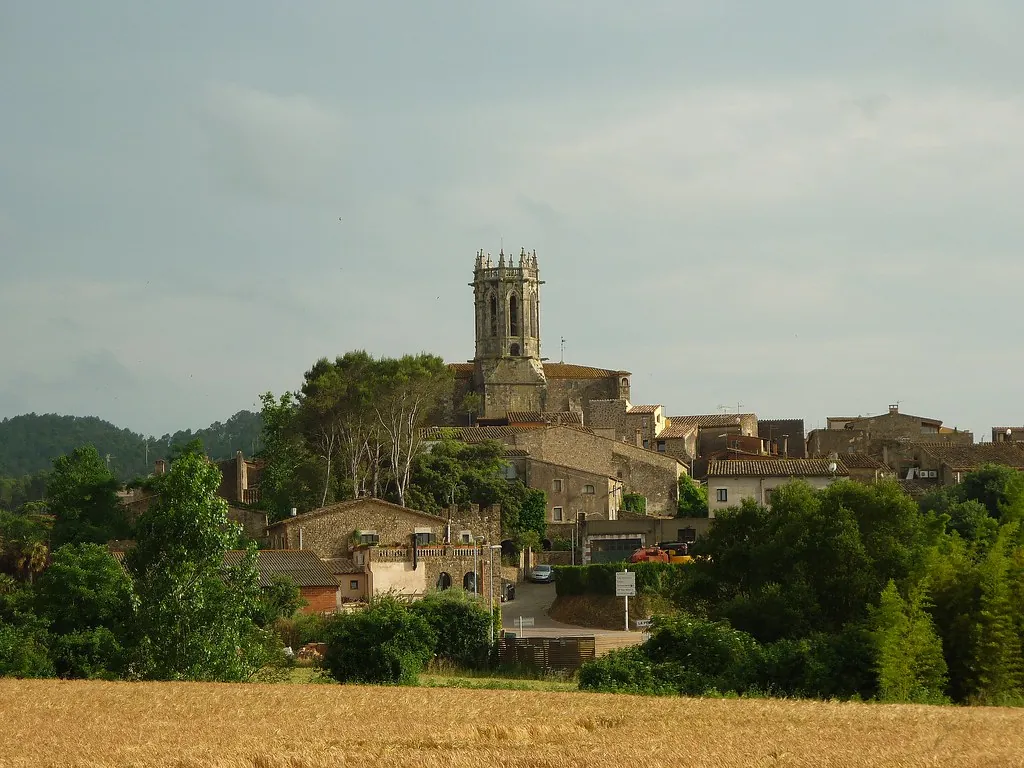
This municipality in the comarca of Gironès has just over two hundred inhabitants. It sits close to the provincial capital yet feels turned away from its noise. Life here revolves more around the land than anything else: crops, kitchen gardens, scattered masías and the unhurried rhythm common to many inland villages in the province of Girona. The houses in the centre are built of stone, with tiled roofs and large doorways. They look like homes meant for living in, not façades waiting to be photographed.
Sant Martí Vell does not try to impress. It simply carries on at its own speed.
Around the Church, the Village Began
The name offers a clue to its origins. Sant Martí Vell grew up around its parish church. The building has a Romanesque base, later additions layered on over time, something frequently seen in rural churches across this part of Catalonia. It is not a vast monument, yet as you walk through the village the bell tower keeps appearing between the rooftops, a useful point of reference in the narrow streets.
The old quarter is compact. It is the sort of place you explore without a map or much of a plan: one street climbing gently, another curving around the church, an old doorway here, a more imposing house there, set alongside simpler dwellings. The cobbled ground is uneven in places, so it pays to watch your step. Nothing feels polished or staged. The wear of centuries of everyday use is still visible in the stones.
There is no formal circuit to follow and no queue for entry. The appeal lies in wandering slowly, noticing the texture of the walls, the thickness of wooden doors, the way the church tower rises modestly above the rooftops.
Fields, Woodland and Distant Peaks
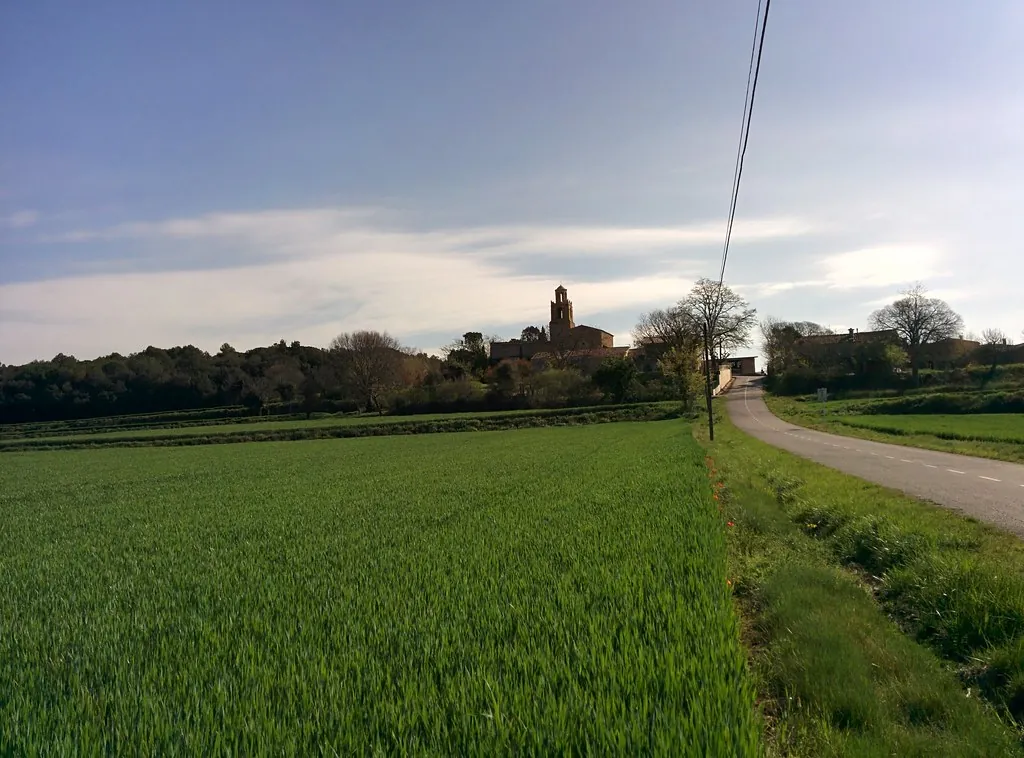
The landscape around Sant Martí Vell is typical of inland Gironès. Cereal fields shift in colour as the seasons change, loose clusters of olive trees dot the land, and patches of low woodland appear with holm oaks and oaks. In between stand isolated masías and dirt tracks used more often by tractors than by cars.
Walking here is straightforward and unfussy: quiet, open horizons and little else competing for attention. Now and then there is the hum of agricultural machinery in the distance, or birdsong, and not much more. On clear days, from some of the higher points along the tracks, the distant outline of the Pyrenees can be made out on the horizon.
The countryside does not feel arranged for visitors. It functions as working land. That is part of its character. The fields are not decorative, the paths are not landscaped, and the silence comes naturally rather than being curated.
Rural Tracks on Foot or by Bike
From the village, rural tracks branch out and connect with other small settlements nearby. They do not involve dramatic climbs and are generally manageable whether on foot or by mountain bike. There is no expectation of tourist signposts every hundred metres. These are agricultural paths that have been in use for decades.
That is precisely what makes them interesting. A walk or ride takes you between fields, through a small stretch of woodland, and before long you emerge in another village having encountered barely any traffic. The sense of continuity between settlements remains intact. Rather than isolated attractions, they form part of a lived-in landscape.
It is the kind of setting where time is measured less by landmarks and more by distance covered at a steady pace. An hour’s walk might simply mean a loop through fields and back, without a single interpretive panel to interrupt the view.
Eating and Getting Around
Within the village itself, there is very little infrastructure aimed at passing visitors. For a wider choice of places to eat, people usually head into Girona or to another nearby village. The advantage is proximity. A short drive brings you back into the city, making it easy to spend the morning walking around Sant Martí Vell and then head elsewhere for lunch.
In that sense, Sant Martí Vell works well as a calm stop on a broader route through the Gironès, or as a short outing if you are staying nearby. It is not presented as a destination packed with activities. Instead, it complements the surrounding area, offering a quieter counterpoint to Girona’s busier streets.
Festa Major and Neighbourly Gatherings
Local life comes into clearer focus during the Festa Major, usually held around the day of Saint Martin in November. According to those in the village, it is very much a residents’ celebration: shared meals, music and simple activities organised by the people who live here.
In summer, there are sometimes communal dinners or small open-air concerts, the sort of evenings where almost everyone knows one another. These events do not transform the village into something else. They reinforce its scale and its sense of community.
For visitors, stumbling across one of these occasions can offer a glimpse of everyday social life in a small Catalan municipality, where participation matters more than spectacle.
Is It Worth the Detour?
Sant Martí Vell is not a place to fill an entire day with scheduled sights. It feels more like a short detour taken because it is nearby and curiosity wins out.
A stroll through the old streets, a look at the church, an hour along the rural tracks, and you have a solid sense of the place. That may be all that is needed. There is no long list of must-sees and no dramatic storyline to recount afterwards.
What it offers instead is straightforward: a small village in the Gironès, a Romanesque-rooted church, fields stretching out under wide skies and a good measure of quiet. Sometimes that is reason enough to turn off the main road and see where it leads.