Full Article
about Vilablareix
Growing municipality south of Girona; still has farmland and farmhouses.
Ocultar artículo Leer artículo completo
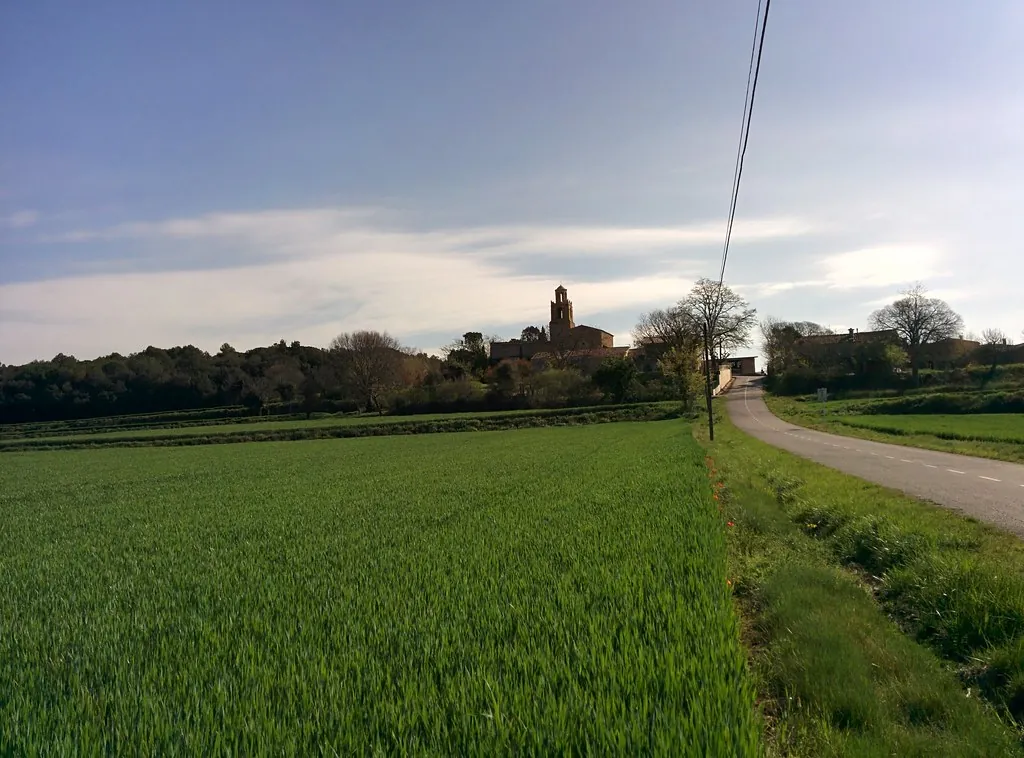
The wheat fields stop abruptly at the municipal boundary. One more step and you're on a cycle path that threads past low-rise flats, a primary school, and the parish church of Sant Esteve, whose bell tower has marked the hours since medieval times but now competes with the rumble of commuter traffic heading into Girona. This is Vilablareix: not quite countryside, not quite suburb, and all the better for refusing to choose.
At 99 metres above sea level the village sits on a gentle ridge that tilts towards the Ter valley. The altitude is too modest to cool the summer air—July temperatures regularly touch 32°C—yet just high enough that the Pyrenean tramontana wind can whip across the plain without warning. Locals keep a light jacket handy even in August; visitors who arrive in shorts and sandals usually make a detour to the Wednesday market in search of something warmer.
Fields that outnumber people
Roughly 3,500 residents share the parish with 1,200 hectares of cultivated land. cereal crops dominate—wheat, barley and the occasional strip of oats—interrupted only by irrigation channels and the scattered masías, those stone farmhouses with Roman-tile roofs that look as though they have grown out of the soil itself. Most are still working properties; dogs bark, irrigation pumps throb, and a handwritten sign on a gate near the Camí Vell advertises “ous ecològics, 3 €/dotzena”. Pull over, toot the horn, and someone’s grandmother will emerge with a recycled yoghurt pot filled with change.
Walking tracks radiate from the plaça Major like spokes. The shortest, a 40-minute loop to the ruined torre de Guaita, is flat enough for pushchairs; the longest threads 12 km to the neighbouring town of Salt and back, passing three working dairies where the smell of silage hangs thick in the morning. Cyclists use the same lanes—look for the brown “Vies Verdes” waymarks—but the surface is compressed earth rather than tarmac, so bring tyres wider than 28 mm after rain.
A church that rebuilt itself
Sant Esteve has been knocked down, enlarged, baroque-ified and stripped back so many times that the guidebook simply lists “various centuries” under date of construction. Step inside and the hybrid ancestry is obvious: a Gothic arch shelters a neoclassical altar, while the bell tower sports 19th-century battlements that were added after Carlist troops used the roof as a lookout. The interior is usually open 9 am–1 pm; if the door is locked, the baker opposite keeps the key on a hook labelled “clau de l’església” and will hand it over without questions if you buy a croissant.
Opposite the church, the old schoolhouse contains a one-room interpretation centre that explains, in Catalan and politely academic English, why the surrounding soil is deep enough to hide Iberian pottery yet too thin for vines. Admission is free; opening hours follow the enthusiasm of whichever retired teacher is on duty that week. If the lights are off, peer through the window anyway—the scale model shows every masía, right down to the colour of the barn doors.
Eating what the plain provides
There are no destination restaurants, which keeps prices close to what locals will pay. Can Xifra, on the corner of Carrer Major, serves a three-course weekday menu for €14 that might open with escalivada (smoky aubergine and peppers) and close with crema catalana so recently torched that the sugar crust still crackles. Evenings bring families out for “pa amb tomàquet” topped with grilled botifarra sausage; children are given the fatty end to keep them quiet while parents debate fertilizer prices over a carafe of house red.
Saturday breakfast is a sandwich of sobrassada and honey at the petrol-station bar. The combination sounds improbable until you remember that Mallorcan migrants arrived here in the 1960s to pick peaches and never left. Their descendants now run the convenience store, stock bocadillo de calamares on Fridays, and apologise that the coffee machine is “més britànic que no pas espanyol”—a dig at the filter option installed for the handful of northern Europeans who rent neighbouring fincas through winter.
Using the village as a base
Girona’s old quarter lies 5 km north; the bus leaves hourly from outside the pharmacy, costs €1.55 and takes twelve minutes if traffic at the roundabout behaves. From Girona you can be on the beach at Platja d’Aro in 40 minutes by car, or in the volcanic Garrotxa within an hour. The practical upshot: Vilablareix works for travellers who want rural quiet at dinner time but coastal hikes or medieval monasteries by day—provided you have wheels. Public transport beyond Girona is patchy; the last bus back from the coast leaves at 7 pm in low season, and Sunday service is myth rather than reality.
Accommodation is limited to two small hotels, a handful of B&Bs in converted barns, and a cluster of Airbnb flats aimed at university visitors. Expect €70–90 for a double in May, dropping to €45 once the academic term ends. Book early if your visit coincides with the Festa Major (first weekend of August); the population triples as former residents return for the correfoc, a fire-run that sends devil-costumed locals sprinting past the church with sparklers attached to pitchforks. Spectators stand behind fire trucks; the bombers spray the front row so polyester wigs don’t ignite. Health & Safety would have a field day, yet somehow only the stray dog ends up singed.
When to come, when to stay away
Spring brings storks on the electricity pylons and enough wild asparagus along the tracks to fill a tote bag in twenty minutes. Autumn smells of freshly pressed olive oil from a cooperative mill on the road to Sant Gregori; visitors are welcome to watch the centrifuges spin, but you must bring your own five-litre container. Mid-July to mid-August is hot, shadeless and noisy with harvesters that start at dawn. The village pool (€3 day pass) gets crowded with teenagers playing reggaeton from tinny speakers; grandparents retreat indoors and emerge again at siesta-end. Winter is mild—daytime 12–14°C—but the tramontana can make it feel five degrees colder, and several pensions close from January to March because heating bills erase the profit margin.
The bottom line
Vilablareix will never feature on glossy “Costa” brochures, and that is precisely its appeal. It offers a slice of working Catalan life where the bakery still shuts at 2 pm and the mayor drinks vermouth with constituents on the church steps. Come if you need a reset between Girona’s city treasures and the coast’s sand-choked coves. Don’t expect postcards views or Michelin stars; do expect to return home knowing the price of eggs straight from the hen, and the exact note the church bell strikes at seven—every single morning, including Sunday.