Full Article
about Isona i Conca Dellà
Rich in dinosaur fossil sites and Roman remains.
Hide article Read full article
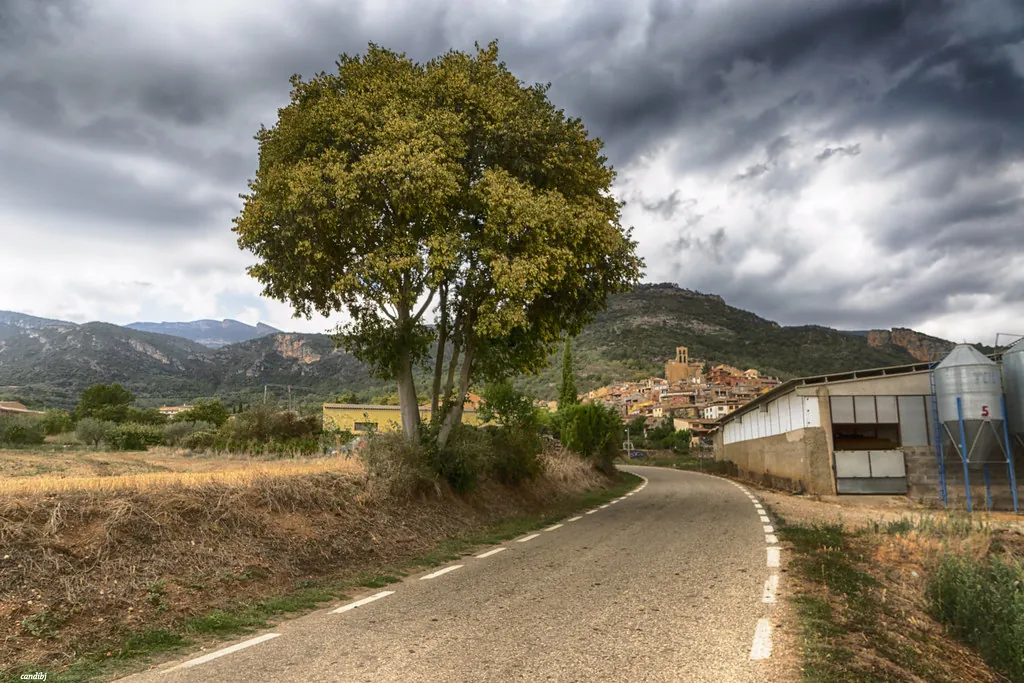
To understand Isona i Conca Dellà, start with its shape on the map. This municipality forms the western limit of the Pallars Jussà, a broad basin enclosed by the sierras of the Pre-Pyrenees. The terrain here opens into cultivated plains, eroded hills and stretches of badlands. Settlement is ancient and dispersed across small villages and solitary farmhouses.
Different timelines converge in this depression. Dinosaur fossils rest beneath the surface. Above them, Romanesque churches and sections of medieval wall persist. The landscape itself provides the primary narrative, often explaining more than the built structures do.
The Conca Dellà is recognized for its paleontological sites. Sediments that now form hillsides preserved footprints and remains from the late Cretaceous period, when the climate was subtropical. Erosion has exposed these layers over time, leaving ichnites and bone fragments visible in the rock.
Visiting requires an acceptance of distance. The villages are small and separated by secondary roads and open fields. A day here typically involves short drives punctuated by walks along signposted paths.
Fossils, Churches and Sections of Wall
The Museu de la Conca Dellà in Isona provides a necessary foundation. It clarifies the basin's geology and displays local fossils, eggs, and reproductions that help interpret the outdoor sites. From the museum, several routes lead to locations where dinosaur footprints remain fixed in stone.
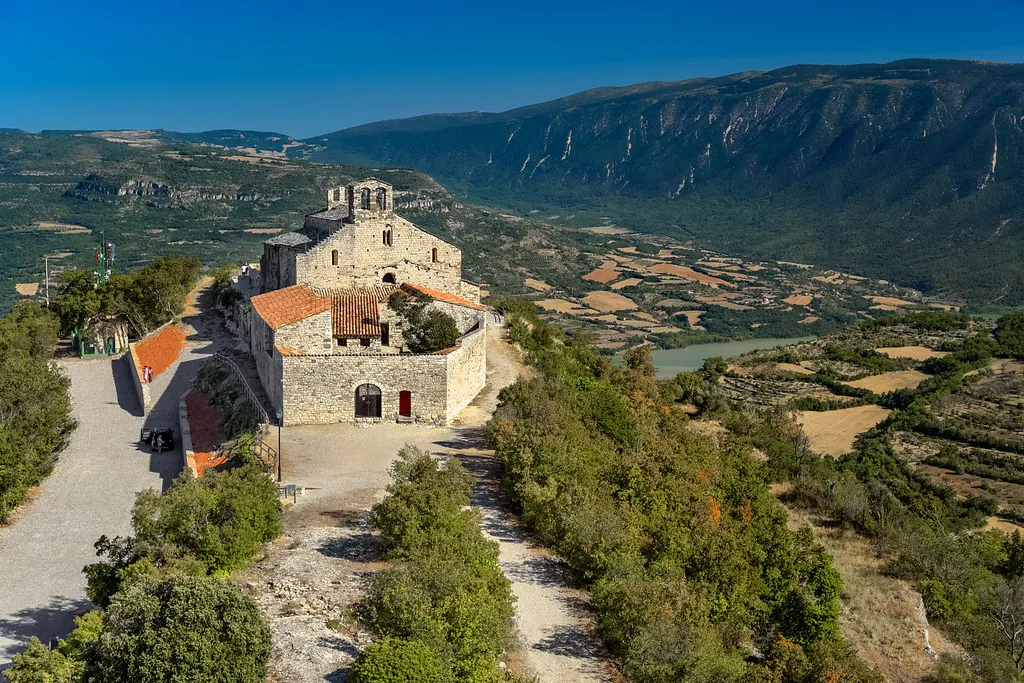
Romanesque architecture appears in various settlements. The 11th-century church of Santa María de Covet is perhaps the most significant. Its sculpted portal, with Lombard influences, is an unexpected detail for a rural church of its size. In Sant Romà d'Abella, another Romanesque church stands, linked to the village's original medieval core.
In Isona's old quarter, you can trace fragments of the town's former fortifications. These sections of wall were part of a defensive system when this area was a frontier with al‑Andalus. They are now embedded within later houses.
Other villages, like Basturs, maintain a coherent rural architecture. Stone houses, agricultural buildings and narrow lanes follow the land's contours. These are quiet places where the interest lies in the whole, not a single landmark.
Walking the Basin
Routes to the ichnite sites are common excursions. Several marked trails lead to points where fossilised footprints are preserved. It helps to know what to look for; many appear on sloped rock faces that might seem unremarkable at first glance.
Hiking follows agricultural tracks, old paths and stretches of Mediterranean holm oak woodland. The terrain is gentler than in other parts of the Pallars, though the summer sun is intense and shade is scarce.
Some longer routes approach the congosto de Mont‑rebei, beyond the municipal boundary. Local roads from the Conca Dellà lead towards progressively more rugged scenery as the landscape tightens into gorges.
These secondary roads also attract cyclists. Traffic is generally light and distances between villages are manageable, but you should plan for water and rest stops.
Calendar and Rhythm
Local celebrations follow the agricultural calendar common to the Pallars. The festa major in Isona usually occurs in late August, mixing religious events with communal dances and gatherings. It functions as a reunion for residents from across the municipality's scattered villages.
Daily life remains tied to the countryside and moves at a measured pace. Many villages have few year-round inhabitants, with basic services concentrated in Isona. A visit works best with some planning, especially if you intend to cover several villages in a day.
Isona i Conca Dellà operates on a logic of continuity. Fossilised footprints point to a deep past. Romanesque churches and pieces of wall speak of a medieval frontier. Cultivated fields and quiet tracks define the present. The landscape holds these layers together, and reading it is how you understand this part of the Pallars Jussà.