Full Article
about Caldes d'Estrac
Small seaside town known as Caldetes, famous for its thermal baths and modernist architecture.
Hide article Read full article
At six in the evening, thermal water runs from the taps of the fountain on the Passeig dels Anglesos and slips away down the drains unnoticed. In Caldes d’Estrac, this water is part of daily life. Locals call it aigua de Caldes and walk straight past it. They have had the right to use it for centuries, yet in the height of summer the promenade smells more of sun cream than sulphur.
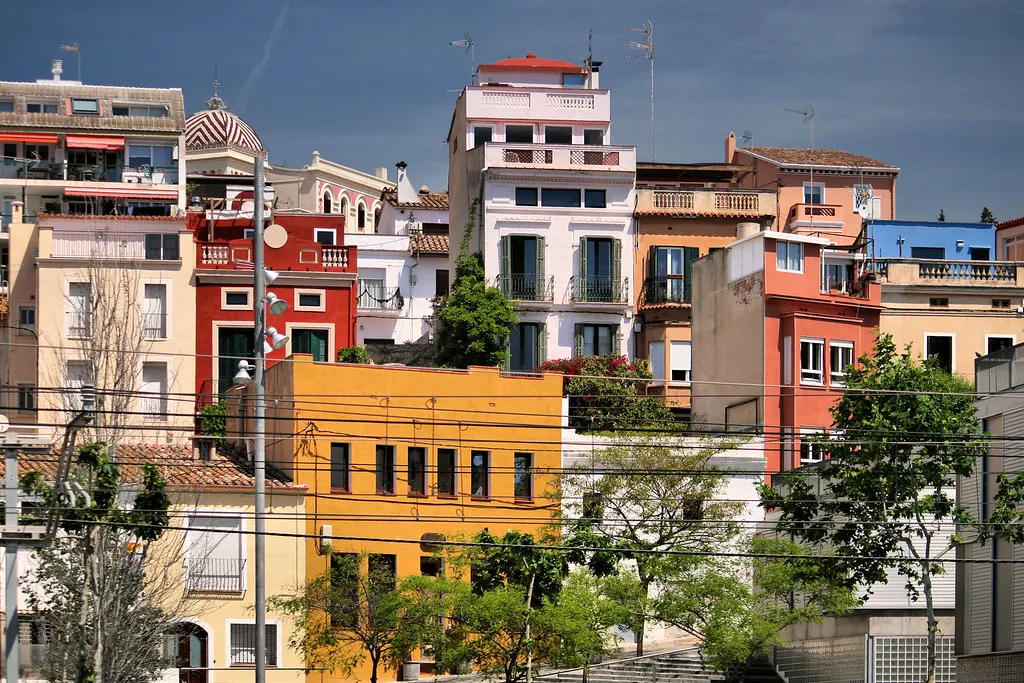
By the following morning the scene has shifted. As the sun warms the tiled roofs of the town’s Modernista houses and cats prowl through Parc del Muntanyà, the same water rises hot in the municipal thermal baths. Someone always appears with a towel tucked under an arm, hoping to ease a sore back or simply to repeat a ritual that has been part of life here for generations.
Caldes d’Estrac sits on the Maresme coast of Catalonia, close enough to Barcelona to feel connected yet with its own steady rhythm. Sea and thermal springs exist side by side, and neither seems to compete for attention. The water flows, the trains arrive and leave, and daily routines carry on around both.
The sound of xinxas at low tide
Trains on the coastal line set travellers down a few minutes from Platja dels Tres Micos. Doors open and salt air rushes in. From the platform, the sea is close enough to hear. There is also another sound in the early hours: the sharp snap of xinxas striking rock. Some fishermen use this quick, repeated motion to crack small crustaceans against the stones left exposed by the receding tide. It is a brief, dry noise that marks the start of the day.
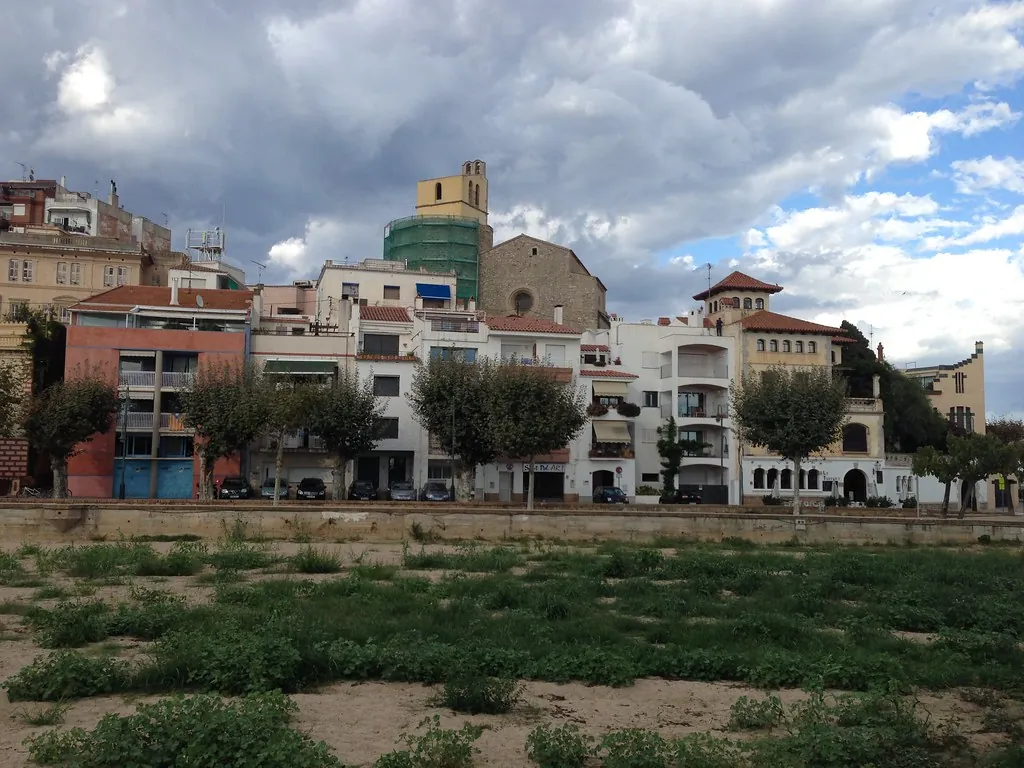
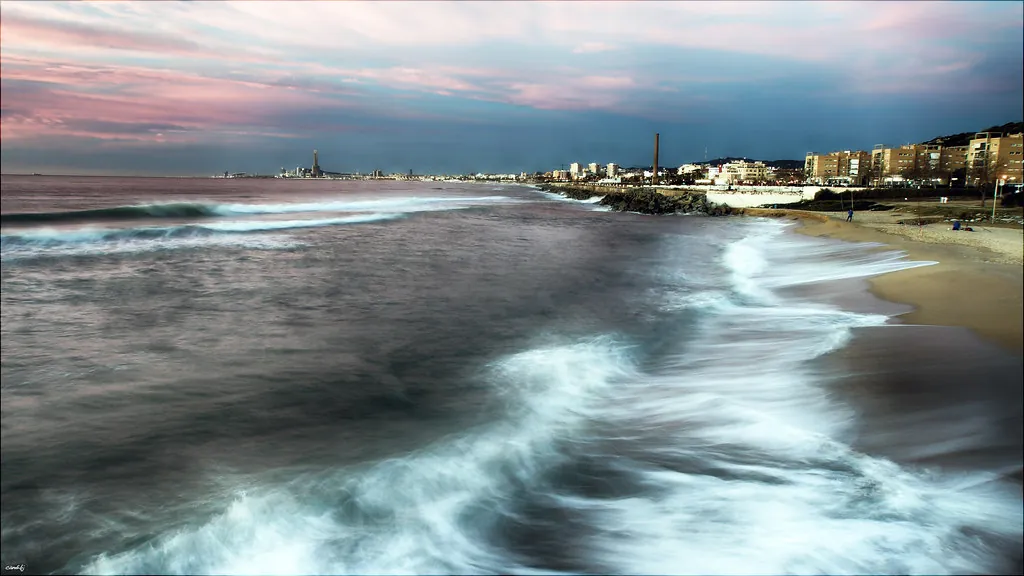
The sand here is not white but a deep toasted shade that clings to damp skin. The seafront promenade, lined with low palms and stone benches that heat up under the sun, fills in August with beach trolleys and children carrying buckets, while fishing nets lie coiled beside the breakwater. Just over a century ago, this same stretch of coast served as a summer retreat for well‑to‑do families from Barcelona.
At the northern end stands Torre Busquets, built in the 16th century, rising as a grey stone cylinder. Close up, a family coat of arms can be seen carved beneath the eaves, worn by the marine wind. Torre Verda sits near the riera, the seasonal stream that cuts through town. Torre dels Encantats appears among the pines when following the paths that climb through Muntanyà. These were scattered watchtowers, raised when this coastline feared incursions by Barbary pirates.
The past feels present without being staged. Sea air moves through the same spaces where guards once kept watch.
Inside the Fundació Palau
The Fundació Palau occupies the former house linked to the poet and essayist Josep Palau i Fabre. From the outside, the building combines red brick with dark iron. Inside, the rooms are quiet and remain slightly cool even in summer.
The collection centres on the relationship between Palau i Fabre and Pablo Picasso. There are swift sketches, prints and small pieces that feel closer to private notes than to works created for a museum wall.
Light falls from above through a skylight and settles softly on the frames. At times, a member of staff shares an anecdote about the bond between the two artists or points out a detail that might otherwise go unnoticed. The visit does not take long, yet it leaves an impression of having encountered something unexpected in a small coastal town.
Spring peas and black rice
In early spring the Maresme takes on a different scent. After rainfall, damp earth and orange blossom dominate the air. This is also the season of the pèsol de la Floreta, a highly prized pea in the region. Small and sweet, it is harvested before the pod hardens.
Around this time many residents talk about the Pesolada, a celebration centred on this particular pea. It appears in varied dishes. Some plates pair it with butifarra negra, while elsewhere it is served in a light cream or barely sautéed.
A meal often ends with arroz negro cooked with cuttlefish and squid, dark and gleaming, carrying the lingering aroma of sofrito. The flavours reflect both land and sea.
Food here follows the calendar closely. When summer advances, attention shifts back towards long days by water.
A practical rhythm
Caldes d’Estrac is connected to Barcelona by a suburban train that runs along the coast. The journey typically takes around three quarters of an hour.
August brings a noticeable change. The population swells and the beach fills from mid‑morning. Those in search of a calmer version often prefer June or September. The thermal water continues to flow hot then.
At dawn in early September during its festa major, you might find confetti stuck to damp pavement from celebrations hours before. Later, during events like a correfoc, sparks trace red circles against darkened buildings while powder smoke drifts toward sea air.
Through all these shifts, some pass by its thermal taps without a glance while others carry towels toward municipal baths where hot springs meet saltwater horizons without ceremony or fanfare—just another part of daily life here along this stretch of coast where trains still stop just short enough for you smell both brine rising off waves breaking nearby as well as faint traces left behind after centuries have washed over stones warmed each morning anew beneath Mediterranean suns