Full Article
about Dosrius
Inland Maresme municipality with lush forests and the Corredor sanctuary
Hide article Read full article
The name first appears on a parchment from 963: Duos Rios. Two rivers. Specifically, two streams that come down from Montnegre and el Corredor, meet here, and then run towards the sea. That confluence decided where people would settle. Water dictated the old economy: the placement of mills, market gardens, and wash houses. It also explains the castle’s position, controlling the route between the Maresme plain and the inland hills.
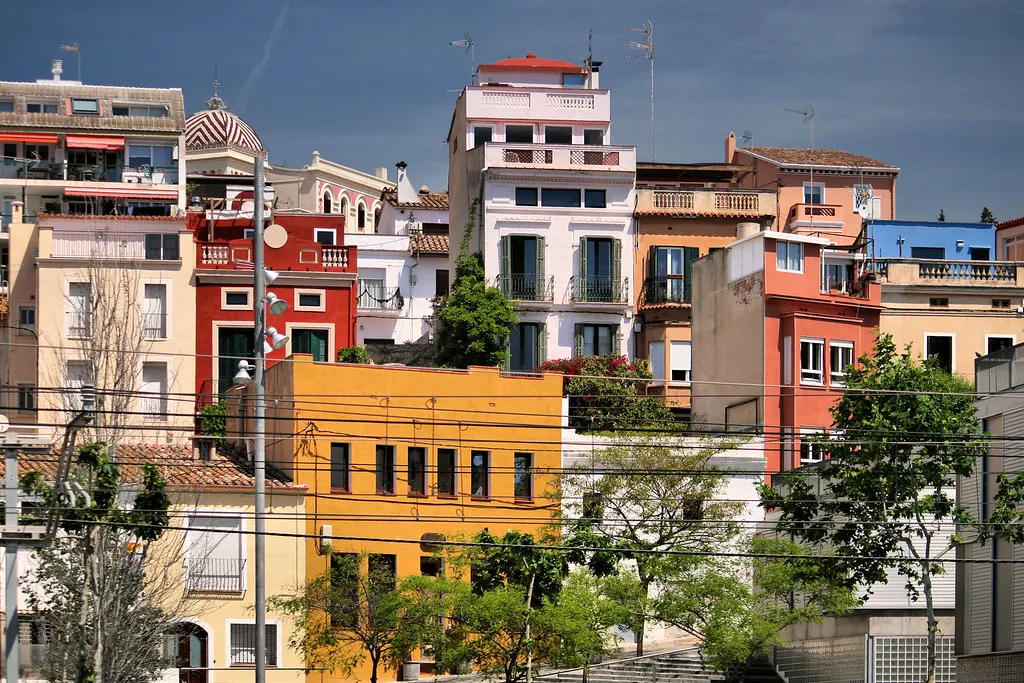
Dosrius is not one village but three distinct centres. The main nucleus, Dosrius itself, clings to the mountainside. A short distance away is Canyamars, with its own square and a sense of separateness. Further south, Can Massuet spreads across the slope in residential developments that grew in the latter half of the twentieth century. Old paths, once used for carts and pack animals, still connect them, now walked by hikers and mountain bikers. The geography is the limit here; the Serra del Corredor blocks the Maresme from extending inland, so these settlements occupy the valleys where the land allows for building and farming.
The Castle on the Ridge
The walk up to the Castle of Dosrius is less steep than it appears from below. A footpath starts near the cemetery and climbs through pines and cork oaks to the ridge. What remains are fragments of walls and part of a tower. The view from here is what matters: you see the entire entrance to the valley and the natural corridor between coast and interior.
The castle is documented from the eleventh century. It was part of the feudal system that organised this part of the Maresme, functioning more as a watchpoint and a symbol of authority than a fortress for siege. The title linked to it later evolved into the Marquisate of Castelldosrius.
Down in the village centre, the parish church of Sant Iscle i Santa Victòria also has medieval origins. The current building shows mainly eighteenth-century work. It’s a restrained structure—a single nave with a simple bell gable—typical of many rural Catalan churches. Inside, a late Baroque altarpiece shows modest craftsmanship.
The main annual festival is usually held in mid-July, around the feast of Sant Iscle. The ball de gitanes, a folk dance with strong roots in this part of the Vallès and Maresme, remains a central part of the celebration here.
Canyamars and the Ice Well
Canyamars revolves around a broad square lined with low houses featuring stone doorways and exposed wooden beams. On one side stands the Pou de Glaç, an ice well likely built in the sixteenth century.
The process was practical. During cold winters, snow was compacted and stored inside the well. Insulated with straw, it turned into ice blocks that could last for months. Come warmer weather, carts would transport the ice down to coastal towns for domestic and commercial use.
The well can sometimes be visited on open days or through local cultural initiatives that explain the old trade.
Behind the village, a forest track begins its climb to the Santuari del Corredor. It passes through pinewoods and holm oak groves before reaching the summit sanctuary, built in the seventeenth century over an earlier site of devotion. On clear days, the view from around the sanctuary takes in much of the Maresme coastline.
A popular pilgrimage makes its way up from Canyamars each year. It’s a neighbourly affair, combining the walk with shared food and informal music.
Watercourses and Old Mills
Dosrius sits on an area with more underground water than is typical for the Maresme, where many streams are seasonal. This abundance is why you find springs in various spots across the different centres.
Walking the course of the riera d’Ardenya reveals traces of old mills and small stone bridges—reminders of the milling and farming that sustained the local economy for centuries. After rain, pools form along its course, making the walk particularly agreeable.
The territory lies within the Parc del Montnegre i el Corredor, a protected area where Mediterranean woodland is slowly recovering after decades of forestry use. In the quieter parts of the valley, seeing roe deer is not unusual.
Getting There and Getting Around
Dosrius is about ten kilometres from Mataró, connected by road. There is public transport to the coast, but services are limited throughout the day.
The main centre is easily explored on foot. Moving between Dosrius, Canyamars, and Can Massuet means covering distance, as they are separate nuclei shaped by the valleys.
Spring and autumn are good times to come, when the forested slopes show their seasonal changes and walking conditions are at their best. Summer brings the main festival around Sant Iscle. Winter is quieter, with the occasional cold snap that once made the ice trade viable.
Dosrius is still defined by its geography. Two rivers converge, paths thread the valleys, and the hills of el Corredor frame everything. Water, stone, and woodland continue to shape a municipality that has grown in different directions but still reflects the landscape that drew settlers here over a millennium ago.