Full Article
about Malgrat de Mar
Family-friendly resort on the Girona border with long beaches and parks.
Hide article Read full article
The Railway Line and the Shore
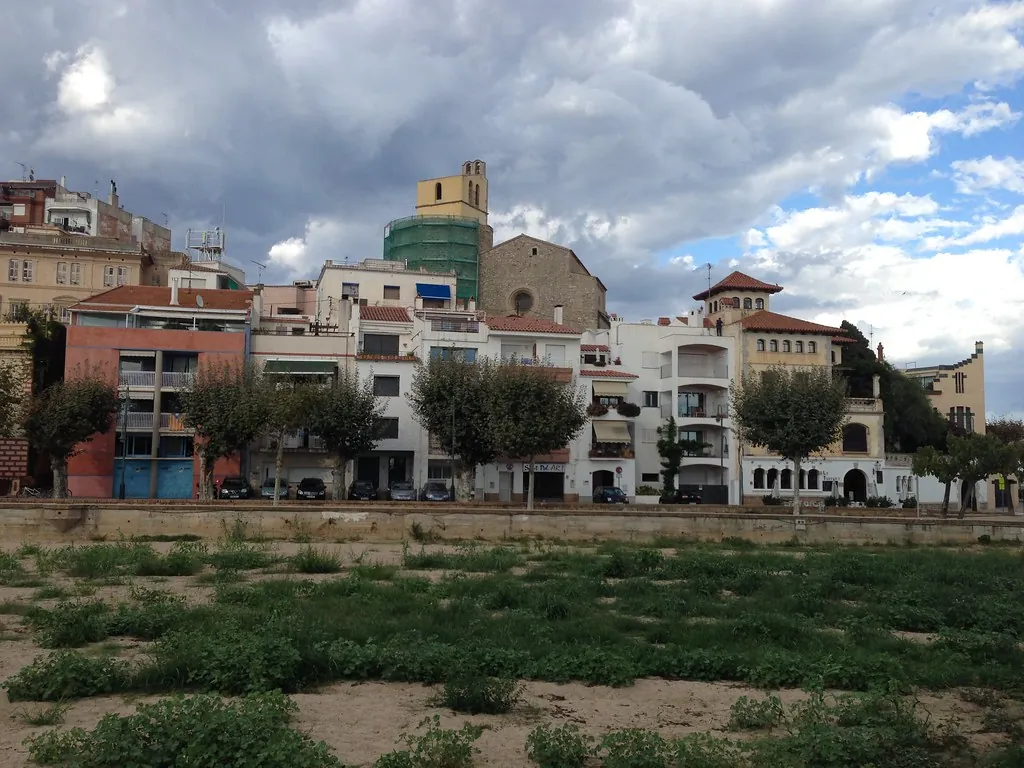
The train runs between the town and the beach in Malgrat de Mar. This is the first thing you see when you arrive by rail: the tracks form a precise border, a narrow strip of land that separates the houses from the sand. For centuries, this was an open space between the Mediterranean and the mouth of the River Tordera.
Tourism here is a recent development. Before visitors arrived, the town lived from market gardening, fishing, and a small port that shipped produce from inland. The sea was a workplace, not a holiday setting. The fertile plain behind the town, known as the Pla de Grau, provided its economic foundation.
That dual identity remains. While the beach draws summer crowds, the agricultural landscape persists. The railway still marks the division between daily life and the shoreline.
Vilanova de Palafolls and Its Castle
The town’s origins are tied to the castle of Palafolls. Its ruins still watch over the area from a nearby hill. In the 14th century, a charter was granted to a small settlement by the sea, called Vilanova de Palafolls. The name acknowledged its dependence on the local lord.
Soon after, the Torre del Castell was built. It was not a noble residence but a watchtower, designed to monitor the coastline and surrounding fields. From here, guards could raise the alarm against incursions and track ship movements. The tower still stands, its appearance austere and functional.
The name Malgrat appeared later. Its origin is unclear. Some link it to the damp terrain of the Tordera delta; others to the hardship of living by a capricious sea. What is certain is that fishing was never the sole occupation. The inland plain sustained agriculture for centuries, anchoring the economy.
Sant Nicolau and the Old Town
The church of Sant Nicolau defines the historic centre. Its size is notable for a town of this scale. The current building was constructed between the 16th and 18th centuries on the site of an earlier temple.
Locals sometimes call it “the Cathedral of the Coast,” a nickname that speaks to its visual impact rather than its ecclesiastical rank. Inside, the wide central nave and barrel vault create an impression of space that contrasts with the tight streets outside.
For sailors, the church served as a landmark. An old image of Saint Nicholas, patron saint of sailors, is kept inside. Each December, the statue is traditionally carried through the streets in procession.
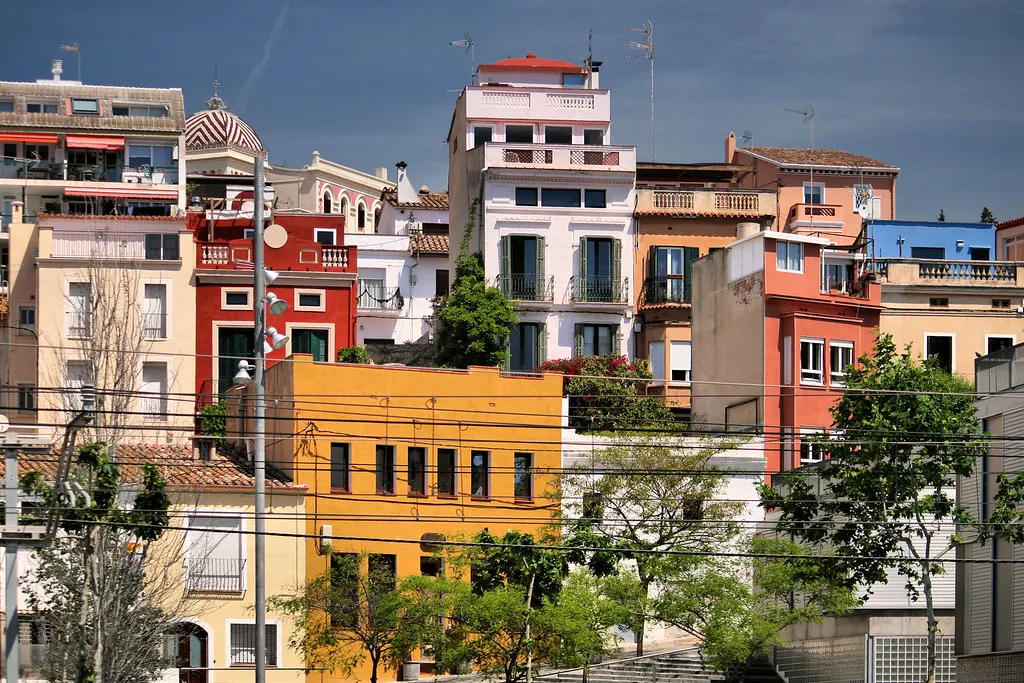
The old town spreads irregularly below Sant Nicolau. Streets narrow and climb toward the church, giving the centre a compact form. Stone doorways and simple façades remain on many houses. The architecture does not present a single style but shows different periods of growth: former schools, houses built by indianos who returned from overseas, and 20th-century public buildings are scattered throughout. They reveal how Malgrat developed in layers.
At the upper edge lies the Parc del Castell. From here, you see the relationship between town, coastline, and river delta clearly. The open mouth of the Tordera contrasts with the urban fabric below. An inclined lift connects the park to the beach area, though many people still walk down.
A Beach of Coarse Sand
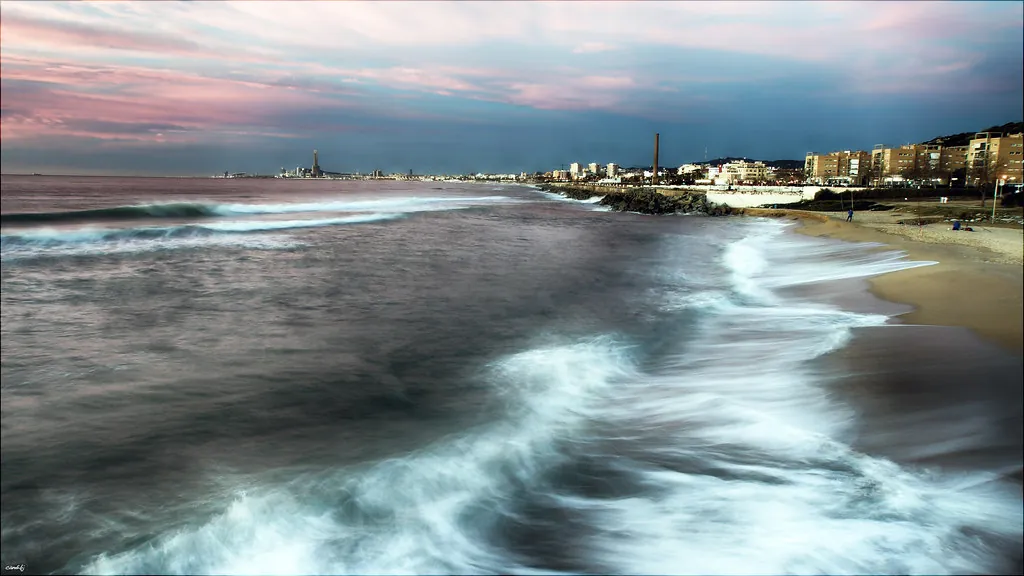
The beaches here form a long, straight line along the Mediterranean. The sand is coarse, much of it formed from materials carried down by the Tordera River.
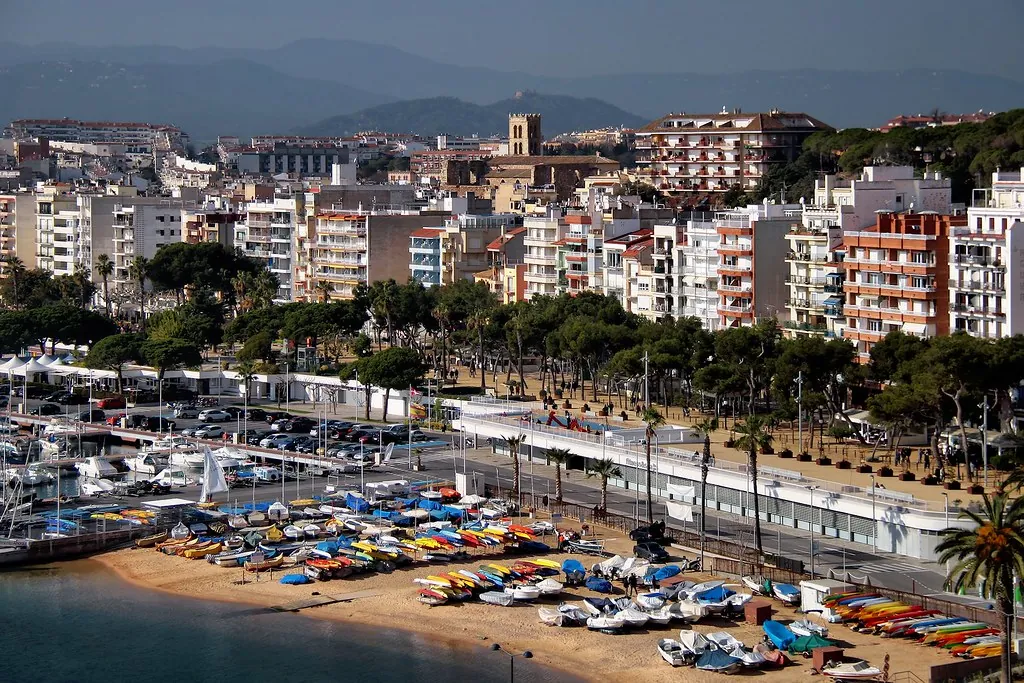
To the north, near the river mouth, the landscape opens up. Human presence feels lighter, the horizon broader. Closer to the town centre, the beach changes character. Access is easier, and in summer, the busiest swimming areas form near the urban core.
The seafront promenade follows the coastline with gentle curves. It becomes a shared space for the town, especially in the late afternoon. Older residents sit on benches, families head to the sand, and young people gather in the open areas. The rhythm is local, shaped by daily routines as much as by the seasons.
The Inland Plain and Its Produce
Behind the beachfront, agriculture remains important. The mongeta del ganxet, a white bean with a curved tip, is a well-known crop of the Maresme region. It thrives in the damp, irrigated soils of the plain.
This bean appears often in local cooking, sometimes prepared with cured meats, other times simply with olive oil. The cuisine reflects the town’s character, combining produce from the sea with what comes from the market gardens.
In spring, Maresme strawberries appear in local markets. They are a visible part of an agricultural landscape that has defined this area for decades. Even with tourism’s growth, these crops continue to shape the fields around Malgrat.
A Year-Round Rhythm
Malgrat de Mar does not shut down outside summer. In spring, activity focuses on the agricultural surroundings, and the promenade is quieter.
Summer brings more visitors, centering life on the beach. Some traditional festivals are held in August; others occur in December for Saint Nicholas, connecting celebrations to the maritime past.
The town is well connected by the coastal commuter train. Still, the best way to understand Malgrat is on foot. A slow walk through the old centre and along the seafront shows how town and sea coexist, divided by a railway line yet tied together in daily life.