Full Article
about Mataró
Maresme's capital with Roman and modernist heritage and a busy port.
Hide article Read full article
At six in the evening the sun drops low and hits the storage tanks in the port head-on. Metal flashes like broken mirrors and the air carries the mixed scent of diesel and salt. On the quay, fishermen unload crates of red prawns, still wet from the water. These are the prawns of Mataró, the ones that later appear on menus across the Maresme, usually at a price that few people argue with.
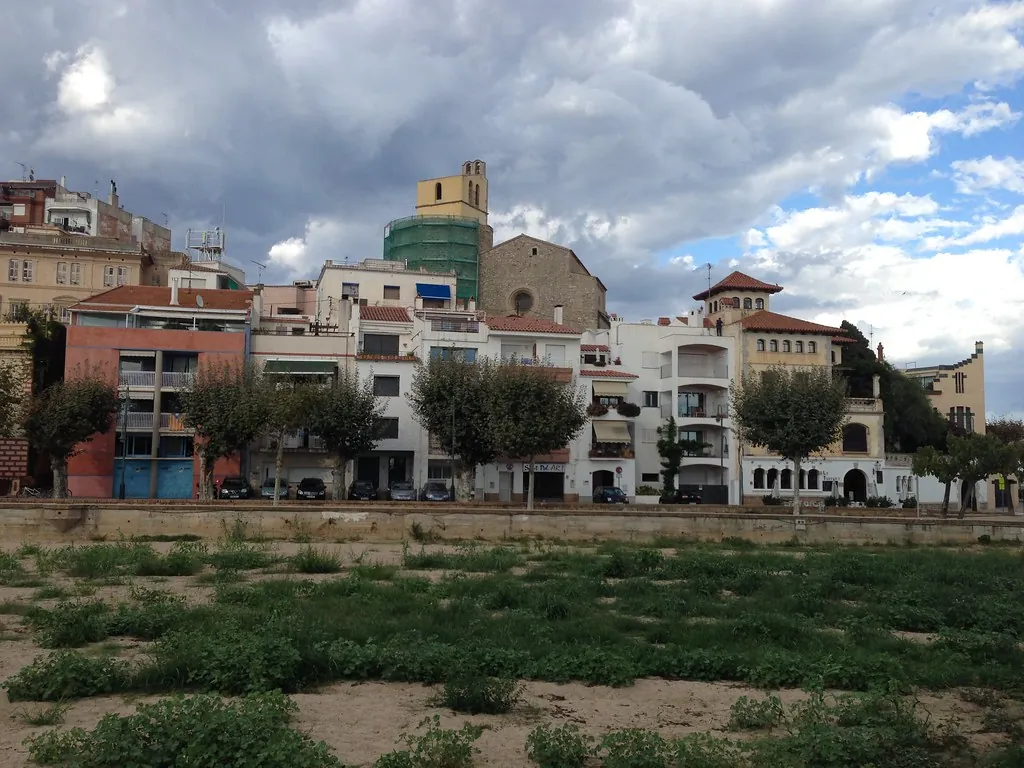
In Plaça de Santa Anna, a boy crosses with a surfboard tucked under his arm and steps over the railway line that was the first on the Iberian Peninsula. Barcelona is a little over half an hour away, yet the rhythm here feels different. Life leans more towards the seafront promenade, more towards the neighbourhood.
From Iluro to Mataró
Mataró does not begin at the beach, but slightly uphill. Around two thousand years ago the Romans founded Iluro on ground raised just above the coastline. Today the most visible trace is the Torre Llauder archaeological site, a short walk from the centre. Parts of the Roman villa remain: geometric mosaics, fragments of bath complexes and the heating system that once channelled hot air beneath the floors.
It is often a quiet place. By mid-morning, the only sounds are distant cars from the ring road and wind moving through the pines inside the enclosure. Occasionally a cat stretches out on slabs warmed by the sun.
Many of the stones in the historic centre were quarried nearby in the Maresme. It is a pale, relatively soft stone that is easy to work. Walk slowly past some of the older façades and reused blocks are still visible, their Latin inscriptions half erased by time.
The Roman presence may seem discreet compared with other sites in Catalonia, but it explains the layout of the upper town and the sense that Mataró’s story began inland rather than by the sea.
A First Step for Gaudí
Long before his name became inseparable from Barcelona, Antoni Gaudí received a modest commission in Mataró: the design of a workshop building for a workers’ co-operative. The Nau Gaudí, built in the nineteenth century, still stands and now functions as an exhibition space.
The real interest lies less in what is displayed inside and more in the structure itself. Brick arches repeat in a sequence that resembles an exposed skeleton, almost like open branches. Light enters from the sides and bounces off the reddish floor. This was an early work, at a time when Gaudí was testing structural ideas that he would later develop much further.
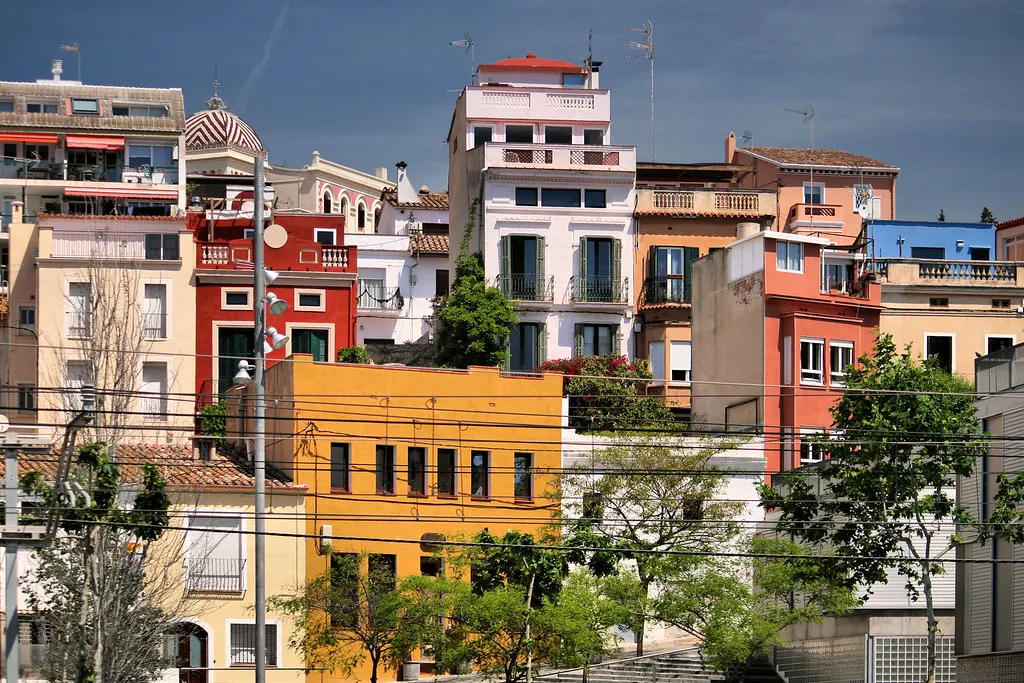
Elsewhere in the city, Modernista buildings by other architects of the period remain scattered through the centre. Those drawn to this style will find it worth wandering without a fixed route and simply looking up. Wrought-iron balconies, glazed ceramics and heavy wooden doorways appear along the streets, sometimes without warning.
Market Mornings and Winter Flavours
The Mercat del Rengle occupies a Modernista building with an iron structure and large upper windows. Early in the day a white light filters in and falls across the fish counters. The smell changes depending on what has arrived: shellfish, salted cod, fresh herbs.
In winter, dishes closely tied to the area begin to appear. One of them is xató, a robust salad made with cod, escarole and a thick sauce of nuts and ñoras, a type of dried red pepper common in Catalan cooking. It is eaten slowly, with bread on the side to make sure nothing is left on the plate. In some households, ratafía is still prepared at home, left to macerate for weeks with herbs and green walnuts.
There is also a curious story linked to the sea. The so-called coca de Mataró, preserved in a foreign maritime museum, is said to have been a sailor’s ex-voto offered in thanks for surviving a storm. It is not something found in today’s bakeries, yet it forms part of the city’s maritime imagination.
Food here is not presented as spectacle. It is tied to season and routine, to what arrives at the port and what grows inland. The red prawns unloaded in the afternoon reappear later on plates across the comarca. Salt cod and preserved fish recall older methods of storing what the sea provided.
Festive Days and Quiet Mornings
At the end of July, the pace shifts. Las Santes, the main festival dedicated to Santa Juliana and Santa Semproniana, takes over the city. Giants parade through the streets, music fills the air and fireworks are set off in abundance. For several days the centre is crowded and the noise carries well into the night. Those who enjoy a festive atmosphere will have little trouble joining in; anyone in search of calm may prefer to choose a different week.
Outside these dates, there are other moments when tradition surfaces. The hermitage of Sant Simó, slightly removed from the urban core, hosts popular pilgrimages in spring. The path climbs between pines and former summer houses. From the top, the sea appears flat, the port visible in the distance and the railway line tracing the edge of the coast.
One practical detail stands out. The commuter train station sits almost beside the seafront promenade, so arriving by train avoids unnecessary detours. Those coming by car tend to leave it in one of the larger parking areas near the sports facilities and walk down towards the sea.
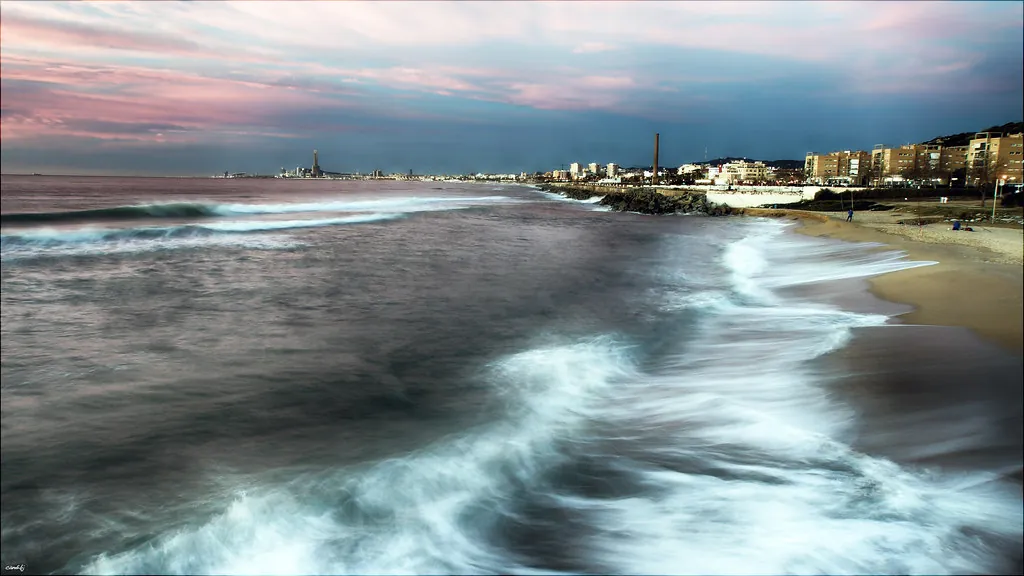
In summer, the beaches closest to the centre fill quickly, sometimes before mid-morning. For a little more space it helps to walk towards either end. To see the port at its calmest, early rising makes a difference. Around seven in the morning some boats return, gulls argue over the fish crates and the smell of the sea still outweighs everything else.
Mataró moves between these contrasts: Roman stones set above the shore, early experiments by Gaudí, market stalls heavy with fish, festival nights loud with firecrackers. Barcelona may be close, yet the mood here remains distinct, shaped by the port, the Maresme landscape and a daily life that unfolds at its own pace.