Full Article
about Montgat
Gateway to El Maresme with a seafaring tradition and the sung fish auction
Hide article Read full article
The neighbour you never get off to meet
Montgat is the sort of place many people pass for years without properly noticing. It sits right next to Barcelona, linked by frequent trains, close enough to feel almost absorbed by the city. Most travellers stay on board. Every so often someone steps off on a whim and discovers that this small coastal town has more going on than its size suggests.
There is a beach that feels relatively calm for this stretch of coastline. There is a working fishermen’s corner where the air still carries the scent of the sea rather than tourist menus. There is even a small fish market where the day’s catch changes hands with surprising energy for such a compact municipality.
Montgat does not try to compete with Barcelona or with the larger towns of the Maresme coast. It simply continues at its own pace, which is perhaps why it feels different from the places that surround it.
A small town that chose its own path
For centuries, Montgat was part of Tiana. It did not become an independent municipality until the twentieth century. The comparison that locals sometimes make is of someone moving into a small flat of their own: modest in size, but finally self-governed.
The municipal area is tiny, just a few square kilometres, and that shapes daily life. In Montgat, everything is close. The seafront, the residential streets, the hill with its hermitage, the railway station, all lie within easy reach of one another.
The station itself plays a central role in the town’s story. The railway line that runs through Montgat formed part of the first railway on the Iberian Peninsula, linking Barcelona and Mataró in the mid nineteenth century. That historical detail matters here, because the line did not just connect places, it influenced how they grew.
Montgat’s station is small, almost model-like in scale, with the look of an old railway building that has become increasingly rare. Seen from the platform, it can feel more like a carefully arranged set than a busy suburban stop. Yet trains continue to pass every few minutes, binding the town tightly to Barcelona and to the rest of the Maresme.
Boats on the sand
One of the most distinctive features of Montgat is what it does not have. There is no marina. No forest of masts rising from a sheltered harbour. Instead, boats still come straight in across the sand.
They are hauled up using rails and rollers, an old system that survives in certain parts of the Mediterranean. It is practical and direct, and it keeps the relationship between town and sea visible. The fishing boats rest on the beach itself, close enough to examine as you walk past.
At certain moments, it is possible to see the catch arriving and being handled in the local fish market, the lonja. It is not a picturesque scene designed for visitors. The space is functional, almost industrial, organised around whatever the sea has yielded that day. Activity depends on timing and luck. There are days when little seems to be happening, and others when movement and exchange make it clear how this stretch of coast has operated for generations.
This working side of Montgat is easy to miss if you only glance at the shoreline. Spend a little time near the boats and the rhythm becomes clearer.
A beach for the people who live here
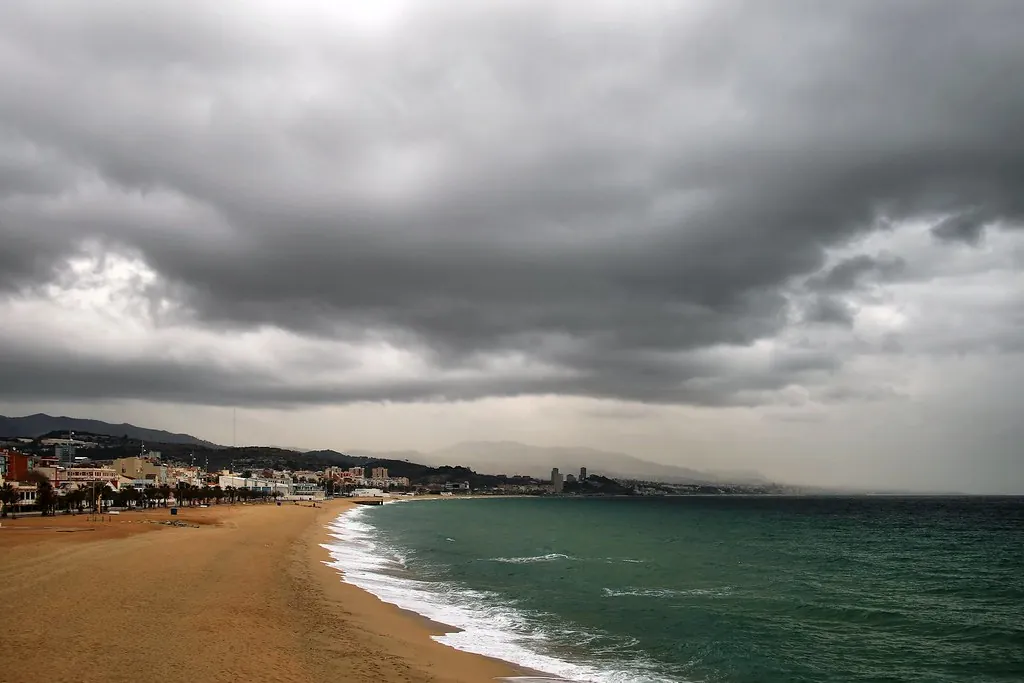
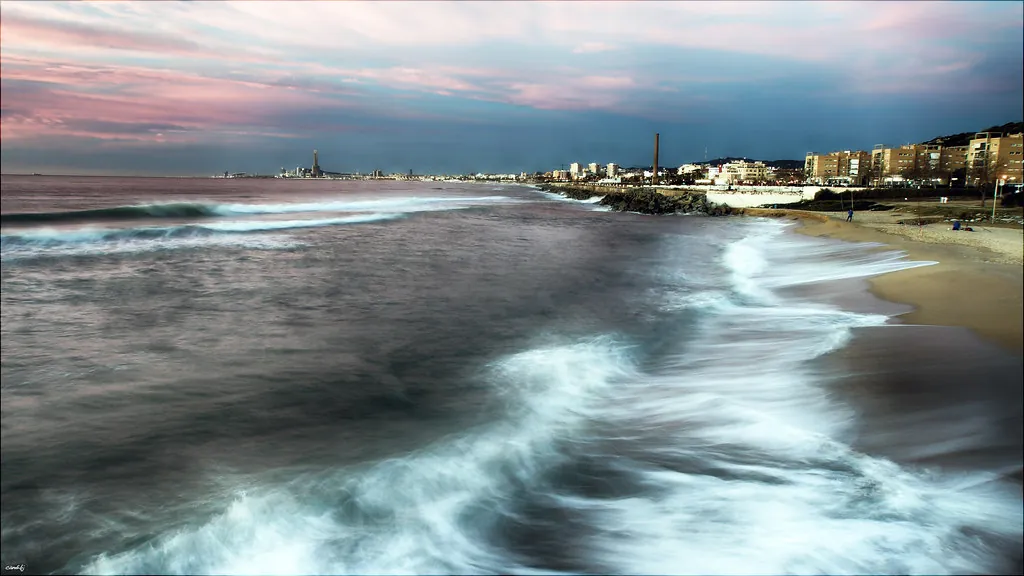
Montgat’s beach is not a postcard version of the Mediterranean. The sand is relatively coarse and the colour of the water shifts depending on the weather and recent storms. The railway line runs just behind, trains sliding along the coast at regular intervals.
What the beach does offer is space, especially compared with many beaches closer to central Barcelona. In summer, residents from nearby neighbourhoods come down in significant numbers. Even so, it rarely reaches the tightly packed feeling found elsewhere along the coast.
Outside the main season, the atmosphere changes completely. The beach can be almost empty. The trains still pass behind, fishermen prepare their boats, and the sea reclaims the soundscape. It becomes a place used mainly by those who live nearby, people walking their dogs or taking a quiet stroll by the water.
This is not a beach designed to impress. It is one that functions as part of daily life.
The hermitage above the coast
A short walk away from the seafront, climbing towards the higher part of town, stands the ermita de Sant Martí. The building is of medieval origin, with thick walls and the sober appearance typical of rural Romanesque architecture.
It is not grand, and that is precisely its character. The stone structure has the solid, restrained quality associated with early medieval churches across Catalonia. From its surroundings, the view opens out widely.
To one side lies the Mediterranean. Towards Barcelona, the residential blocks of Badalona line the coast. To the north, the Maresme stretches away in a long strip. With the railway tracing the shoreline below, the contrast between an ancient religious building and the constant movement of modern commuter trains is striking.
The setting captures something essential about Montgat. The old and the everyday coexist without ceremony.
When getting off the train makes sense
Montgat is not a destination that usually justifies a long, carefully planned trip. It works better as a pause between Barcelona and other towns of the Maresme. Yet that is also its strength.
Because it is not shaped around large numbers of visitors, it keeps a normal rhythm. Neighbours walk their dogs. People head down to the beach after work. Fishermen prepare their boats on the sand. The station platform fills and empties in a steady cycle.
A simple way to understand Montgat is to step off the train and walk without rushing. Start near the boats and the beach. Follow the seafront for a while. Then head uphill towards the ermita de Sant Martí and look back over the coastline.
Within a short time, most of the town can be covered on foot. Its small scale makes exploration straightforward, almost inevitable. Returning to the platform, with another train due shortly, a realisation often follows: for years, this was just a name on the line between Barcelona and somewhere else.
Sometimes a place this small needs only one thing to reveal itself. The decision to get off.